
Buying new tyres should provide confidence in their quality, but understanding what happens when something goes wrong can be confusing. Many drivers assume that a tyre warranty covers any problem that develops while the tyre is in use. However, a warranty against manufacturing defects is not necessarily protection against punctures, pothole damage or ordinary tread wear. Different manufacturers and retailers offer different levels of cover, with their own conditions and exclusions. Knowing these differences can help you understand what protection you actually have. It can also prevent misunderstandings when a tyre develops an unexpected problem.
Imagine noticing a bulge on a tyre that was fitted only a few months ago. You might reasonably wonder whether the problem developed during manufacturing or resulted from an impact on the road. The answer matters because tyre warranties usually distinguish between genuine product defects and damage caused during use. Some retailers also provide additional protection for specific road hazards, but this should never be assumed. UK consumer law provides separate rights when goods do not meet the required standards. Understanding how these protections work together makes it easier to approach a possible tyre warranty claim.
What Is a Tyre Warranty and What Does It Usually Cover?
A tyre warranty is a commitment provided by a manufacturer or retailer under specific conditions. It explains which tyre problems may qualify for a remedy and how a claim must be submitted. Many manufacturer warranties focus on defects in materials or workmanship that occurred during production. Other arrangements may include specific mileage, treadwear or accidental damage benefits. However, the exact protection depends on the policy attached to the tyre or purchase.
A warranty does not mean that a tyre will remain damage-free throughout its working life. Tyres are exposed to road debris, changing temperatures, loading and repeated contact with uneven surfaces. These conditions can cause wear or damage without indicating that the original product was defective. A warranty may also have limits relating to time, remaining tread depth, vehicle use or maintenance. Always read the applicable policy terms before assuming that a particular problem is covered.
What Does a Manufacturing Defect Warranty Protect Against?
A manufacturing defect warranty generally addresses faults linked to the materials or processes used to produce the tyre. These may involve problems with the rubber compound, internal construction or workmanship during manufacture. However, identifying a possible fault does not automatically establish that the manufacturer is responsible. The tyre usually needs to be examined to determine whether the problem originated during production. A genuine manufacturing defect must be distinguished from damage that developed after the tyre entered service.
For example, a driver may notice an unusual change in the tyre’s shape despite having no recollection of a significant road impact. This could raise a question about the tyre’s construction, but it would not prove a manufacturing fault. Internal damage from underinflation, kerb contact or pothole impacts can sometimes produce similar symptoms. A technical examination may be needed to identify the more likely cause. The manufacturer or its appointed assessor then considers the findings against the relevant warranty conditions.
Do Tyre Warranties Include Mileage, Treadwear or Road Hazard Protection?
Some tyre warranties or additional protection schemes offer benefits linked to mileage, treadwear or particular types of road damage. A mileage or treadwear guarantee may describe conditions under which unusually early tread wear can qualify for consideration. Such policies often require evidence that the tyres were maintained and used appropriately. They may also specify qualifying vehicles, minimum remaining tread depth or particular replacement arrangements. These benefits are not automatically included with every tyre.
Road hazard protection is different because it may address certain types of accidental damage rather than manufacturing faults. Depending on the scheme, specified punctures or impacts may qualify for an assessment or replacement benefit. However, conditions can vary substantially, including which damage types are eligible and whether registration is necessary. Some policies are provided directly by tyre manufacturers, while others are arranged through retailers. Always check the actual wording rather than assuming that a manufacturer’s standard warranty includes road hazard protection.
How Do Manufacturer Warranties and Retailer Protection Plans Differ?
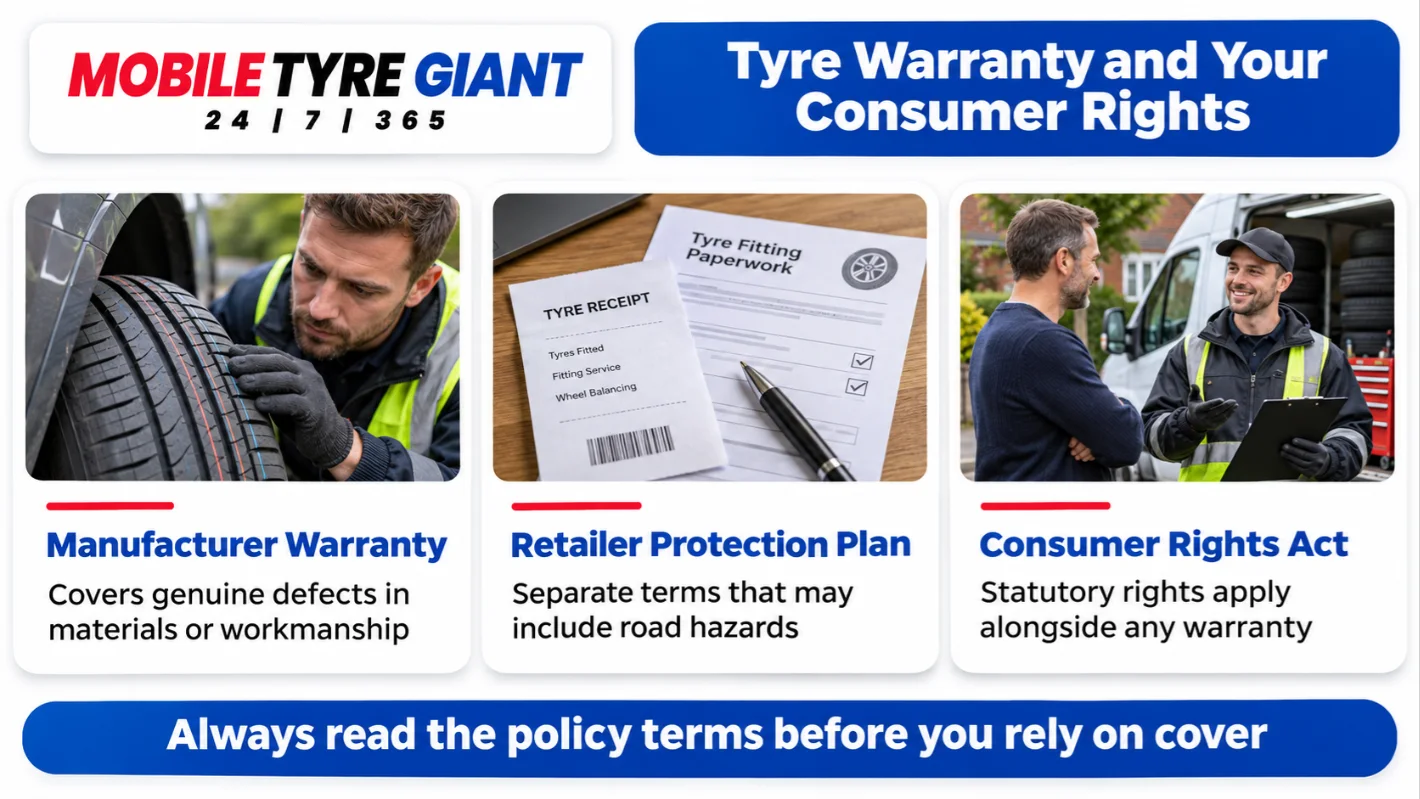
A manufacturer warranty generally concerns the quality of the tyre as produced. It may provide a remedy when technical examination confirms a qualifying defect in materials or workmanship. A retailer protection plan may offer additional benefits based on the agreement made when the tyres were supplied. These arrangements can operate separately even when they relate to the same tyre. Understanding who provides each benefit helps establish the appropriate claim process.
Imagine a driver who buys a new tyre and later discovers a nail embedded in its tread. The puncture may not qualify under the manufacturer’s standard defect warranty because it resulted from an external road hazard. However, a separate retailer protection plan might include eligible puncture damage under its terms. Without that additional protection, the driver may still be able to arrange a professional repair if the tyre is suitable. The important distinction is between damage caused by ordinary road use and a fault present in the product itself.
Who Provides Cover Under a Manufacturer Tyre Warranty?
A manufacturer’s tyre warranty is based on the manufacturer’s stated promise and eligibility requirements. The supplying retailer will often act as the first point of contact when a possible defect is reported. Depending on the manufacturer, the retailer may inspect the tyre or arrange for further technical assessment. The manufacturer then considers whether the complaint falls within its warranty policy. The exact claim procedure can differ between brands and product categories.
For example, a driver may return to the supplier after discovering unusual tread or sidewall deterioration. The retailer might request proof of purchase, the tyre’s identification markings and details of the reported problem. If a manufacturing defect is suspected, the tyre may need to be examined more thoroughly. A claim is not necessarily approved simply because the tyre is still within the stated warranty period. The outcome depends on the evidence, the condition of the tyre and the applicable policy terms.
Is a Retailer Road Hazard Plan the Same as a Manufacturer Warranty?
A retailer road hazard plan is usually designed to address specified accidental tyre damage under a separate agreement. This differs from a manufacturer’s warranty against faults arising during production. Some plans may include certain punctures or impact incidents, while others provide a narrower form of protection. There may also be eligibility conditions involving the date of purchase or the way the tyre has been used. The retailer’s written terms determine the actual benefits.
Consider a tyre that becomes damaged after striking an unexpected pothole. A standard manufacturing warranty would not normally cover damage caused by that external impact. A qualifying road hazard plan might provide a remedy if the incident meets its stated conditions. However, the plan may require inspection and may exclude certain forms of damage or vehicle use. Drivers should confirm whether such cover exists before relying on it after an incident.
How Do UK Consumer Rights Apply to Tyre Warranties?
UK consumer rights and voluntary tyre warranties are not the same thing. Under the Consumer Rights Act 2015, goods sold to consumers must meet legal requirements, including satisfactory quality, fitness for purpose and correspondence with their description. These requirements can apply even when a manufacturer does not provide an additional warranty. A voluntary warranty cannot remove the consumer’s statutory rights. However, those rights do not mean that every tyre problem automatically qualifies for a remedy.
Tyres are products that naturally wear as they are used. The law distinguishes between goods that fail to meet the required standards and problems caused by normal wear, accidents or misuse. An unexpected problem may require consideration of the tyre’s age, condition, maintenance history and circumstances of use. A genuine defect may support a claim, while damage caused by an avoidable impact may not. Understanding that distinction can help drivers explain their concerns more accurately when contacting the seller.
Do Statutory Consumer Rights Apply Without a Tyre Warranty?
Yes, consumer rights can apply even when a tyre has no separate manufacturer’s warranty or an advertised warranty has expired. The Consumer Rights Act 2015 protects consumers when goods do not meet the legal standards required at the time of supply. This includes relevant considerations of safety, durability and suitability for their intended purpose. The circumstances of the problem and the available evidence affect which remedies may apply. The existence or expiry of a voluntary warranty does not decide the legal position by itself.
Imagine purchasing tyres that later develop a fault which appears inconsistent with their expected quality and use. The seller cannot simply dismiss a valid statutory complaint because the manufacturer’s warranty is unavailable. However, the driver may still need to establish that the issue is a qualifying fault rather than subsequent damage. The legal position can also depend on how long the tyres have been owned and the relevant circumstances. These protections should be considered separately from any additional warranty scheme.
Who Should You Contact if You Believe a New Tyre Is Faulty?
For a consumer purchase in the UK, the retailer that supplied the tyre is normally the first contact for concerns about statutory rights. Explain what has happened, when the problem was first noticed and why you believe the tyre may be faulty. Keep any relevant proof of purchase and inspection findings available. The retailer may need to examine the tyre or arrange an assessment to establish the nature of the problem. A manufacturer warranty may have a separate procedure, but it does not replace the retailer’s statutory responsibilities.
The timing of the complaint can also matter under the Consumer Rights Act. A short-term right to reject qualifying faulty goods generally applies within the first 30 days, subject to the relevant legal conditions. During the first six months, a qualifying fault is generally presumed to have existed at delivery unless the trader establishes otherwise or the presumption is incompatible with the circumstances. After that period, the consumer will normally need evidence that the goods did not conform when supplied. This is general consumer information rather than legal advice, and individual circumstances may require specialist guidance.
What Counts as a Genuine Tyre Manufacturing Defect?
A genuine manufacturing defect is a fault attributable to the tyre’s materials or production rather than damage sustained during normal use. Tyres contain several structural components, including reinforcing materials, rubber compounds and bonded layers. Problems involving these components can sometimes raise questions about manufacturing quality. However, visible deterioration or an unusual shape does not necessarily reveal what caused the problem. A professional examination is often needed before drawing conclusions.
Some tyre defects may also make a vehicle unsafe or unsuitable for continued road use. A structural bulge, exposed reinforcement or serious casing damage should never be ignored while a warranty claim is being considered. The explanation of tyre defects that can cause an MOT failure highlights why tyre condition matters independently of warranty eligibility. Importantly, an MOT failure or dangerous tyre condition does not automatically establish a manufacturing fault. Safety and warranty responsibility are related concerns, but they require separate assessments.
What Signs Might Suggest a Defect in Tyre Materials or Workmanship?
Potential warning signs can include unusual structural distortion, unexpected separation of components or abnormal deterioration that lacks an obvious explanation. Some problems become noticeable through vibration, visible changes in tyre shape or repeated loss of pressure. However, these symptoms can also result from road impacts, incorrect inflation or mechanical issues with the vehicle. A driver cannot reliably identify manufacturing responsibility from appearance alone. The tyre’s construction and history need to be considered before reaching a conclusion.
Imagine a relatively new tyre that repeatedly loses air even though no obvious puncture is visible. It may be tempting to assume that the tyre was manufactured incorrectly. However, a damaged valve, wheel corrosion or a poor seal around the rim could explain the same problem. The information about tyres losing pressure without a visible puncture explains why the complete wheel assembly needs checking. A properly identified fault is much more useful than assuming every unexplained pressure loss is a warranty issue.
How Can You Distinguish a Manufacturing Defect From Road Damage?
The difference between a manufacturing defect and road damage often depends on identifying the cause of the tyre’s condition. A pothole strike can damage internal reinforcement even when the outer rubber appears relatively normal. Kerb contact may leave sidewall abrasions, while severe underinflation can damage the tyre’s internal structure. These forms of damage can develop during use rather than during manufacture. The presence of a bulge, cut or unusual wear pattern is therefore not sufficient evidence of a factory defect.
For example, a sidewall bulge appearing shortly after a tyre strikes a deep pothole may indicate impact-related structural damage. A similar-looking concern without a known impact still requires careful investigation rather than an automatic warranty assumption. The technician may examine the tyre’s internal condition, wear pattern and any signs of external force. The manufacturer or other relevant assessor can then consider the findings under the applicable policy. Whatever the cause, a tyre with suspected structural damage should be assessed for safety before further driving.
Which Types of Accidental Tyre Damage Are Normally Excluded From Warranty Cover?
Accidental tyre damage is one of the most common reasons a warranty claim may not qualify. Tyres regularly encounter sharp objects, damaged road surfaces and unexpected impacts during ordinary driving. A standard manufacturing warranty will not usually cover damage caused by these external events. However, additional road hazard protection may provide benefits for certain incidents when the policy specifically includes them. The distinction matters because even a recently fitted tyre can suffer accidental damage.
The cause of the damage is often more important than how long the tyre has been used. A puncture appearing shortly after fitting does not automatically suggest a problem with manufacturing quality. Likewise, visible damage following a strong impact may be treated differently from an unexplained fault. Manufacturers and retailers may request an inspection before deciding whether a claim is eligible. Drivers should therefore check the exclusions and any additional protection arrangements attached to their tyres.
Why Are Nail Punctures and Road Hazards Usually Excluded?
Nails, screws, glass and other sharp objects can penetrate a tyre while the vehicle is being driven. This type of damage normally results from contact with an external object rather than a manufacturing problem. Standard tyre warranties commonly exclude punctures and similar road hazards for this reason. The exclusion can apply even when the tyre has substantial tread remaining. Some separately purchased or included protection schemes may provide specific puncture benefits, depending on their conditions.
Imagine discovering a screw embedded in a tyre only a few weeks after replacement. The tyre may have been manufactured correctly but damaged by an object lying on the road. A standard defect warranty would not normally cover that situation. However, a qualifying road hazard arrangement might offer protection if the damage meets its requirements. Whether the tyre can be repaired is a separate technical decision that depends on its condition and the puncture location.
How Do Kerb Strikes and Potholes Affect Warranty Eligibility?
Kerb strikes and pothole impacts can place sudden stress on a tyre’s internal structure. The tyre may become compressed between the road obstacle and wheel rim, potentially damaging its reinforcing materials. This can cause a sidewall bulge, cut or internal separation, even when pressure does not immediately fall. Such damage is normally regarded as impact-related rather than a manufacturing defect. Standard warranty exclusions often specifically identify kerb and pothole damage.
For example, a driver may hit a deep pothole during a journey and discover a sidewall swelling the following morning. The tyre might still hold air, but the impact could have damaged its internal construction. The explanation of pothole tyre damage in London describes why this type of damage is not always immediately visible. A warranty assessor may consider impact evidence when reviewing the tyre. Drivers should not continue using a tyre with suspected structural damage while waiting for a claim decision.
Are Sidewall Cuts and Bulges Covered by a Tyre Warranty?
Sidewall cuts and bulges are not automatically covered by a tyre warranty. These defects can develop after contact with kerbs, sharp objects or potholes. A bulge may indicate that reinforcing cords inside the tyre have been damaged, allowing inflation pressure to distort the weakened area. Many manufacturer policies exclude impact breaks, cuts and similar external injuries. However, the visible appearance alone does not establish the cause in every case.
Imagine noticing a small bulge on a tyre without remembering any particular road impact. The absence of a remembered collision does not prove that the tyre has a manufacturing defect. A technician may need to inspect its structure and look for evidence of external damage. The information about tyre sidewall damage explains why cuts, bulges and exposed reinforcement require attention. Whatever the eventual warranty outcome, a tyre showing serious structural damage should not remain in normal service.
How Can Inflation, Overloading and Incorrect Tyre Work Affect Warranty Cover?
Tyre warranties commonly include conditions relating to appropriate vehicle use and maintenance. Even a correctly manufactured tyre can suffer damage when operated outside its intended requirements. Incorrect inflation pressure, excessive vehicle loading and unsuitable applications may accelerate wear or damage the internal structure. Manufacturers may exclude problems attributable to these conditions. However, the specific wording and assessment requirements differ between warranty policies.
A warranty investigation may therefore consider more than the visible damage on the tyre. The vehicle’s loading, inflation history, wheel condition and fitting arrangements may all be relevant. A technician might also examine wear patterns or evidence of overheating when investigating a complaint. These findings can help explain whether the problem developed during use. A claim should be assessed against the actual evidence rather than rejected simply because maintenance records are incomplete.
Why Can Underinflation or Overloading Lead to a Rejected Claim?
Driving with insufficient tyre pressure can cause excessive sidewall flexing and heat build-up. Over time, this may weaken internal components and contribute to premature tyre failure. Carrying loads beyond the vehicle or tyre’s approved limits can create similar problems by increasing stress on the structure. Manufacturer warranties commonly exclude damage attributable to underinflation or overloading. Such exclusions reflect conditions that can affect an otherwise correctly manufactured product.
Consider a delivery vehicle that regularly carries heavy equipment while its tyres remain below the recommended pressure. The additional flexing may contribute to abnormal shoulder wear or internal deterioration. If a tyre later fails, the manufacturer may investigate whether loading and inflation contributed to the damage. The fact that the tyre failed earlier than expected would not, by itself, establish a manufacturing defect. Drivers should follow the vehicle manufacturer’s pressure and load requirements to reduce these risks.
What Types of Tyre Misuse Can Affect Warranty Protection?
Tyre misuse can include operating a tyre outside its approved vehicle specifications or intended conditions. Examples may involve inappropriate loading, using unsuitable wheel combinations or continuing to drive after serious damage has become apparent. Some warranty policies also exclude damage associated with motorsport, deliberate abuse or particular forms of off-road use. A tyre fitted with an incorrect load rating may also be unsuitable for the vehicle. The manufacturer’s stated operating limits and policy conditions determine how these situations are assessed.
Imagine fitting tyres intended for ordinary passenger-car use to a vehicle requiring a higher load capacity. The tyres may physically fit the wheels but still fail to meet the approved specification. Continued operation could place stresses on them beyond their intended requirements. If damage follows, the use of an unsuitable tyre may become relevant to the warranty assessment. Correct fitment should therefore be established before the tyres enter service, rather than after a problem develops.
Can Incorrect Fitting or Previous Repairs Affect Warranty Cover?
Incorrect tyre fitting can damage the bead, casing or other components before the vehicle has travelled any significant distance. Problems may arise from unsuitable equipment, incorrect mounting techniques or incompatible wheels. A manufacturer may exclude damage attributable to improper fitting because it did not originate during tyre production. However, a fitting problem does not automatically establish that every later tyre complaint is ineligible. The actual cause and responsibility for the damage must still be considered.
Previous repairs can also affect warranty eligibility, particularly if they were carried out incorrectly or altered the tyre’s condition. A manufacturer may exclude damage resulting from an unauthorised repair, unsuitable sealant or improper modification. However, not every correctly completed repair automatically cancels all remaining warranty protection. The outcome depends on the manufacturer’s conditions and whether the repair contributed to the complaint. Drivers should retain information about previous fitting and repairs because it may help explain the tyre’s service history.
How Do Normal Tread Wear, Mileage and Tyre Age Affect Warranty Cover?
Tread wear is an expected part of tyre use because rubber gradually wears away through contact with the road. The rate varies with driving habits, vehicle weight, road conditions, alignment and inflation pressure. Standard manufacturing warranties do not normally guarantee that a tyre will retain its original tread depth for a particular period. Some manufacturers may offer separate mileage or treadwear benefits with specific eligibility requirements. These arrangements should be considered independently of ordinary wear expectations.
Tyre age also matters because rubber and other materials can deteriorate through environmental exposure and use. However, a tyre’s manufacturing date does not determine its condition or warranty eligibility on its own. Storage conditions, sunlight, temperature, loading and maintenance can influence ageing. A warranty may distinguish natural deterioration from an unusual material problem. Drivers should check both the applicable policy and the physical condition of the tyre when assessing whether continued use is appropriate.
Is Normal Tread Wear Covered by a Standard Tyre Warranty?
Normal tread wear is generally excluded from standard manufacturing defect warranties. A tyre gradually loses tread depth during braking, cornering and ordinary road use. The rate can differ substantially between vehicles and driving conditions, even when the same tyre model is fitted. Reaching a particular mileage does not necessarily indicate that the tyre has failed prematurely. Manufacturers normally assess unusual wear separately from expected service-related deterioration.
For example, two drivers may purchase identical tyres but use them in very different conditions. One completes steady motorway journeys, while the other regularly travels on urban roads with frequent braking and turning. Their tyres may wear at different rates without either set being defective. Uneven wear may also indicate an alignment, inflation or suspension problem rather than a manufacturing fault. A useful assessment considers the wear pattern and operating conditions instead of relying solely on the distance travelled.
When Might a Mileage or Treadwear Guarantee Apply?
A mileage or treadwear guarantee may offer a particular benefit if an eligible tyre wears out before a stated distance. However, not every tyre manufacturer provides such guarantees for UK motorists. Where available, the scheme may apply only to selected models, vehicles or types of use. Terms can require evidence of appropriate inflation, alignment checks or tyre rotation where recommended. The policy may also specify how remaining tread depth and mileage are assessed.
Imagine buying tyres covered by a stated mileage guarantee and noticing substantial tread wear before reaching the specified distance. The claim may require inspection of the wear pattern alongside the vehicle’s service and maintenance history. If the tyres were used outside the scheme’s conditions, the benefit may not apply. Some policies provide a proportionate replacement benefit rather than an identical remedy in every circumstance. Reading the complete mileage guarantee before purchase helps establish what evidence and conditions may be involved.
Can Tyre Age and Rubber Cracking Be Excluded From Warranty Cover?
Tyre ageing can cause rubber to harden, lose flexibility or develop visible surface cracking. Exposure to sunlight, ozone, temperature changes and long periods of limited use can contribute to deterioration. Manufacturer policies may exclude ordinary weathering or age-related degradation, particularly when it develops under recognised service conditions. However, an unusual material problem should not automatically be classified as normal ageing without appropriate assessment. The tyre’s condition, history and applicable policy remain important.
For example, a vehicle used infrequently may develop cracks around its tyre sidewalls despite covering relatively little mileage. This can happen because environmental exposure continues even when the vehicle is parked. The information about tyre cracking and perishing explains why low mileage does not guarantee good tyre condition. A technician should assess cracking that may affect the tyre’s structure, regardless of warranty status. The age of a tyre alone does not establish that it is safe, defective or automatically excluded from every form of cover.

How Do You Make a Tyre Warranty Claim in the UK?
Making a tyre warranty claim usually begins with reporting the problem to the retailer that supplied the tyre. The retailer can explain the relevant policy and whether the manufacturer needs to examine the product. Some warranty arrangements have specific notification procedures or require the tyre to be returned through an authorised dealer. Others may allow an initial assessment using photographs and purchase information. Checking the correct process before submitting anything helps avoid unnecessary delays.
The condition of the tyre should also determine what happens next. If a tyre develops a dangerous bulge, serious structural damage or significant pressure loss, do not continue driving simply to preserve the warranty claim. Arrange a professional assessment or suitable replacement from a safe location. Where possible, keep the affected tyre available until the retailer or warranty provider explains whether it needs to be examined. The claims process should never take priority over vehicle safety.
Who Should You Contact First About a Possible Tyre Warranty Claim?
Start by contacting the business that supplied the tyre and explaining the problem clearly. Give the purchase date, vehicle details and a description of the symptoms. Mention when you first noticed the problem and whether there has been any recent impact or repair. Ask which warranty applies and whether the retailer will arrange an inspection. It is useful to request the next steps in writing so you have a record of the discussion.
For example, imagine noticing unusual tread distortion several months after buying a set of tyres. You contact the supplier and explain that one tyre has developed a problem while the others appear normal. The retailer may ask you to bring the tyre for inspection or provide initial photographs. If the manufacturer needs to become involved, the supplier may explain how the tyre will be submitted. Following the stated procedure helps ensure the complaint reaches the appropriate person.
What Documents and Photographs Help Support a Tyre Warranty Claim?
Proof of purchase is one of the most useful documents when submitting a warranty claim. A receipt, invoice or order confirmation can establish when and where the tyre was supplied. A fitting record may also help identify the tyre specification, installation date and work completed. Photographs should show the reported damage, relevant sidewall markings and overall tyre condition where these can be captured safely. Clear evidence helps the assessor understand the complaint before examining the tyre.
Imagine finding an unusual crack or deformation during a routine inspection. Photographing the affected area and keeping the original purchase record can help establish the circumstances. The tyre’s size, load index, speed rating and identification markings may also be requested. If the tyre was removed during professional fitting, retain any available information about the work performed. Understanding what tyre fitting includes can help drivers recognise which installation details may be useful when documenting a claim.
What Happens During a Manufacturer or Retailer Warranty Inspection?
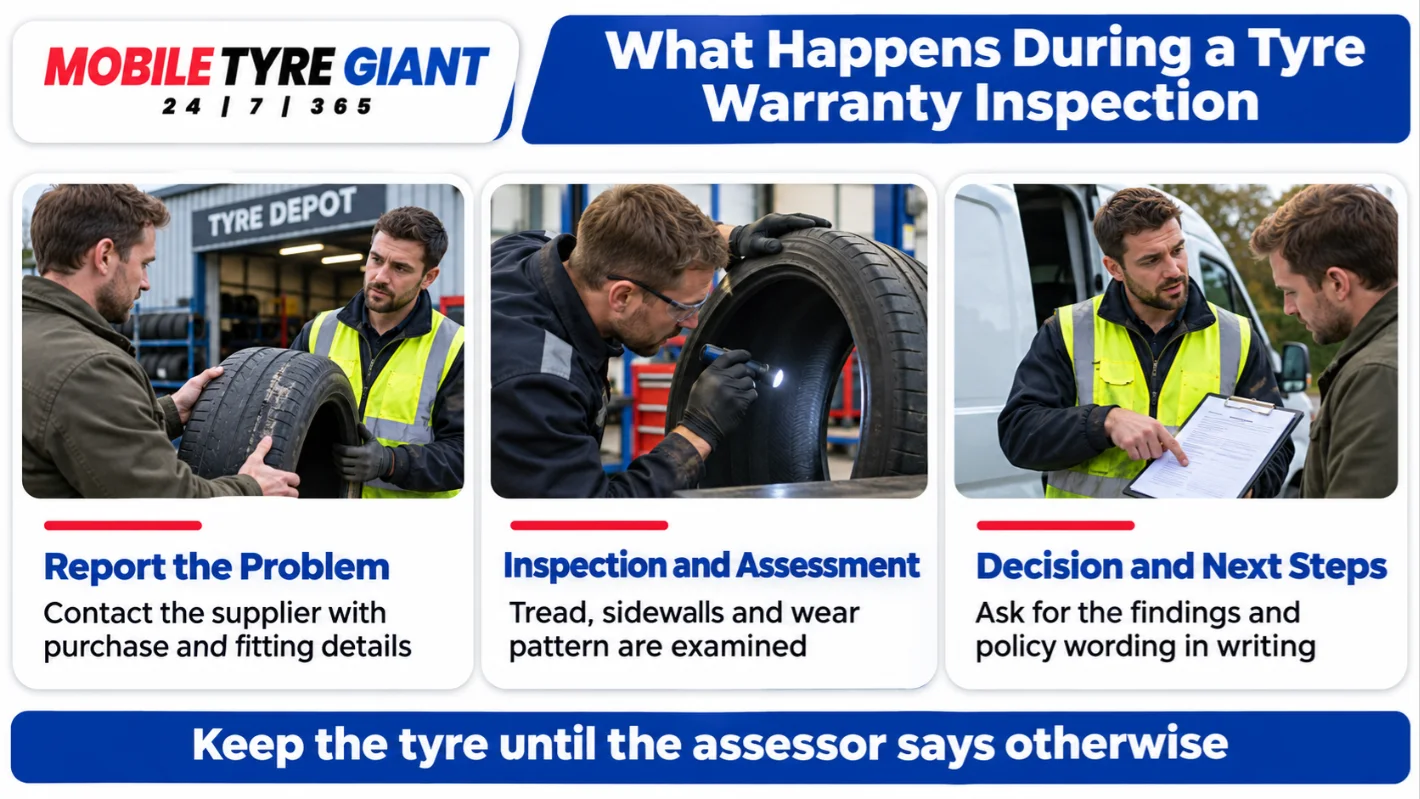
A warranty inspection aims to determine whether the tyre’s condition is consistent with a qualifying defect. The assessment may begin with an examination by the retailer or a qualified tyre technician. Depending on the complaint, the tyre may then be referred to the manufacturer or an appointed technical assessor. The inspection can consider visible damage, tread wear, construction, previous repairs and signs of incorrect use. The process varies between warranty providers and the type of problem reported.
Drivers should not assume that an initial visual inspection will always settle the claim. Some concerns require closer examination of the tyre’s internal construction or supporting information. A manufacturer may also request the actual tyre rather than relying entirely on photographs. If the vehicle needs a replacement tyre immediately, ask how the original tyre should be retained for assessment. Disposing of a disputed tyre before receiving instructions could make a technical investigation more difficult.
How Does an Assessor Decide Whether a Tyre Has a Manufacturing Defect?
An assessor examines the reported condition and looks for evidence explaining how the damage developed. This may involve evaluating the tread, sidewalls, bead areas and internal structure where appropriate. Unusual wear patterns, impact marks and signs of overheating can provide clues about the tyre’s service history. The assessment may also consider whether the correct tyre specification was used on the vehicle. These findings help distinguish a possible manufacturing problem from damage that occurred during use.
For example, imagine a tyre with a section of tread that appears unusually distorted. The assessor may look for evidence of a manufacturing irregularity alongside possible impact or inflation-related damage. The driver’s maintenance records and description of the problem may provide useful context. However, neither a recent purchase nor the absence of a remembered impact automatically confirms a manufacturing defect. A decision should be based on the available evidence and the applicable warranty terms.
What Happens if a Tyre Warranty Claim Is Accepted?
An accepted claim means the reported condition qualifies under the relevant warranty or protection scheme. The available remedy depends on the policy and the circumstances of the complaint. Some manufacturer warranties provide a replacement tyre or another specified benefit. Others use a proportionate arrangement based on remaining usable tread or other stated criteria, which may include tyre age. The driver should check how the particular policy determines the outcome rather than assuming every accepted claim provides an identical replacement.
Imagine a qualifying tyre that has already completed a substantial amount of normal service. Under a policy using a tread-based allowance, the remedy may reflect the amount of usable tread remaining. Another manufacturer or retailer could apply different conditions or provide a different remedy. If replacement is required, the new tyre must still meet the vehicle manufacturer’s approved specifications. Professional mobile tyre replacement may be a practical fitting option where available, but the warranty provider must confirm whether that arrangement forms part of the accepted claim.
Can Tyre Repairs or Mobile Fitting Affect Warranty Eligibility?
Tyre repairs and fitting arrangements can be relevant to a warranty investigation, but their effects depend on the policy and the circumstances. A properly fitted tyre does not become defective simply because installation took place outside a conventional garage. Likewise, an appropriate puncture repair does not necessarily explain an unrelated manufacturing concern. However, incorrect fitting or repairs that damage the tyre may affect eligibility. The important question is whether the work contributed to the reported problem.
Keeping a record of previous tyre work helps clarify this distinction. A fitting invoice, repair record or technician’s findings may show what was done and when. These details can help establish whether the complaint existed before or after particular work took place. If the tyre is being examined under warranty, tell the assessor about previous repairs rather than concealing them. Accurate information supports a more reliable investigation.
Does Having a Puncture Professionally Repaired Cancel the Warranty?
A previous puncture repair does not automatically cancel every possible warranty benefit. However, some manufacturers exclude repaired tyres or place restrictions on particular types of damage and repair work. Others may focus on whether a previous repair caused or contributed to the condition being claimed. A repair must also be technically suitable for the tyre and comply with the applicable safety requirements. The manufacturer’s actual warranty wording should be checked before assuming continued eligibility.
For example, imagine a tyre that received a professional tread puncture repair and later develops an unrelated complaint. The assessor may examine the repair and consider whether it has any connection with the new problem. The explanation of mobile tyre repair provides context about professional puncture assessment and repair suitability. Keep the repair record and explain the circumstances when submitting the claim. If the tyre has already suffered structural damage, it should not be used while a warranty decision is pending.
Can Mobile Tyre Fitting Affect a Manufacturer’s Warranty?
Mobile tyre fitting does not automatically make a manufacturer’s tyre warranty invalid. What matters is whether the tyre was correctly specified, handled, mounted and installed using appropriate procedures. The condition of the wheel and the quality of the fitting work may become relevant if the complaint concerns bead damage or air leakage. Manufacturers may also have particular requirements relating to approved fitting methods or documentation. These conditions should be checked before deciding whether the fitting arrangement affects cover.
Imagine having new tyres fitted at home and noticing an unusual vibration several days later. A fitting-related issue, wheel problem or tyre concern could explain the symptom. An inspection should establish the actual cause rather than assuming the mobile fitting method was responsible. The fitting record may help identify the installation date, tyre specification and any balancing work performed. A properly documented installation makes it easier to explain the tyre’s history if a warranty question arises.
How Can Maintenance Records Help if a Tyre Warranty Claim Is Refused?
Maintenance records can provide useful context when a manufacturer or retailer investigates a complaint. Regular tyre pressure checks, inspections and appropriate wheel maintenance help demonstrate how the tyres were cared for. This information can be particularly relevant when the assessor considers whether abnormal wear or underinflation contributed to the problem. However, maintaining a tyre correctly does not guarantee approval of a warranty claim. The reported fault must still qualify under the applicable policy.
A refused claim can be frustrating, especially when the driver believes the tyre has failed unexpectedly. Before challenging the outcome, request a clear explanation of the decision and the relevant policy wording. Review the inspection findings alongside any records you have retained. Sometimes the disagreement concerns the cause of the damage rather than whether the damage exists. Understanding that difference helps you decide what additional evidence may be useful.
Which Tyre Maintenance Records Are Most Useful for a Warranty Claim?
Records of tyre pressure checks, inspections and relevant maintenance can help explain how the tyres were used. Where applicable, tyre rotation and wheel alignment records may also provide useful information about tread wear. Wheel balancing reports can be relevant when a complaint concerns vibration or uneven tyre behaviour. These documents are especially valuable when the warranty has explicit maintenance conditions. However, not every manufacturer requires the same records or maintenance schedule.
For example, imagine a driver challenging a decision that attributes premature wear to poor inflation. Consistent pressure records may help show how the tyres were maintained during normal use. The tyre maintenance schedule explains practical checks that can support an ongoing record of tyre condition. Rotation should only be carried out where appropriate for the vehicle and tyre configuration, following the manufacturer’s instructions. Records cannot prove every aspect of a claim, but they can help establish a clearer service history.
What Should You Do if a Tyre Warranty Claim Is Rejected?
If a claim is refused, ask for the decision and its supporting reasons in writing. Request the relevant policy clause and any available inspection findings explaining why the tyre was considered ineligible. Compare these details with your purchase documents, maintenance history and photographs. If something appears incorrect or incomplete, explain the concern and provide any additional evidence. Keep copies of correspondence so the sequence of events remains clear.
For example, a claim may be declined because the assessor attributes damage to underinflation. If you have relevant maintenance records or an independent technical opinion, you can ask the provider to reconsider the findings. Some complaint procedures allow another review, while an independent tyre examination may help clarify a disputed technical conclusion. You can also raise the issue with the retailer if you believe the tyre did not meet the required standards when supplied. Statutory consumer rights remain separate from a voluntary warranty, and this is general information rather than legal advice.
What Should You Check Before Buying Tyres With a Warranty?
Understanding warranty conditions before buying tyres can prevent confusion if a problem develops later. A manufacturer’s warranty and a retailer’s additional protection scheme may have different eligibility requirements. Some policies apply only to selected tyre models or particular types of vehicle use. Others require registration or supporting documentation within a specified period. Checking these details before purchase helps you understand which protections are actually included.
It is also worth confirming when the warranty begins and how long the relevant cover lasts. Some arrangements calculate eligibility from the purchase date, while others may refer to fitting dates or manufacturing information. Conditions concerning remaining tread depth, vehicle ownership and maintenance can also affect a claim. Do not assume that every tyre from the same manufacturer receives identical protection. The applicable written terms should always be your reference point.
How Can You Compare Manufacturer and Retailer Warranty Terms?
Start by identifying exactly who provides the warranty and which tyre models qualify. Check whether the manufacturer covers production defects and whether the retailer offers any additional protection for specified accidental damage. Look at the required claim procedure, notification period and any restrictions on vehicle use. If registration is necessary, complete it within the stated timeframe and keep confirmation. These details help establish what you can reasonably expect if a problem develops.
Imagine comparing two suitable tyres that both advertise warranty protection. One may include only manufacturing defects, while the other comes with an additional retailer scheme covering certain road hazards. The difference may not be obvious from a short product description. Asking for the complete terms can reveal exclusions, claim deadlines and documentation requirements. Choose based on the actual protection offered rather than assuming a longer advertised warranty automatically provides broader cover.
Why Should You Check Tyre Age and Specifications Before Buying?
A tyre’s manufacturing date can be identified using the date code on its sidewall. For modern tyres, this is a four-digit code showing the week and year of manufacture. However, a tyre manufactured some time before sale is not automatically defective or unsuitable. Storage conditions, physical condition and manufacturer recommendations are also important considerations. Before buying, clarify whether the warranty period is calculated from manufacture, purchase or another date specified by the provider.
Correct vehicle compatibility is equally important when selecting replacement tyres. An unsuitable tyre specification can create safety concerns and complicate a later warranty assessment. Check the approved dimensions, load index, speed rating and any required construction markings. The explanation of how to find the correct tyre size for your car can help you verify these details before ordering. Always compare the complete specification with the vehicle manufacturer’s requirements rather than relying only on the tyre’s appearance.
Does Buying Tyres Online Instead of Fitted Affect Warranty Protection?
Buying tyres online does not automatically reduce the protection provided by an applicable manufacturer’s warranty. However, the purchasing arrangement may affect which business handles questions about supply, fitting and additional retailer benefits. Some online retailers include fitting through participating partners, while others supply the tyres separately. The manufacturer warranty may operate under one procedure and any fitting-related concern under another. Understanding these arrangements beforehand makes future communication easier.
For example, you might order tyres online and arrange installation through an independent mobile fitter. If a problem develops, the tyre supplier and fitting provider may need different information depending on the suspected cause. The comparison of buying tyres online versus mobile fitting explains how these purchasing and installation arrangements differ. Keep the tyre purchase confirmation and fitting record together, even when different businesses supplied the services. Ask the relevant providers about their responsibilities and written terms before installation.
How Can You Protect Your Tyre Warranty Cover Through Everyday Maintenance?
Good tyre maintenance supports road safety and can help demonstrate appropriate vehicle use if a warranty question arises. Manufacturers commonly expect tyres to be operated within their specified inflation, loading and fitment requirements. Routine checks can also identify developing problems before they cause additional damage. However, maintaining tyres correctly does not guarantee that every future claim will qualify. The problem must still meet the conditions of the applicable policy.
A practical approach is to make tyre care part of ordinary vehicle maintenance rather than something done only before an MOT. Inspect all four tyres regularly and pay attention to differences in their appearance or behaviour. Keep relevant records when professional work is completed, especially if it affects tyre wear or wheel condition. Address unusual symptoms promptly instead of allowing them to become more serious. These habits help preserve tyre performance and create a clearer maintenance history.
Which Tyre Pressure, Rotation and Tread Checks Matter Most?
Check tyre pressures at least monthly and before long journeys, preferably when the tyres are cold. Use the vehicle manufacturer’s recommended settings for the expected load. Inspect tread wear across the tyre rather than measuring only one convenient point. Differences between the inner, centre and outer tread areas may indicate inflation, alignment or suspension concerns. Correcting these problems promptly can help prevent avoidable deterioration.
Tyre rotation may help distribute normal wear more evenly when the vehicle and tyre configuration permit it. However, directional tyres, different front and rear sizes and specific drivetrain requirements can restrict the available rotation patterns. Follow the vehicle manufacturer’s guidance rather than moving tyres between positions at random. Wheel balancing should also be checked when appropriate, particularly after fitting or when vibration is investigated. Record relevant maintenance without assuming that every warranty provider requires the same schedule.
How Can You Prevent Avoidable Damage and Keep Useful Records?
Avoiding unnecessary tyre damage begins with sensible driving and appropriate vehicle loading. Reduce speed when approaching damaged road surfaces and avoid striking kerbs where possible. Do not exceed the vehicle’s permitted loading limits or use tyres outside their approved specifications. If a significant impact occurs, arrange an inspection even when the tyre initially appears normal. Hidden structural damage can develop without an immediate loss of pressure.
Imagine striking a pothole during a journey and noticing unusual steering vibration afterwards. Recording the date and arranging an inspection creates a clearer account of what happened. Keep relevant fitting invoices, alignment reports and professional inspection findings where available. These documents may help explain whether later tyre problems relate to an identified event or another cause. Good records support an accurate assessment, but they do not override warranty exclusions or prove that every tyre problem is a manufacturing defect.
What Should You Do When Tyre Damage Is Not Covered by Warranty?
Discovering that tyre damage is excluded from warranty cover does not change the need to resolve the problem safely. The next step is establishing whether the tyre remains suitable for use, qualifies for professional repair or needs replacement. Some minor tread punctures may be repairable, while structural damage can make continued use unsafe. The condition of the wheel may also need checking after a significant impact. A warranty decision and a roadworthiness assessment serve different purposes.
If the claim is declined, keep the written explanation and any technical findings provided. These details may help the technician understand the damage and identify the appropriate work. Check whether another valid protection arrangement applies, but do not delay urgent safety measures while doing so. An excluded puncture or impact injury still requires an appropriate technical assessment. Protecting the vehicle’s occupants must remain the priority.
How Do You Decide Whether an Excluded Tyre Should Be Repaired or Replaced?
A professional repair decision depends on the location and extent of damage, the tyre’s construction and its overall condition. A suitable minor puncture within the permitted tread repair area may qualify for permanent repair. However, serious sidewall damage, exposed reinforcing material and significant internal deterioration generally make replacement necessary. The technician should also consider whether the tyre has been driven while severely underinflated. Remaining tread depth alone cannot establish whether a damaged tyre is repairable.
For example, imagine a small nail entering the central tread area shortly after the tyre was fitted. The puncture may not qualify under a standard manufacturing warranty, but professional repair could still be possible. The information about tyre repair versus replacement explains why a proper inspection matters. A tyre with similar-looking external damage may require replacement if hidden structural deterioration is found. The safest option depends on the actual condition of the tyre, not the outcome of a warranty claim.
When Should You Stop Driving and Arrange Professional Assistance?
Stop driving when a tyre becomes severely underinflated, shows a structural bulge or develops damage that may compromise its strength. Sudden pressure loss, serious vibration or unexpected handling changes can also indicate an unsafe condition. Move to a suitable stopping location without abrupt steering or braking where possible. Do not attempt to continue normal driving simply because the tyre was recently purchased. A warranty period does not guarantee that a physically damaged tyre remains roadworthy.
Once the vehicle is safely parked, arrange professional inspection, repair or replacement as appropriate. The technician may also need to inspect the wheel if the damage followed a pothole or kerb impact. If the vehicle is stopped beside motorway traffic, follow the relevant breakdown safety procedures rather than attempting an exposed roadside repair. Ask for confirmation that the replacement or repaired tyre meets the vehicle manufacturer’s requirements before travelling again. Resolving the safety problem correctly is more important than obtaining an immediate warranty decision.
Final Words: Understand Your Tyre Warranty Before You Need It
A tyre warranty can provide useful protection, but its value depends on the cover actually offered. Manufacturing defects, accidental road damage, normal wear and additional retailer benefits are not necessarily treated in the same way. Checking the policy before purchase helps you understand its conditions, exclusions and claim requirements. Correct tyre selection, appropriate fitting and regular maintenance also support safer everyday use.
If a tyre develops a problem, prioritise safety and obtain a suitable assessment before making decisions about continued driving. Keep relevant purchase and maintenance records, and follow the applicable warranty process when submitting a claim. Remember that voluntary warranty arrangements and UK statutory consumer rights are separate protections. This information is general guidance rather than legal advice, and the specific policy terms should always be checked.
Damaged or Defective Tyre? Get Safe Help Fast
Share your location and tyre details, and we will confirm the safest way to repair or replace your tyre.
Frequently Asked Questions
Find quick answers to the most common questions our customers ask.
A standard manufacturer warranty usually covers qualifying defects in materials or workmanship. The exact conditions and available remedies depend on the manufacturer.
Ordinary punctures are generally excluded from manufacturing warranties. A separate road hazard protection plan may cover certain punctures if its conditions are met.
Standard manufacturing warranties normally exclude pothole impact damage. Some additional road hazard schemes may provide protection for qualifying incidents.
Sidewall damage caused by external impacts is commonly excluded. An unexplained structural problem may require technical assessment to determine its cause.
Damage resulting from incorrect inflation may be excluded under the policy. However, the actual terms and evidence determine how a particular claim is assessed.
Normal tread wear is generally excluded from manufacturing defect warranties. Selected tyres may have separate mileage or treadwear guarantees with specific conditions.
The starting date depends on the applicable warranty policy. Some use the purchase date, while others apply different eligibility rules.
Some providers may accept alternative purchase evidence, but this varies. Keep invoices, fitting records and order confirmations wherever possible.
Mobile fitting does not automatically invalidate a tyre warranty. Correct installation, approved specifications and the manufacturer's policy requirements remain important.
Request the reasons and relevant policy terms in writing. Review the evidence, ask for reconsideration where appropriate and consider any separate statutory rights.