

Yes, a professionally repaired tyre can be safe for motorway driving, provided the repair meets British safety standards and the tyre remains in good condition. A correctly completed permanent repair does not automatically reduce the tyre’s original speed or load capability. However, the location of the puncture, the repair method and any hidden damage all influence whether the tyre is suitable for continued use. A temporary roadside plug or sealant should never be treated as equivalent to a properly inspected permanent repair.
Imagine travelling along the M25 when you remember that one of your tyres was repaired a few weeks earlier. The car feels normal, but a worrying thought crosses your mind: could the repaired area fail at motorway speed? That concern is understandable because tyres face sustained loads, heat and changing road conditions during longer journeys. Fortunately, a suitable repair can restore a tyre to normal service. The important question is whether the repair was completed correctly and the tyre is still roadworthy.
Can You Drive on the Motorway After a Puncture Repair?
You can generally return to normal motorway driving after a suitable permanent puncture repair has been professionally completed. The tyre must be structurally sound, correctly inflated and suitable for the vehicle. There is no automatic UK motorway ban simply because a tyre has previously been repaired. However, this applies only when the repair satisfies the relevant standards and manufacturer requirements. An unknown repair history or unresolved pressure loss calls for further inspection before a long journey.
The difference becomes clearer when you compare a small tread puncture with serious sidewall damage. A nail hole in an approved repair area may be suitable for permanent repair after inspection. A tyre with damaged internal cords or deterioration from prolonged underinflation may need replacing instead. Motorway journeys leave little room for uncertainty about tyre condition. Our tyre safety guide explains the wider checks that help keep tyres roadworthy.
What Makes a Professionally Repaired Tyre Roadworthy?
A safe permanent repair begins with removing the tyre from its wheel and examining it internally and externally. The technician checks the original puncture, surrounding rubber, internal lining and structural condition. For an ordinary minor passenger-car puncture, the injury must fall within the permitted central tread repair area and satisfy the applicable damage limits. If the tyre has been driven while severely underinflated, hidden damage may make it unsuitable for repair. Simply filling the hole would not correct that damage.
In the UK, professional tyre repairs should follow British Standard BS AU 159g:2013 and the tyre manufacturer’s instructions. Suitable materials are applied from inside the tyre, addressing the penetration and maintaining an effective air seal. Depending on the damage and approved method, this may involve a combination plug-and-patch repair or another permitted internal repair system. The finished tyre must also meet normal requirements for tread, pressure and structural condition. A proper assessment matters more than how quickly the puncture was fixed.
Does a Puncture Repair Affect Your Tyre’s Speed Rating?
A correctly repaired tyre that meets BS AU 159 requirements can retain its original speed and load capabilities. This means an approved permanent repair does not automatically require the driver to travel below normal motorway speeds. However, this guidance should not be extended to temporary repair kits, unknown repairs or tyres with unresolved damage. You must still follow the vehicle’s legal speed limits, approved tyre specifications and any applicable manufacturer restrictions. The repair needs to be suitable for that particular tyre.
Consider two identical tyres that have suffered similar punctures. One receives a professional internal inspection and an approved permanent repair, while the other receives an emergency external plug without internal examination. Although both may hold air, they have not undergone equivalent repair procedures. The professionally repaired tyre may be suitable for its original operating capabilities. The externally plugged tyre should receive proper assessment before being relied upon for regular motorway journeys.
Why Does Motorway Driving Put Greater Demands on a Repaired Tyre?
Motorway driving involves sustained speeds and often longer periods without stopping. During a journey, tyres flex continuously as they support the vehicle, absorb road imperfections and respond to steering movements. This generates heat, particularly when inflation pressure is incorrect or the vehicle is heavily loaded. A tyre with existing structural damage may be less capable of coping with these demands. That is why its condition matters more than the simple fact that a puncture was repaired.
Think about carrying a heavy shopping bag with a previously torn handle. If the handle has been properly restored, it may perform normally again. If the damage was merely concealed, the weakness remains even when everything looks fine. Tyres are more complicated, but the principle is similar. A professional repair addresses an eligible injury, while a temporary seal may only stop the immediate air leak. Motorway safety depends on the strength and suitability of the complete tyre.
How Do Speed, Heat and Low Pressure Affect a Repaired Tyre?
Low pressure allows a tyre to flex more than intended, creating additional heat and stress within its structure. During sustained motorway driving, this can become particularly concerning. A tyre may appear properly inflated after a previous puncture but still contain damage caused when it was driven at very low pressure. Reintroducing air does not reverse weakened internal components. A professional must assess whether the tyre was damaged before deciding that a permanent repair is appropriate.
Before a motorway journey, check inflation pressures against the vehicle manufacturer’s recommendations, accounting for passengers and luggage. Use a reliable gauge when the tyres are cold rather than guessing from their appearance. If you are unsure about the correct method, see this guide on how to check tyre pressure. A tyre that repeatedly loses pressure after repair requires further investigation. Never assume that topping it up again makes a long journey safe.
Does the Type of Puncture Repair Make a Difference?
Yes, the repair method makes a significant difference when deciding whether a tyre is suitable for motorway use. A permanent repair involves internal inspection and approved repair materials, while a temporary sealant or externally inserted string plug does not provide the same assessment. Emergency repair kits are intended for limited mobility under their own instructions. They may help a driver reach suitable assistance, but they are not a substitute for a recognised permanent repair.
Imagine repairing a puncture with a sealant kit after discovering a screw in the tread. The tyre holds air, and the car feels normal during a short journey. That does not prove the tyre is suitable for another 150 miles on the motorway. The penetrating object may have damaged internal components, or the tyre may have been weakened while deflated. Before returning to ordinary motorway use, arrange a professional inspection and an appropriate permanent repair or replacement. Safety should never depend on guesswork.
What Should You Check Before Taking a Repaired Tyre on a Motorway?
Before heading onto a motorway, spend a few minutes checking the condition of your repaired tyre. A permanent repair may be suitable for normal driving, but the entire tyre must still be roadworthy. Look for visible damage, unusual wear or signs of continuing pressure loss. Check the other tyres too, especially when planning a longer journey with passengers or luggage. A repair that was satisfactory several months ago does not prevent another problem developing later.
Think about preparing for a long drive from London to Manchester. You would probably check the fuel level and make sure your route is clear. Your tyres deserve similar attention because they support the vehicle throughout the journey. A simple inspection can reveal a developing problem before you reach a busy motorway. If something looks suspicious or the repair history is uncertain, professional assessment is preferable to taking an unnecessary risk.
Check Tread Depth, Tyre Pressure and Vehicle Load
Tyre tread provides the grip needed for braking, steering and dispersing water from the road surface. In the UK, most passenger-car tyres must have at least 1.6mm of tread across the central three-quarters of their width and around the entire circumference. Use a tread depth gauge to check several locations rather than measuring just one groove. A repaired tyre with insufficient tread is not suitable for normal road use. Uneven wear also deserves attention because it may indicate another vehicle or tyre problem.
Inflation pressure is equally important during sustained motorway driving. Check pressures when the tyres are cold and use the figures recommended by your vehicle manufacturer. Heavier passenger or luggage loads may require different pressures, so consult the vehicle’s pressure label or handbook. Incorrect inflation can affect handling, braking and heat generation, regardless of whether the tyre has been repaired. Remember that a tyre’s maximum sidewall pressure is not the recommended everyday inflation setting.
Examine the Repair Area and Tyre Sidewalls
If you know where the original puncture was located, examine the visible surrounding tread for new damage or embedded objects. Do not attempt to dig into the repair or remove anything lodged in the tyre. A permanent repair is generally carried out from inside, meaning its quality cannot be established through an external glance. Look for signs of continuing air loss, but remember that appearance alone is not a complete assessment. If you suspect the repair has deteriorated, arrange an inspection before travelling.
The sidewalls also deserve careful attention because they flex continually while driving. Check for cuts, cracks, unusual swelling and exposed reinforcing material. A genuine outward bulge can indicate structural damage even when the tyre is holding pressure. Our guide to tyre sidewall damage explains the differences between surface marks and more serious warning signs. If the tyre has a bulge or suspected structural damage, do not continue driving until its condition has been professionally assessed.
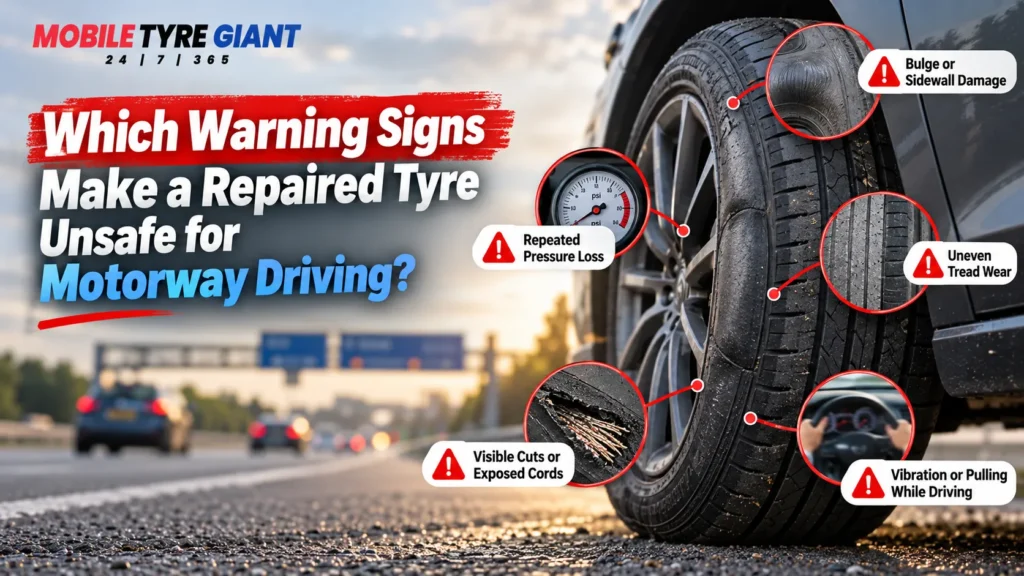
Which Warning Signs Make a Repaired Tyre Unsafe for Motorway Driving?
A repaired tyre should not be considered safe simply because it still holds air. Certain warning signs suggest that the tyre, wheel or previous repair requires closer attention. Repeated pressure loss, abnormal vibration, visible structural damage and unusual handling are all reasons to investigate before motorway travel. Some problems develop gradually, while others may appear after a pothole impact. Recognising these changes early can help prevent a dangerous situation at higher speeds.
Imagine noticing a faint thumping sound shortly after leaving home. You might be tempted to turn up the radio and continue because the car still moves normally. However, unfamiliar noises or vibrations can indicate problems requiring assessment. The sensible response is to stop somewhere safe and investigate rather than wait for the symptoms to become severe. If you cannot establish that the vehicle is safe, arrange professional assistance instead of proceeding onto the motorway.
Is a Slow Leak After a Repair a Reason to Delay the Journey?
Yes, repeated pressure loss after a puncture repair should be investigated before a motorway journey. A tyre that needs topping up every few days may have an unresolved leak. The original repair could be involved, but a faulty valve, damaged wheel rim or separate puncture may also be responsible. You cannot reliably identify the cause from pressure readings alone. A professional can investigate the air loss and determine whether further repair or replacement is necessary.
Consider a repaired tyre that measures correctly in the morning but loses noticeable pressure overnight. Adding air before every journey might temporarily hide the problem without resolving it. During motorway travel, underinflation can increase tyre flexing and heat, placing additional stress on its structure. That does not mean every slow leak will cause sudden failure, but it is a risk that should not be ignored. Postpone unnecessary motorway travel until the source of the pressure loss has been identified and addressed.
What if You Notice Vibration, Pulling or a Tyre Bulge?
Steering vibration or a vehicle pulling to one side does not automatically mean the puncture repair has failed. Wheel imbalance, alignment problems, tyre damage and other mechanical faults can produce similar symptoms. However, a repaired tyre with new vibration should not be dismissed without investigation. Pay attention to when the problem occurs and whether it becomes more noticeable as speed increases. Avoid testing the symptoms by deliberately accelerating to motorway speeds.
A visible tyre bulge is more concerning because it may indicate damage to internal reinforcing components. This can occur after a significant pothole or kerb impact, even without an obvious puncture. A tyre with structural deterioration may need replacing rather than further repair. Our article on when to replace tyres explains the signs that warrant attention. If you discover a genuine bulge, exposed cords or serious sidewall damage, avoid driving the vehicle until the issue is resolved.
Should You Drive, Arrange an Inspection or Replace the Tyre?
The decision depends on the repair’s history, the tyre’s current condition and any symptoms you have noticed. A properly completed permanent repair on an otherwise roadworthy tyre may allow normal motorway use. However, an unknown repair method, recurring air loss or suspected structural damage changes the situation. A tyre inspection can establish whether the existing repair remains suitable or replacement is required. There is no benefit in taking a motorway journey merely to find out whether a questionable tyre will cope.
Before setting off, consider whether you know how the tyre was repaired and whether it has behaved normally afterwards. Check pressure, tread, visible damage and the vehicle’s handling history. If everything meets the applicable requirements, a previous puncture repair alone is not a reason to avoid the motorway. If you remain uncertain, professional advice provides a safer basis for your decision. The following comparison summarises the appropriate next steps for common situations.
Tyre condition | Recommended action |
Properly repaired, correct pressure and no other defects | Normal motorway driving may be appropriate |
Unknown repair method or history | Arrange professional inspection before a long journey |
Repeated pressure loss after repair | Investigate and resolve the leak before travelling |
Temporary external plug or emergency sealant | Follow temporary-use restrictions and obtain professional assessment |
Visible bulge, exposed cords or serious structural damage | Do not drive; arrange suitable assistance |
Tread below the legal minimum | Do not drive; replace the tyre before road use |
Does the Location of a Puncture Affect Motorway Safety?
The location of the original puncture plays an important role in determining whether a repaired tyre is safe for motorway driving. Not every part of a tyre can be repaired to the same standard because different areas experience different forces. The central tread is designed to maintain contact with the road, while the shoulders and sidewalls flex as the tyre rotates. A puncture in one area may qualify for permanent repair, while similar damage elsewhere could require replacement. This distinction becomes particularly important during sustained motorway journeys.
A professional tyre technician must establish exactly where the damage occurred before deciding whether repair is appropriate. The original puncture should fall within the permitted repair area and meet the applicable size and condition requirements. Even a small nail hole can be unsuitable if it extends into a vulnerable part of the tyre. The repair location also needs to be considered alongside tread wear and internal condition. Never assume that a tyre is safe simply because the puncture has stopped leaking.
Why Are Central Tread Punctures More Suitable for Repair?
A small puncture within the permitted central tread area is generally more suitable for permanent repair than damage near the tyre’s edges. This area has a reinforced structure and experiences different stresses from the flexible sidewall. For ordinary passenger-car tyres, minor puncture repairs are commonly limited to eligible penetration damage of up to 6mm in diameter. However, the exact repairable area and applicable limits must be assessed under British Standard BS AU 159. A hole’s appearance alone cannot confirm that it qualifies.
Imagine discovering a small screw embedded near the middle of the tread. If the tyre has sufficient tread remaining and no internal damage, a professional may be able to repair it using an approved method. The tyre must first be removed from the wheel and inspected thoroughly. An appropriate permanent repair can then restore its intended operating capabilities when all requirements are satisfied. This is why a properly assessed central tread puncture does not automatically mean the tyre must be replaced before motorway driving.
Why Are Shoulder and Sidewall Punctures More Dangerous?
The tyre’s shoulder connects the tread to the sidewall, while the sidewall repeatedly flexes as the wheel rotates. These areas experience substantial movement and support the vehicle under changing driving conditions. Damage affecting their structural integrity can compromise the tyre’s ability to handle normal road forces. For ordinary minor passenger-car puncture repairs, shoulder and sidewall penetration damage falls outside the permitted repair area. A temporary seal does not make such damage suitable for permanent repair.
During motorway driving, an already weakened sidewall may experience additional stress from sustained speed, loading and heat. Even if the tyre holds air, its reinforcing components may have suffered damage that cannot be seen externally. A visible bulge, exposed cord or deep structural cut is particularly concerning. Driving on a tyre with these defects is unsafe and can lead to sudden failure. If an inspection identifies unacceptable shoulder or sidewall damage, replacement is generally the appropriate solution.
Can Hidden Internal Damage Make a Repaired Tyre Unsafe?
Yes, internal damage can make a repaired tyre unsuitable for motorway driving, even when its outside surface appears normal. Tyres contain several structural components that work together to support the vehicle and maintain their shape. Severe underinflation, excessive heat or an impact can damage these components without producing an obvious external warning. Repairing the original puncture does not automatically restore a tyre whose internal structure has deteriorated. This is why internal inspection is essential before a permanent repair.
Consider a driver who discovers a puncture only after travelling several miles with very low tyre pressure. Once reinflated, the tyre might regain its normal appearance and seem perfectly usable. However, prolonged flexing could already have damaged the inner liner or reinforcing materials. A technician may discover deterioration that was completely hidden while the tyre remained fitted to the wheel. In such circumstances, the safest decision may be replacement rather than attempting to preserve the original tyre.
What Happens When a Tyre Has Been Driven While Flat?
Driving on a significantly deflated tyre increases the amount its sidewalls bend with every rotation. This excessive movement can generate heat and place stress on the internal structure. In severe cases, the inner liner and reinforcing materials can deteriorate, potentially leaving rubber debris inside the tyre. The damage may develop before the driver notices a major difference in handling. Reinflating the tyre cannot reverse structural deterioration that has already occurred.
If you have driven on a flat tyre, tell the technician how far you travelled and whether you noticed unusual noises or handling. Do not guess if you cannot remember when the pressure loss began. That uncertainty is relevant when assessing whether the tyre remains suitable for permanent repair. Run-flat tyres require particular attention because their reinforced construction may conceal pressure loss, and repair policies vary between manufacturers. Never assume that a tyre designed for limited emergency mobility is automatically repairable afterwards.
How Long Does a Permanent Puncture Repair Last?
A properly completed permanent puncture repair does not have a universal expiry date simply because the tyre was previously damaged. When carried out according to the applicable British Standard and manufacturer requirements, the repair is intended to remain serviceable throughout the tyre’s remaining usable life. However, this depends on the tyre continuing to meet normal safety requirements. The repair cannot prevent future punctures, ageing, unusual wear or structural damage caused by other factors.
A tyre’s overall condition matters more than the number of months since the repair was completed. For example, a professionally repaired tyre with healthy tread and correct inflation may remain serviceable for a considerable period. Another tyre might need replacing sooner because its tread has worn down or its rubber has deteriorated. Our guide on how long tyres last explains the different factors affecting tyre lifespan. Continue regular inspections rather than assuming that a successful repair removes the need for maintenance.
Can the Same Tyre Be Repaired More Than Once?
A second puncture does not always mean automatic replacement, but multiple repairs require careful assessment. The decision depends on the tyre’s speed rating, construction, previous repair locations and the damage limits in the applicable standard. Existing repairs must be examined before additional work is considered. Repairs positioned too close together or overlapping one another may make the tyre unsuitable for further repair. Some tyre categories also have restrictions on the number of permitted repairs.
Imagine discovering another nail in a tyre that was professionally repaired last year. If the new damage is sufficiently separate and the tyre remains structurally sound, another repair might be considered where the standard and manufacturer permit it. However, this should never be treated as a guaranteed option. The technician needs to inspect the complete tyre, including its earlier repair, before deciding. If the damage exceeds permitted limits, replacement is safer than attempting another repair.
When Is Tyre Replacement Safer Than Another Puncture Repair?
Replacement becomes the appropriate decision when a tyre cannot meet the requirements for a safe permanent repair. Common reasons include unacceptable shoulder or sidewall damage, exposed cords, structural bulges and serious deterioration from underinflation. A puncture exceeding the permitted repair limits can also make replacement necessary. The same applies when existing damage or previous repairs prevent further work under the relevant standard. Continuing to use a questionable tyre is particularly unwise before a long motorway journey.
If replacement is necessary, the new tyre must suit the vehicle’s approved specifications. Check its size, load index and speed rating rather than choosing solely by price. Our correct tyre size guide explains how these markings relate to vehicle compatibility. The condition and specification of the remaining tyres should also be considered, particularly on vehicles with specific drivetrain requirements. A suitable replacement offers a safer solution when the original tyre can no longer be repaired reliably.
What Should You Do if a Repaired Tyre Develops a Problem on the Motorway?
A repaired tyre that suddenly loses pressure or causes unusual handling needs immediate attention. You might notice steering vibration, a rhythmic thumping sound or a warning light appearing on the dashboard. Avoid sudden braking or sharp steering movements. Reduce speed smoothly and find somewhere suitable to stop. Continuing at motorway speeds could worsen existing tyre damage and increase the risk of losing control.
Even a professionally repaired tyre can develop an unrelated puncture or suffer damage from road debris. Do not automatically assume the original repair has failed. The important thing is to respond safely rather than attempting to diagnose the problem while driving. If the tyre is seriously deflated or the vehicle becomes unstable, stop as soon as it is safe and arrange appropriate assistance.
Where Should You Stop and How Should You Get Help?
If your vehicle remains controllable, try to reach a motorway service area or leave at the next suitable exit. These locations are generally safer than stopping beside fast-moving traffic. If reaching an exit is impossible, follow the Highway Code’s motorway breakdown procedures. Use an emergency area or hard shoulder where available, and activate your hazard warning lights. Never attempt to inspect or repair a tyre beside a live motorway lane.
If you can leave the vehicle safely, exit on the side away from traffic and move behind a safety barrier where possible. If you cannot reach a safe stopping place or leave the vehicle safely, remain inside with your seat belt fastened and call 999. Do not place a warning triangle on the motorway. Your safety and that of your passengers must come before assessing the tyre.
Can You Continue Driving if the Repaired Tyre Still Looks Normal?
A tyre can appear properly inflated while experiencing gradual pressure loss or internal damage. This is particularly concerning if a warning light appears alongside vibration or unusual handling. Looking at the tyre is not enough to establish that continued motorway driving is safe. Check its pressure only after reaching a suitable location where inspection can be performed safely.
If the tyre repeatedly loses air or shows signs of structural damage, do not continue your journey until the issue is assessed. A previously repaired tyre can develop new problems unrelated to its original puncture. Adding air may temporarily restore pressure without addressing the cause. Professional inspection provides a more reliable basis for deciding whether further driving, repair or replacement is appropriate.
When Should You Ask a Tyre Specialist to Inspect or Replace It?
Professional assessment is worthwhile whenever you are uncertain about a tyre’s repair history or current condition. A specialist can examine the tyre for pressure loss, structural damage and problems associated with the previous repair. Some issues require removing the tyre from its wheel for internal inspection. If the damage falls outside the permitted repair limits, replacement may be necessary.
You should not feel pressured to replace a tyre simply because it has been repaired before. A correctly completed permanent repair can remain suitable for normal use. However, serious sidewall damage, exposed cords or significant underinflation damage can make continued use unsafe. When replacement is required, mobile tyre replacement may provide a convenient solution at a suitable home, workplace or parking location.
What Should You Tell the Fitter Before Arranging Help?
When contacting a tyre specialist, explain that the tyre has previously undergone a puncture repair. Mention when the repair took place and whether you know which method was used. Describe any pressure loss, vibration, visible damage or warning messages. These details help the technician understand the situation before assessing the vehicle.
Have your registration number, tyre size and exact location available if possible. If the vehicle is stranded, explain whether it is in a safe location for work or requires recovery assistance. This guide explains what information a mobile tyre fitter needs before attending. Providing accurate details helps avoid confusion about the vehicle, tyre specifications and assistance required.
How Can You Maintain a Repaired Tyre Between Motorway Journeys?
A successful permanent repair does not remove the need for routine tyre maintenance. Your tyre remains exposed to potholes, road debris, changing temperatures and normal wear. Regular checks can reveal developing problems before they become more serious. Pay attention to pressure changes, tread condition and the way your vehicle feels while driving.
Keeping your tyres properly inflated is especially important before longer journeys. Incorrect pressure can affect braking, steering and heat generation during sustained motorway travel. Do not assume that a tyre is healthy simply because its previous puncture was repaired successfully. Every tyre on the vehicle should receive the same attention, regardless of its repair history.
What Routine Checks Matter Most?
Check your tyre pressures at least monthly and before long journeys, preferably when the tyres are cold. Follow the vehicle manufacturer’s pressure recommendations, including adjustments for heavier loads where specified. Examine the tread for uneven wear and ensure it remains above the legal minimum. Look for cuts, bulges or other visible damage around the sidewalls.
Pay particular attention to a repaired tyre that repeatedly needs inflating. Air loss might result from another puncture, a faulty valve or a wheel-sealing issue. If you notice recurring pressure loss or unfamiliar vibration, arrange an inspection rather than waiting for the next service. Regular maintenance helps you make better decisions about tyre safety before motorway travel.
Final Words: Is a Repaired Tyre Safe for Motorway Driving?
Yes, a professionally repaired tyre can be safe for motorway driving when the repair meets British Standard BS AU 159 and the tyre remains structurally sound. A suitable permanent repair can retain the tyre’s original speed and load capabilities. However, temporary plugs, emergency sealants and repairs to unsuitable damage should not be treated as equivalent. The tyre’s overall condition matters just as much as the repair itself.
Before travelling, check pressure, tread depth and visible condition. If the tyre continues losing air, develops unusual vibration or shows structural damage, seek professional assistance. A previous puncture does not automatically make a tyre unsafe, but an unsuitable repair can create unnecessary risks. Make your driving decision based on proper inspection and the tyre’s actual condition rather than guesswork.
Repaired Tyre Unsafe for Motorway Driving?
Not sure if your repaired tyre is safe for a motorway journey? If an inspection confirms replacement is needed, arrange convenient mobile tyre fitting at your home or workplace.
Frequently Asked Questions
Find quick answers to the most common questions our customers ask.
Yes, a correctly repaired tyre can retain its original speed capability. The tyre must remain roadworthy, properly inflated and suitable for the vehicle.
A permanent repair completed according to BS AU 159 can preserve the original speed rating. Temporary plugs and sealants do not provide the same assurance.
Yes, a properly repaired and roadworthy tyre can generally be used for normal long-distance journeys. There is no automatic mileage restriction solely because of a suitable permanent repair.
Any tyre can fail because of structural damage, incorrect pressure or other serious defects. A properly completed permanent repair does not automatically make a tyre unsafe.
An externally inserted emergency plug is not recognised as a permanent repair under BS AU 159. Arrange professional inspection rather than relying on it for normal motorway driving.
Not always. A small puncture within the permitted repair area may qualify for permanent repair. Replacement is necessary when damage or manufacturer restrictions make repair unsuitable.
A suitable permanent repair is intended to remain serviceable during the tyre's remaining usable life. Its continued safety depends on tyre condition, pressure and normal maintenance.
Reduce speed smoothly and stop somewhere safe as soon as possible. Avoid driving on a seriously deflated tyre and arrange professional assistance before continuing.