
Choosing the right tyres can feel confusing when dozens of options appear for the same wheel size. A small city car, family SUV and delivery van may use tyres that look similar but perform very different jobs. Vehicle weight, driving conditions, load capacity and handling requirements all influence the selection. Choosing tyres based on price or appearance alone can lead to poor performance or unsuitable fitment. Understanding how different vehicles use their tyres makes the decision much easier.
Think of tyres as footwear designed for different activities. Running shoes, walking boots and work boots may share a size, but they are built for different demands. Tyres work in a similar way because each vehicle places particular forces on the rubber. The right choice should provide suitable grip, load support, comfort and durability for the intended use. This selection guide explains how to identify suitable tyres for different vehicle types without getting lost in technical terminology.
Why Does Vehicle Type Matter When Choosing Tyres?
Vehicle type plays an important role in determining which tyres are suitable. A lightweight hatchback typically places different demands on its tyres from a heavily loaded van or large electric SUV. Weight, suspension design, acceleration and braking performance all influence tyre requirements. The type of roads you regularly drive on also affects which characteristics matter most. A tyre designed for comfortable motorway journeys may not be the best choice for demanding off-road conditions.
Imagine comparing a small commuter car with a seven-seat family vehicle. The commuter may prioritise wet grip, comfortable handling and economical running costs. The larger vehicle could regularly carry passengers, luggage and additional equipment. Its tyres must support those loads while maintaining suitable handling and stability. Choosing tyres by vehicle type helps narrow the available options, but the manufacturer’s approved specifications must always come first.
Why Should You Check the Manufacturer’s Tyre Specifications First?
Before comparing tyre brands or designs, confirm the specifications approved for your vehicle. These normally include tyre width, aspect ratio, wheel diameter, load index and speed rating. You can usually find this information in the owner’s handbook, on the tyre information label or through manufacturer fitment information. The existing tyre sidewall provides another useful starting point. However, previously fitted tyres are not always correct, especially if a former owner changed the wheels.
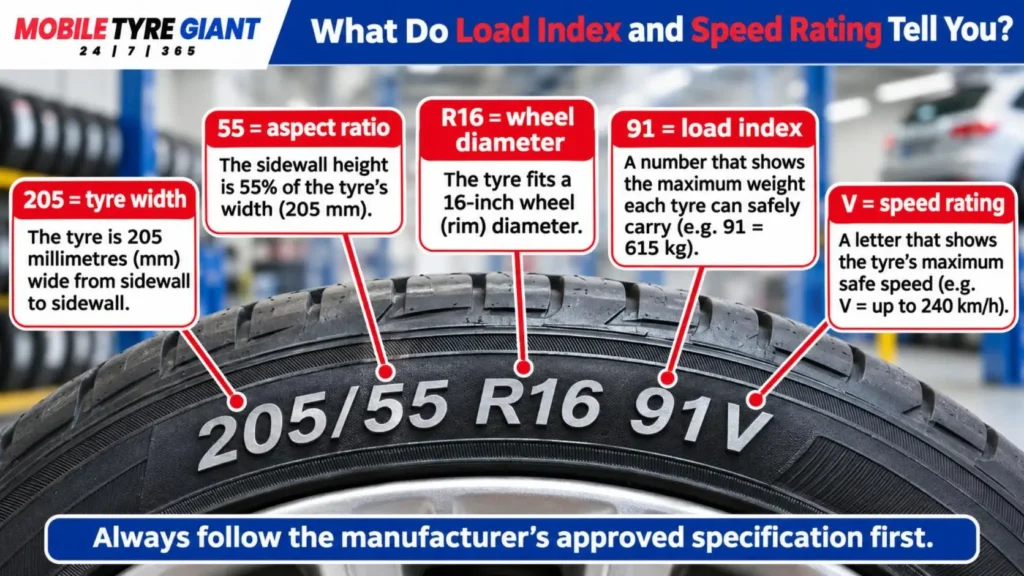
A tyre marked 205/55 R16 91V contains more information than its wheel diameter alone. The numbers describe its dimensions, while the final load and speed ratings identify important operating capabilities. Two tyres with matching dimensions can still have different load capacities or constructions. The explanation of how to find the correct tyre size and specification covers these markings in greater detail. Always cross-check the complete specification before ordering replacements.
What Do Load Index and Speed Rating Tell You?
The load index indicates how much weight a tyre is rated to support under specified operating conditions. This matters because tyres must carry the vehicle’s weight, passengers, luggage and other permitted loads. A small hatchback and a large family vehicle may need different load ratings even when their tyre dimensions appear similar. Fitting tyres with insufficient load capacity can compromise safety and performance. The correct rating must meet the vehicle’s approved requirements.
The speed rating indicates the maximum speed capability of a tyre under its specified operating conditions. It appears as a letter near the load index on the sidewall. However, choosing a higher speed rating does not automatically make a tyre better for everyday driving. Tyre construction, comfort and handling characteristics can vary between suitable options. Check the manufacturer’s recommended service specification rather than selecting a rating based only on your usual driving speed.
Which Tyres Are Suitable for Everyday Passenger Cars?
Everyday passenger cars include city cars, hatchbacks, saloons, estates and many family vehicles. Although these vehicles share similar road environments, their tyre requirements can differ considerably. Smaller cars may benefit from tyres that provide predictable handling and efficient everyday performance. Larger passenger cars may place greater emphasis on load support, motorway stability and ride comfort. The best option depends on the vehicle’s approved specification and how it is regularly driven.
For most UK motorists, wet grip deserves particular attention because rainy conditions are common throughout the year. Road noise and rolling resistance can also influence driving comfort and efficiency. However, tyre labels should be considered alongside independent performance information and the manufacturer’s recommendations. A suitable tyre should balance the characteristics that matter to your vehicle and driving habits. More detailed advice on choosing the right tyres for your car can help when comparing compatible passenger-car options.
What Should Small City Cars and Hatchbacks Prioritise?
Small city cars and hatchbacks are commonly used for commuting, shopping and short journeys through busy streets. Their tyres should provide predictable steering, dependable wet-road grip and comfortable everyday performance. Frequent braking, tight turns and uneven road surfaces can place additional demands on the tread. Suitable rolling resistance may also help improve efficiency, although actual results depend on the vehicle and driving conditions. Choosing the correct size and ratings remains the first priority.
Imagine driving a compact hatchback through London on a rainy morning. You encounter wet junctions, speed humps and repeated traffic stops before reaching work. In these conditions, dependable braking and consistent handling matter more than an aggressive-looking tread pattern. A tyre with strong wet-grip performance may be particularly useful when comparing otherwise suitable options. There is no need to buy a specialised performance tyre simply because it looks more impressive.
What Matters Most for Saloons and Family Estate Cars?
Saloons and estate cars frequently cover longer distances and may carry additional passengers or luggage. Their owners often prioritise motorway stability, comfortable handling and low cabin noise. Estate cars can also experience changing loads when transporting luggage, pushchairs or other family equipment. The tyres must have suitable load capacity for the vehicle’s approved operating conditions. It is therefore important to check the full specification rather than choosing tyres based on the car’s appearance.
Consider a family estate carrying four passengers and several suitcases during a holiday journey. Its tyres must support the additional weight while providing reliable grip during braking and cornering. Touring tyres may be worth considering when comfort, wet-road performance and mileage are important. However, the ideal model still depends on the vehicle’s approved fitment and intended use. Correct inflation for the carrying load is equally important because unsuitable pressure can affect handling and tyre wear.
How Do MPVs and Seven-Seat Family Cars Change the Choice?
Multi-purpose vehicles, commonly called MPVs, are designed around passenger space and practicality. Some models regularly transport six or seven occupants alongside luggage and everyday equipment. This creates different loading demands from those experienced by a small commuter car. Suitable tyre load ratings are therefore particularly important when selecting replacements. Depending on the model, the manufacturer may specify reinforced or Extra Load tyres to support the intended vehicle requirements.
Imagine preparing a seven-seat MPV for a weekend journey with the entire family. Every seat is occupied, and the luggage compartment contains bags, equipment and supplies. The tyres must support the permitted load while maintaining appropriate steering, braking and stability. Check the manufacturer’s tyre specification and recommended pressures for fully loaded operation before departure. Selecting suitable tyres and maintaining them correctly helps keep the vehicle prepared for both daily journeys and longer family trips.
Which Tyres Are Best for SUVs and Crossovers?
SUVs and crossovers often need tyres capable of handling greater weight and different driving demands than smaller passenger cars. However, not every SUV requires heavy-duty or off-road tyres. Many modern crossovers spend their entire lives travelling on ordinary roads, making comfort, wet grip and stability important priorities. Larger SUVs may also need higher load ratings to support additional passengers and luggage. The correct choice depends on the vehicle’s approved specification and how it is actually used.
Imagine a family crossover travelling between school runs, shopping trips and weekend motorway journeys. Its tyres need to provide dependable braking, predictable steering and comfortable everyday performance. Aggressive off-road tread patterns would offer little benefit if the vehicle rarely leaves tarmac. Instead, suitable road-focused tyres may provide a better balance of comfort, grip and efficiency. Understanding your SUV’s normal driving conditions helps narrow the options without paying for features you rarely need.
Are SUV Tyres Different From Normal Car Tyres?
SUV tyres can differ from ordinary passenger car tyres in construction, load capacity and handling characteristics. Many SUVs are heavier and have a higher centre of gravity than smaller cars. Their tyres must manage these demands while maintaining appropriate grip during braking and cornering. Some models require reinforced or Extra Load tyres, while others use conventional tyre constructions with suitable load ratings. The correct specification is more important than whether a tyre is marketed as an SUV product.
For example, a compact crossover may use tyres similar to those fitted to a family hatchback. A large seven-seat SUV could require a substantially higher load index or a different construction. Two tyres with identical dimensions may therefore have different load capabilities. This is why checking the complete specification matters before purchasing replacements. The detailed explanation of SUV tyre sizes, load ratings and road use provides further information about these differences.
Should SUVs Use Summer, Winter or All-Season Tyres?
The right seasonal tyre depends on the weather conditions your SUV regularly encounters. Summer tyres are commonly used in the UK and provide road-focused performance in suitable conditions. Winter tyres are designed to improve traction and braking in colder weather, particularly on snow and ice. All-season tyres aim to balance performance across a broader range of conditions. However, their capabilities vary between models, so the label alone should not determine your choice.
Consider an SUV used for daily commuting in southern England. A suitable all-season tyre may provide useful versatility without requiring seasonal changes. Someone regularly travelling through snowy rural areas might benefit more from dedicated winter tyres during colder months. When comparing options, look for the three-peak mountain snowflake symbol if tested snow performance matters. Always confirm that the tyre’s size, load rating and speed rating remain suitable for the vehicle.
What Tyres Should 4×4 Vehicles Use?
Choosing tyres for a 4×4 requires understanding the difference between four-wheel drive and genuine off-road use. A vehicle may have four-wheel-drive capability while spending nearly all its time on paved roads. Others regularly travel across muddy fields, gravel tracks or uneven construction sites. These different environments place distinct demands on tyre tread, construction and durability. The best option should match the surfaces you actually encounter rather than the vehicle’s rugged appearance.
A large 4×4 used mainly for motorway journeys may perform better with suitable road-focused tyres. Meanwhile, a working vehicle regularly travelling across loose ground could benefit from an appropriate all-terrain design. Off-road capability should not be confused with better performance in every situation. More aggressive tread patterns can affect road noise, comfort and handling on tarmac. Choosing the correct balance helps maintain everyday usability without compromising the vehicle’s intended function.
Highway-Terrain vs All-Terrain vs Mud-Terrain Tyres
Highway-terrain tyres are primarily designed for paved roads, making them suitable for many road-focused SUVs and 4x4s. They generally prioritise comfortable handling, predictable road performance and lower noise levels. All-terrain tyres combine features intended for road driving with additional traction on loose or uneven surfaces. Mud-terrain tyres have more aggressive tread patterns designed for demanding off-road conditions. Each category serves a different purpose, so none is automatically the best option for every driver.
Imagine driving through a muddy farm entrance every morning before joining a motorway. An appropriate all-terrain tyre may offer a useful compromise for that mixed journey. However, a vehicle travelling almost entirely on tarmac may not benefit from the same aggressive tread design. Mud-terrain tyres can be less comfortable and noisier during normal road use. Before choosing, compare the specific tyre’s road performance, load capacity and suitability for your regular routes.
Do Four-Wheel-Drive Vehicles Need Matching Tyres?
Many four-wheel-drive and all-wheel-drive vehicles have specific requirements for matching tyres across their axles. Differences in tyre size, tread depth or rolling circumference can affect how some drivetrain systems operate. In certain vehicles, significant differences may place unnecessary stress on drivetrain components. This makes replacement decisions more complicated than simply fitting a new tyre wherever one is worn. The vehicle manufacturer’s instructions should always determine the acceptable combination.
For example, replacing one heavily worn tyre with a brand-new tyre may create a noticeable difference in rolling circumference. Some all-wheel-drive systems are particularly sensitive to this variation. Manufacturers may specify limits for tread-depth differences or require tyres to match closely. Do not assume that every 4×4 needs four new tyres whenever one becomes damaged. Check the manufacturer’s requirements and the condition of the remaining tyres before deciding.
How Do You Choose Tyres for Vans and Light Commercial Vehicles?
Vans and light commercial vehicles often carry heavier and more variable loads than ordinary passenger cars. Their tyres must support the vehicle, passengers, tools and cargo without exceeding the approved operating limits. Commercial use can also involve frequent stopping, kerb contact and long motorway journeys. These conditions make correct load capacity and tyre construction particularly important. Selecting replacements based only on dimensions could leave the vehicle with an unsuitable tyre.
Consider a tradesperson whose van carries tools during the week and occasionally transports heavier equipment. The tyres need to meet the manufacturer’s requirements throughout the vehicle’s permitted loading range. Some vans use commercial tyres, while certain smaller models have approved passenger-type or reinforced fitments. A tyre that fits the wheel is not necessarily suitable for the van’s maximum axle loads. Always establish the approved specification before considering price or tread design.
What Does the C Marking Mean on Van Tyres?
The letter C appearing after a tyre’s wheel diameter identifies a commercial tyre construction commonly used on light commercial vehicles. For example, a marking such as 225/65 R16C indicates a commercial fitment. These tyres are designed around particular load-carrying and operating requirements. However, not every van requires C-marked tyres, and the marking alone does not establish suitability. The complete size, load index, speed rating and vehicle specification must still match.
Commercial tyre sidewalls may also display two load indices for different wheel configurations. These distinguish the tyre’s rated capacity when used in single-wheel or dual-wheel arrangements. The markings can appear confusing, especially when purchasing tyres for a larger van with twin rear wheels. The explanation of van tyre load ratings, pressure and replacement covers these details more thoroughly. Checking the correct service description helps prevent unsuitable commercial tyre fitment.
How Important Are Load Ratings for Working Vans?
Load ratings are critical because commercial vehicles may operate close to their permitted carrying capacity. Each tyre must have sufficient capacity for the loads imposed on its axle under the specified conditions. A higher load index indicates greater rated capacity, but it does not increase the van’s legal gross vehicle weight. The vehicle’s maximum axle weights remain fixed regardless of the tyres fitted. Choosing unsuitable tyres can create safety problems even if the van is not visibly overloaded.
Imagine loading a delivery van with several heavy parcels concentrated near its rear doors. The rear axle may carry more weight than expected despite the overall load appearing manageable. Suitable tyres must meet the relevant axle requirements, and the cargo must also be distributed correctly. Tyre pressure should follow the manufacturer’s recommendations for the vehicle and load. Correct specification, inflation and sensible loading all contribute to safe commercial operation.
Which Tyres Are Suitable for Delivery Vans and High-Mileage Commercial Use?
Delivery vans frequently encounter stop-start traffic, tight corners and repeated loading throughout their working day. These conditions can increase demands on tyre tread and sidewalls. Suitable commercial tyres should provide dependable wet grip, appropriate load capacity and durability for the intended operating conditions. Some drivers may also prioritise rolling resistance and noise when covering substantial distances. However, the approved fitment must always take priority over individual performance preferences.
A courier van completing dozens of urban deliveries faces different conditions from a service van travelling mainly on motorways. The courier may experience more kerbside manoeuvres and frequent braking, while the motorway vehicle spends longer travelling at sustained speeds. Both need tyres suitable for their weight, approved specifications and typical routes. Comparing relevant performance characteristics can help narrow the available options. The best commercial tyre is one that meets the vehicle’s requirements while providing a sensible balance of grip, durability and operating efficiency.

Which Tyres Are Best for Electric and Hybrid Vehicles?
Electric and hybrid vehicles place different demands on their tyres compared with conventional petrol and diesel cars. Battery weight, electric motor torque and vehicle efficiency can all influence tyre selection. Many electric cars are heavier than comparable combustion-powered models, making load capacity particularly important. Their quiet operation also makes tyre noise more noticeable inside the cabin. Choosing suitable tyres means balancing grip, load support, efficiency and comfort rather than focusing on one feature.
Imagine driving an electric family SUV along a quiet motorway. With almost no engine noise, the sound of tyres rolling across the tarmac becomes easier to hear. The vehicle’s weight and acceleration characteristics also place demands on the tyre construction. A suitable replacement must meet the manufacturer’s approved size, load index and speed rating. Understanding these requirements helps drivers avoid unsuitable tyres while maintaining predictable handling and performance.
Do Electric Cars Need Special EV Tyres?
Electric cars do not automatically require tyres specifically marketed as EV tyres. Many conventional tyre models are suitable when they meet the vehicle manufacturer’s approved specifications. However, some EV-focused tyres are developed to accommodate higher loads, improve rolling efficiency or reduce road noise. These features can be particularly valuable for heavier electric vehicles or drivers covering substantial distances. The EV label itself does not guarantee that a tyre is suitable.
Consider two electric vehicles with very different designs. A compact electric hatchback may have relatively modest tyre requirements, while a powerful electric SUV could require higher load capacity and a different construction. Both need tyres approved for their specific weight and performance characteristics. The explanation of EV tyre load ratings, road noise and driving range explores these considerations in greater detail. Always check the complete fitment specification before selecting replacements.
How Do Tyres Affect Electric Vehicle Range and Road Noise?
Rolling resistance plays an important role in electric vehicle efficiency. As tyres rotate, their rubber and internal components flex, causing some energy to be lost as heat. Lower rolling resistance can help reduce the energy required to keep the vehicle moving. However, efficiency should not come at the expense of suitable grip or load capacity. Drivers should compare compatible tyres using reliable performance information rather than choosing solely by their efficiency rating.
Tyre noise is another consideration because electric motors generally produce less sound than combustion engines. This makes road noise more noticeable, especially on rough motorway surfaces. Some tyres use specialised tread designs or internal acoustic materials to reduce certain types of noise. However, cabin comfort also depends on vehicle insulation, suspension and road conditions. A quieter tyre may improve the driving experience, but it should still meet the vehicle’s essential safety requirements.
Are Hybrid Vehicle Tyres Different From Electric Car Tyres?
Hybrid vehicles combine an internal combustion engine with an electric motor, but their tyre requirements vary considerably. A small petrol hybrid may use tyres similar to those fitted to a conventional hatchback. Larger plug-in hybrids can carry heavier battery systems and require greater load capacity. Regenerative braking and electric motor assistance can also influence how forces are transferred through the tyres. The manufacturer’s approved tyre specification remains the most important reference.
Imagine comparing a compact self-charging hybrid with a large plug-in hybrid SUV. Although both use electric assistance, their weight and handling requirements may be very different. The smaller vehicle might prioritise comfort and economical everyday driving. The larger model could require reinforced tyres capable of supporting additional weight. Choosing suitable tyres means considering the individual vehicle rather than assuming every hybrid needs a particular tyre category.
Which Tyres Are Suitable for Performance and Luxury Cars?
Performance and luxury vehicles often require tyres developed around particular handling and comfort characteristics. Powerful engines, responsive steering and advanced suspension systems can place demanding requirements on tyre construction. Some vehicles prioritise precise cornering and braking performance, while others emphasise a quiet and comfortable ride. These differences explain why tyre suitability cannot be determined by wheel size alone. The correct choice must match the manufacturer’s approved specifications and intended driving conditions.
A performance coupé and a luxury executive saloon might both use large alloy wheels. However, their drivers could expect very different handling and comfort characteristics. One may favour sharp steering responses, while the other places greater importance on reduced road noise. Both still require suitable wet grip, load capacity and speed ratings. Understanding these priorities helps narrow the options without assuming that the most expensive tyre is automatically the best.
What Should You Look for in High-Performance Tyres?
High-performance tyres are designed to meet the handling demands of vehicles with substantial acceleration, braking and cornering capability. Many use specialised rubber compounds, tread patterns and reinforced constructions to support responsive driving. Ultra-high-performance summer tyres may provide strong grip in suitable warm conditions. However, some performance-focused designs can be less appropriate for snow, ice or prolonged cold weather. Selecting the correct seasonal tyre is therefore as important as choosing the right performance category.
Drivers should also check whether their vehicle uses different tyre sizes on the front and rear axles. This arrangement, known as staggered fitment, is common on certain performance cars. The wider rear tyres may help accommodate particular traction and handling requirements. However, fitting the same size on every wheel without manufacturer approval can affect handling and vehicle systems. Always confirm the approved sizes, load ratings and speed ratings for each axle before purchasing replacements.
Should Luxury Cars Use Manufacturer-Approved Tyres?
Some luxury car manufacturers work with tyre companies to develop tyres for particular vehicle models. These tyres may carry manufacturer approval markings that identify their intended application. Their characteristics can be tuned around handling, comfort, noise and suspension behaviour. However, not every luxury car requires a particular branded tyre, and approval requirements vary between manufacturers. The owner’s handbook and official fitment information should guide the replacement decision.
Imagine replacing tyres on a luxury saloon designed for quiet motorway journeys. A suitable touring tyre may provide the comfort and stability expected from the vehicle. Choosing an aggressive performance tyre simply because it has a sporty appearance could change those characteristics. Likewise, selecting a tyre with an unsuitable load rating may compromise the vehicle’s requirements. Manufacturer compatibility, wet-road performance and ride quality should all influence the final choice.
Are Run-Flat Tyres the Right Choice for Your Vehicle?
Run-flat tyres are designed to provide limited mobility after certain types of pressure loss. Self-supporting run-flat designs use reinforced sidewalls that can temporarily support the vehicle when inflation pressure is lost. This may allow a driver to reach a safer stopping place rather than stopping immediately in a dangerous location. However, run-flat capability has strict limitations and does not make a damaged tyre permanently usable. The vehicle must also have a suitable tyre pressure monitoring system.
Run-flat tyres are commonly associated with certain premium and performance vehicles, although availability varies between models. Their construction and operating characteristics can differ from conventional tyres. Some drivers value the additional mobility after a puncture, while others prioritise conventional tyre options. The correct choice depends on the vehicle’s original design and approved specifications. Switching between tyre types should never be treated as a simple cosmetic preference.
How Far Can You Drive After a Run-Flat Tyre Loses Pressure?
Some run-flat tyres permit limited driving after pressure loss, commonly up to 50 miles at a maximum speed of 50 mph. However, these figures are not universal and depend on the specific tyre and manufacturer’s instructions. Vehicle load, road conditions and the extent of damage may also affect the permitted distance. Run-flat capability is intended to help drivers reach a safe location, not to continue an ordinary journey. A tyre with serious damage may require an immediate stop.
Imagine receiving a low-pressure warning while travelling along a motorway. If your vehicle has suitable run-flat tyres, you may be able to continue carefully within the manufacturer’s restrictions. However, the warning should never be ignored simply because the vehicle still feels stable. The tyre needs professional assessment before further normal use. The comparison of run-flat tyres and conventional tyres explains their different construction, advantages and limitations.
Can You Replace Run-Flat Tyres With Normal Tyres?
Replacing run-flat tyres with conventional tyres may be possible on some vehicles, but compatibility must be confirmed first. Run-flat-equipped vehicles may have suspension characteristics and safety arrangements designed around their original tyre construction. Changing tyre type can affect handling and remove the vehicle’s limited mobility after a puncture. Mixing run-flat and conventional tyres on the same vehicle is strongly discouraged. Always consult the vehicle or tyre manufacturer before making a change.
A vehicle originally supplied without a spare wheel may leave the driver without a practical mobility solution after switching to conventional tyres. A suitable spare wheel or approved emergency repair arrangement may therefore need consideration. The replacement tyres must still satisfy the correct dimensions, load ratings and speed requirements. Tyre pressure monitoring functionality must also remain appropriate for the vehicle. Making an informed decision is safer than changing tyre construction purely to reduce the purchase price.
How Can You Compare Tyres That Fit Your Vehicle?
Finding tyres that match your vehicle’s size and specifications is only the first step. Several suitable models may still offer different levels of wet grip, comfort, efficiency and durability. A tyre that performs well on a small commuter car may not provide the characteristics expected from a large family SUV. Your typical journeys, local weather and driving priorities should influence the final decision. Comparing these factors helps you choose suitable tyres rather than simply selecting the cheapest available option.
Imagine comparing three tyres with identical dimensions and approved load ratings. One might prioritise fuel efficiency, another may offer stronger tested wet braking performance, while the third focuses on comfortable everyday driving. None is automatically the best choice for every motorist. The right decision depends on which characteristics matter most for your vehicle and driving conditions. Checking reliable performance information alongside the manufacturer’s specifications makes comparison easier.
What Do UK Tyre Labels Tell You About Performance?
UK tyre labels help motorists compare important characteristics before purchasing replacement tyres. They provide information about fuel efficiency, wet grip and external rolling noise. Fuel efficiency reflects rolling resistance, which influences how much energy a vehicle needs to travel. Wet grip ratings indicate performance during standardised wet braking tests. External rolling noise describes sound produced outside the vehicle rather than the noise passengers necessarily hear inside.
These ratings provide useful information, but they do not describe every aspect of tyre performance. Handling, aquaplaning resistance, dry-road braking and tread durability also deserve consideration. The label format and grading scales can differ between Great Britain and Northern Ireland. Comparing compatible tyres using their applicable labels and independent test results gives a broader understanding of their strengths. Never choose a tyre solely because it has an attractive efficiency rating.
Are Budget, Mid-Range or Premium Tyres Worth Buying?
Tyres are commonly grouped into budget, mid-range and premium categories based on their market positioning and pricing. Premium tyres may incorporate advanced materials and extensive development, but price alone does not guarantee the best result for every vehicle. Mid-range products can offer a useful balance of performance and affordability. Budget options may also be suitable when they meet the correct specifications and perform adequately for the intended use. The important question is what you receive for the money.
Consider a driver who mostly completes short urban journeys and another who regularly travels long distances on motorways. Their priorities may differ even when both vehicles accept the same tyre size. Wet braking performance, durability, comfort and efficiency should be assessed before focusing on the purchase price. Independent testing can reveal meaningful differences between individual models within the same price category. Choosing the right tyres is about suitability and verified performance rather than assuming a particular price automatically means better safety.
Tyres by Vehicle Type: Quick Selection Comparison
Different vehicles require different balances of tyre performance, load capacity and construction. A compact hatchback may prioritise everyday comfort and wet grip, while a commercial van needs tyres suitable for its permitted axle loads. Performance cars can require specific speed capabilities and handling characteristics. Electric vehicles may place additional emphasis on load support, rolling resistance and noise. The comparison below highlights useful considerations for each vehicle category.
These recommendations are general starting points rather than universal fitment instructions. Two vehicles within the same category may have different approved tyre sizes and load requirements. A compact SUV and a large seven-seat SUV should not automatically use the same tyre specification. Similarly, not every electric vehicle needs a specially marketed EV tyre. Always confirm the manufacturer’s approved fitment before choosing replacement tyres.
Vehicle type | Key tyre priorities | What to check |
City cars and hatchbacks | Wet grip, comfort, efficiency | Approved size and ratings |
Saloons and estates | Stability, comfort, load support | Load index and road performance |
SUVs and crossovers | Handling, wet grip, load capacity | Approved construction and ratings |
4×4 vehicles | Road or off-road suitability | Tread type and drivetrain requirements |
Vans and light commercials | Load capacity, durability, grip | Axle loads and commercial specifications |
Electric and hybrid vehicles | Load support, efficiency, noise | Approved fitment and load rating |
Performance and luxury cars | Handling, braking, comfort | Speed rating and manufacturer approval |
What Should You Check Before Ordering New Tyres?
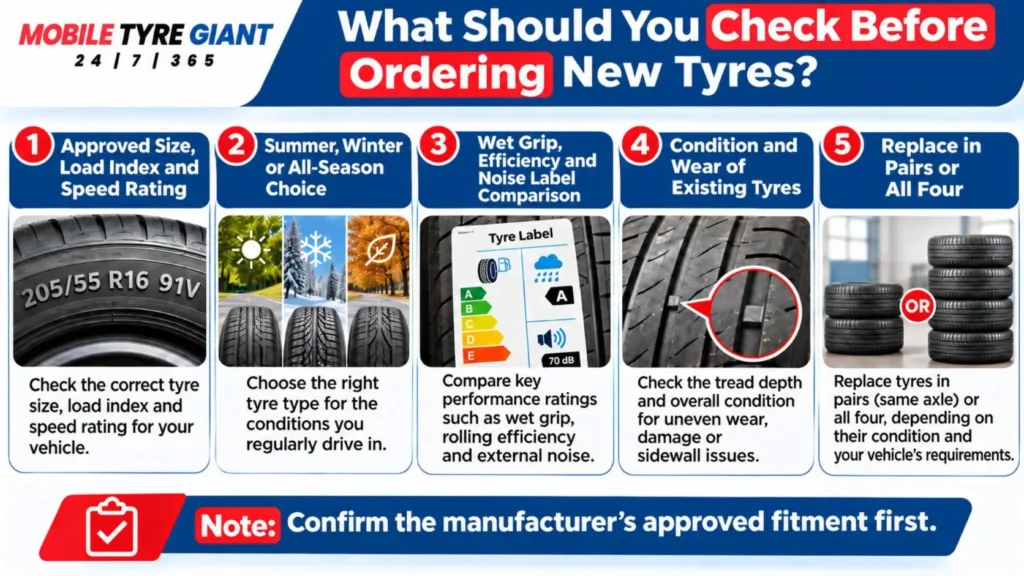
Before purchasing tyres, confirm the complete specification approved for your vehicle. Check the tyre dimensions, load index, speed rating and any required construction or manufacturer approval. Consider whether you need summer, winter or all-season tyres for your regular driving conditions. Compare wet grip, efficiency and other relevant performance characteristics between suitable models. Taking these steps reduces the risk of ordering tyres that fit the wheels but fail to meet the vehicle’s requirements.
It is also worth checking the condition of your existing tyres before deciding how many replacements are needed. Uneven tread wear, repeated pressure loss and visible damage may indicate underlying problems. If the vehicle pulls to one side or develops vibration, investigate the cause rather than assuming new tyres alone will solve it. Accurate tyre pressure information can also help drivers maintain the correct settings after fitting. Appropriate selection and regular maintenance work together to support tyre performance.
Should You Replace Two or Four Tyres at Once?
Whether you need two or four replacement tyres depends on their condition and the vehicle manufacturer’s requirements. Replacing tyres in axle pairs is generally preferable when both tyres are worn or significantly different. Mixing unsuitable tyre constructions, categories or specifications can affect handling and stability. Certain four-wheel-drive systems also have specific requirements regarding tyre matching and tread-depth differences. These should be checked before making a replacement decision.
Imagine discovering that both front tyres are worn while the rear tyres remain in good condition. Depending on the vehicle, replacing a suitable pair may be more appropriate than replacing all four. However, the new tyres must satisfy the manufacturer’s specifications and any axle-position recommendations. A vehicle with a sensitive all-wheel-drive system may require additional checks before mixing tread depths. Professional advice helps ensure the replacement arrangement remains compatible and safe.
When Does Tyre Condition Matter More Than Vehicle Type?
Even correctly specified tyres eventually need replacing because of wear, damage or deterioration. A tyre with a sidewall bulge, exposed reinforcing material or serious structural damage should not remain in normal service. For most UK passenger cars and light vans, the legal minimum tread depth is 1.6mm across the central three-quarters and around the entire circumference. However, legal tread depth alone does not establish whether a tyre is safe. Damage and abnormal wear must also be considered.
Regular inspections help motorists identify problems before they become more serious. Check the tread across its full width and examine the sidewalls for visible defects. The tyre safety guide explains additional checks that can help drivers recognise potential problems. When replacement is necessary, professional mobile tyre fitting can provide a convenient option at a suitable home or workplace location. Correct fitting and ongoing maintenance are essential parts of responsible tyre ownership.
Conclusion: Choose the Right Tyres for Your Vehicle and Driving Needs
Choosing tyres by vehicle type involves more than matching the numbers printed on the sidewall. Vehicle weight, load requirements, driving conditions and manufacturer specifications all influence which tyres are suitable. A small hatchback, family SUV, delivery van and electric car may have very different priorities. Understanding these differences helps narrow the options without relying entirely on price or appearance. The best choice is a compatible tyre that provides suitable performance for how the vehicle is actually used.
Before purchasing replacements, confirm the approved specifications and compare relevant performance information. Consider wet grip, comfort, efficiency and the conditions you regularly encounter. Inspect your existing tyres and investigate unusual wear before fitting new ones. Correct inflation and ongoing maintenance remain important after replacement. Making informed decisions about tyre selection helps support safer journeys and dependable everyday vehicle performance.
Not Sure Which Tyres Suit Your Vehicle?
Whether you drive a hatchback, SUV, van or electric car, professional mobile tyre fitting can come to your home, workplace or a safe roadside location.
Frequently Asked Questions
Find quick answers to the most common questions our customers ask.
Frequent braking, acceleration, heavy loads and tight urban manoeuvres can accelerate tyre wear. Incorrect inflation, wheel alignment problems and poor maintenance may also contribute to premature deterioration.
Most UK light delivery vans up to 3.5 tonnes require at least 1.6mm of tread across the central three-quarters and around the entire circumference. Different rules can apply to heavier vehicles.
Tyre pressures should generally be checked weekly, preferably when the tyres are cold. Follow the vehicle manufacturer's recommended settings for the tyres fitted and the load being carried.
Yes, excessive weight increases stress on tyres and can contribute to heat buildup and abnormal wear. Poor weight distribution may also overload individual axles, even when overall vehicle weight appears acceptable.
Uneven front tyre wear may result from incorrect wheel alignment, unsuitable inflation pressure or worn suspension components. A professional inspection is needed to identify the actual cause.
Correct wheel alignment helps tyres roll as intended and can reduce abnormal shoulder wear. However, alignment adjustments will not resolve problems caused by unsuitable pressure, loading or other mechanical defects.
Yes, pothole impacts can damage tyre sidewalls, wheels and suspension components. Significant impacts may also affect alignment, leading to uneven tyre wear or steering problems.
Replacement before the legal minimum may be appropriate depending on tyre condition, operating requirements and fleet safety policies. Damaged tyres can require replacement regardless of remaining tread depth.
Uneven tread wear cannot be restored through puncture repair. A separate puncture might be repairable, but the tyre must still meet the appropriate safety and repair requirements.
Maintain correct tyre pressure, avoid overloading, encourage smooth driving and carry out regular inspections. Investigating alignment and suspension faults early can also help prevent repeated abnormal wear.