

Alloy wheels can make a car look fantastic, but even a small scrape against a kerb can leave an expensive-looking mark. If you have been shopping for replacement tyres, you may have noticed descriptions containing MFS, FR or FP. These abbreviations can be confusing, especially when different retailers use different terms for what appears to be the same feature. They generally refer to tyres with rim protection, designed to help shield the exposed edge of a wheel from minor kerb contact.
Imagine carefully parking beside a raised pavement and accidentally brushing the wheel against the kerb. On some cars, the alloy makes contact first, leaving an unpleasant scrape. A tyre with a raised protective rubber lip may take some of that contact instead. However, rim protection is not a guarantee against wheel damage. Understanding how it works, which markings to look for and what the feature actually protects will help you choose suitable tyres without paying for something you misunderstand.
What Are Tyres With Rim Protection?
Tyres with rim protection have an additional raised section of rubber around the lower sidewall, close to where the tyre meets the wheel rim. This feature is commonly called a rim protector, rim guard or protective flange. Its purpose is to create a small buffer between the outer edge of the wheel and objects such as kerbs. When the wheel approaches a kerb at low speed, the rubber may make contact before the alloy.
The protective section is normally built into the tyre during manufacturing rather than added afterwards. It forms part of the tyre’s external design and can vary considerably between models. Some protectors are easy to recognise because they protrude noticeably beyond the rim, while others are much less obvious. The amount of protection also depends on the width and shape of the wheel to which the tyre is fitted.
How Does the Rubber Rim Protector Protect Alloy Wheels?
A rim protector works by placing an extra ridge of rubber close to the exposed wheel edge. When a vehicle gently brushes against a kerb during parking, this rubber can act as the first point of contact. Instead of immediately scraping the alloy’s painted or polished surface, the kerb may touch the tyre’s protective lip. This can help reduce minor cosmetic damage caused by everyday parking mistakes.
Think about manoeuvring into a narrow parking space on a busy high street. You might approach the kerb slightly closer than intended, particularly when judging the distance from the driver’s seat. A pronounced rubber flange could help protect the wheel from a light scrape. However, its effectiveness depends on the angle of contact, the kerb’s shape and how far the rubber extends beyond the alloy.
Can Rim Protection Prevent Pothole or Sidewall Damage?
Rim protection is primarily intended to reduce minor contact damage around the wheel edge. It cannot guarantee protection against deep potholes, sharp obstacles or forceful impacts. A tyre can still suffer sidewall cuts, internal damage or pressure loss even when it includes a protective flange. Similarly, a wheel may bend or crack if it strikes a pothole with sufficient force. The extra rubber should not be considered a substitute for careful driving.
A raised lip may offer some protection to the lower sidewall in certain situations, but that depends on the tyre’s construction and the type of impact. If you notice a cut, bulge or exposed cords after striking a kerb, arrange an inspection. Our guide to tyre sidewall damage explains which warning signs require attention. Never assume a tyre remains safe simply because its rim protector absorbed the visible impact.
What Do MFS, FR and FP Mean on a Tyre?
MFS, FR and FP are common abbreviations associated with built-in tyre rim protection. Although their wording differs, they generally identify a raised rubber feature designed to help protect the wheel’s outer edge. These terms often appear in online tyre listings or product descriptions, and some tyres also carry relevant markings on their sidewalls. Manufacturers do not all use the same naming system.
The important distinction is that these markings describe a design feature rather than a separate tyre category. An MFS tyre is not automatically stronger, safer or better-performing than an FR or FP tyre. The shape and size of the protective rubber can differ between models and tyre sizes. When comparing options, examine the actual tyre specification instead of assuming one abbreviation guarantees greater protection.
What Does MFS Mean on a Tyre?
MFS stands for Maximum Flange Shield. It describes an integrated rubber protector positioned near the outer edge of the wheel rim. The raised section is intended to provide a buffer against light kerb contact, helping reduce the likelihood of cosmetic scratches. MFS is particularly relevant when shopping for tyres intended for cars with exposed alloy wheels or lower-profile sidewalls.
Despite the word Maximum, an MFS marking does not establish a universal protection rating. It does not mean the tyre can withstand every kerb strike or offer a measured level of impact resistance. Different tyre sizes and wheel widths may produce different amounts of rubber overhang. Before choosing an MFS tyre, check whether the particular product and size include the feature and whether it will suit your wheels.
What Does FR Mean on a Tyre?
FR commonly refers to Flange Rib, a term used for a protective rubber ridge around the lower tyre sidewall. It is also associated with German terminology for a wheel-rim rib or protector. This feature serves the same broad purpose as MFS: helping shield the alloy’s outer edge during minor contact. The marking is commonly found in descriptions of tyres designed for modern alloy wheels.
Drivers sometimes mistake FR for a speed rating, reinforced construction or an indication of where the tyre was manufactured. It does not serve those purposes when used as a rim protection designation. The tyre’s size, load index and speed rating are separate specifications. A tyre marked FR still needs to meet the vehicle manufacturer’s requirements, regardless of whether its protective lip appears substantial.
What Does FP Mean on a Tyre?
FP commonly stands for Fringe Protector. Like MFS and FR, it describes a built-in rubber feature intended to offer some protection against minor wheel-rim scrapes. You may see FP added after a tyre’s model name or size in an online listing. The marking helps buyers identify versions equipped with a protective flange, particularly when comparing otherwise similar tyre options.
FP should not be confused with a separate accessory fitted around the wheel after installation. The rim protector forms part of the tyre itself, so it normally remains in place throughout the tyre’s usable life. However, not every product carrying a familiar model name includes the same protective feature. Check the exact specification and ask the fitter to confirm if rim protection is important to your purchase.
How Can You Identify Tyres With Rim Protection?
The easiest way to identify tyres with rim protection is to examine the lower sidewall near the wheel edge. Look for a raised rubber ridge running around the tyre’s circumference. On some models, the protector creates an obvious lip slightly beyond the alloy rim. On others, it blends into the sidewall shape and is difficult to recognise. A visual check can be helpful, but it should not be your only method.
Product descriptions can provide additional information. Look for MFS, FR, FP or other manufacturer-specific rim protection designations in the exact tyre listing. Remember that these abbreviations may appear in retailer catalogues rather than as prominent lettering on the fitted tyre. If a listing is unclear, confirm the specification with the supplier before ordering. This is especially important when protecting expensive or recently refurbished alloys.
Does Tyre Size Affect How Much Rim Protection You Get?
Yes, tyre size and wheel width can influence how effectively a rim protector covers the alloy edge. Low-profile tyres have shorter sidewalls, which can leave the wheel rim more exposed during parking. This is one reason protective rubber flanges are commonly associated with larger alloy wheels and performance-oriented tyre sizes. However, a wide wheel fitted with a relatively narrow tyre may leave the rim exposed despite the presence of a protective lip.
The actual fit depends on the tyre’s design, approved rim-width range and the wheel’s dimensions. Two tyres with the same nominal size can have different sidewall shapes and protective flange profiles. Our correct tyre size guide explains how to understand tyre dimensions and compatibility. Always prioritise the vehicle’s approved tyre specifications rather than changing size simply to obtain a larger rim protector.
Are Tyres With Rim Protection Worth Buying?
Tyres with rim protection can be a worthwhile choice for drivers who want to reduce minor cosmetic damage to their alloy wheels. The raised rubber lip is designed to take some of the contact when a wheel brushes against a kerb during parking. This is particularly useful in towns and cities, where narrow roads and tight parking spaces make accidental contact more likely. While the feature cannot prevent every scrape, it may help protect the wheel’s finish during everyday driving.
Whether rim protection is worth paying for depends on your vehicle, wheels and driving habits. If you have expensive alloys or frequently park beside raised kerbs, the additional rubber may provide useful protection. However, it should not be your main reason for choosing a tyre. Wet grip, braking performance, correct sizing and overall quality remain more important. A suitable tyre without rim protection may still be a better choice than an unsuitable model with a protective flange.
Do Rim Protectors Help Prevent Kerb Rash on Alloy Wheels?
Kerb rash refers to the scratches, scuffs and abrasions that appear when an alloy wheel rubs against a kerb. It commonly affects the outer edge of the wheel, especially during parallel parking. A tyre with a pronounced rim protector may reduce the likelihood of this damage by allowing the rubber to make contact first. The protective lip acts as a small buffer between the alloy and the kerb.
Imagine reversing into a tight parking space outside a busy shopping centre. As you straighten the steering, the front wheel brushes lightly against the kerb. Without a protective lip, the alloy’s exposed edge might scrape directly against the rough surface. With suitable rim protection, the rubber may absorb some of that contact instead. However, the result depends on the kerb’s height, the contact angle and how far the tyre’s protective ridge extends beyond the wheel.
Are Rim Protection Tyres Better for Large Alloy Wheels?
Large alloy wheels are often paired with lower-profile tyres, which have shorter sidewalls. This combination can leave the outer wheel edge more exposed to kerbs and other obstacles. A raised rim protector may offer a useful additional barrier against light contact. Drivers with 18-inch, 19-inch or larger alloys may therefore find the feature particularly appealing, especially when the wheels have an expensive painted or diamond-cut finish.
However, wheel diameter alone does not determine how much protection a tyre provides. The tyre’s width, sidewall profile and the wheel’s dimensions all influence whether the rubber lip actually extends beyond the alloy. Some large-wheel combinations may have very little visible overhang despite the tyre carrying an MFS, FR or FP designation. Always check the actual tyre and wheel combination rather than assuming that a particular wheel size guarantees effective protection.
What Are the Limitations of MFS, FR and FP Rim Protection?
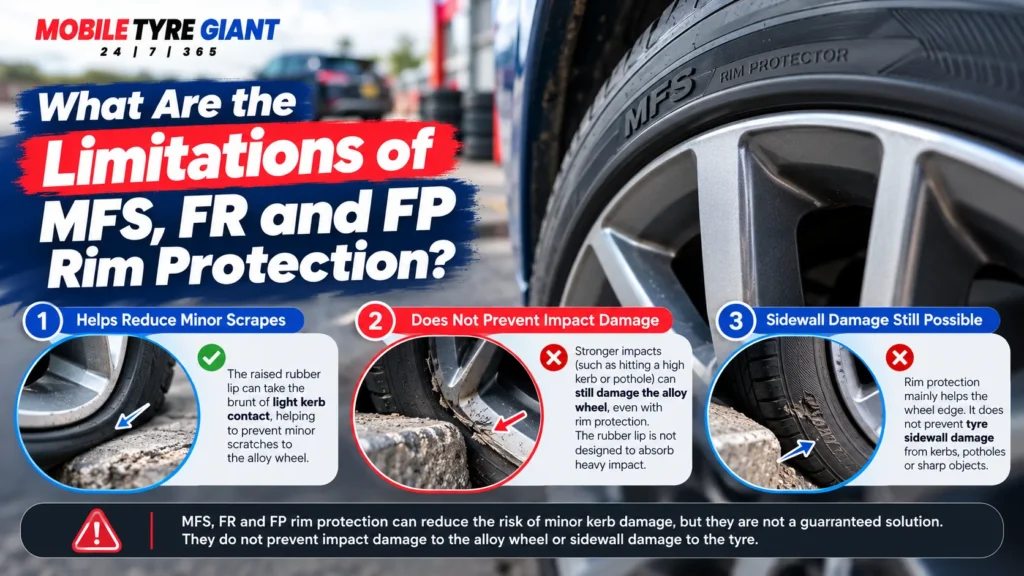
Although MFS, FR and FP tyres are designed to reduce minor wheel damage, their protection has clear limitations. The rubber flange is primarily intended to help with light, glancing contact against kerbs. It cannot prevent every scratch, protect against every impact or make an alloy wheel indestructible. A sharp kerb or an unfavourable contact angle may still reach the metal wheel edge, even when the tyre has a prominent protector.
It is also important to understand that the raised rubber is part of the tyre, not a separate crash-protection device. Strong impacts can damage the wheel, tyre casing or internal structure regardless of the protective lip. Drivers should never rely on rim protection when approaching obstacles or driving over rough surfaces. Careful parking, appropriate speed and regular tyre inspections remain essential for protecting both tyres and wheels.
Can a Kerb Still Damage an Alloy Wheel With Rim Protection?
Yes, an alloy wheel can still suffer damage when fitted with rim protection tyres. The protective rubber may reduce light scrapes, but it cannot guarantee that the wheel will avoid direct contact. A tall kerb, sharp edge or forceful impact can bypass or compress the rubber lip. Depending on the circumstances, the wheel’s paint, polished surface or metal structure may still be damaged.
For example, brushing a low kerb while parking slowly is different from striking a raised kerb while turning sharply. The first situation may involve a minor cosmetic scrape, while the second can create significantly greater forces. Rim protection is most useful for reducing everyday scuffs rather than preventing structural damage. If a wheel develops a crack, visible distortion or persistent air loss after an impact, it needs professional assessment.
Can Rim Protection Prevent Damage From Potholes?
Rim protection is not designed to make tyres or wheels resistant to severe pothole impacts. When a wheel strikes a deep pothole, the tyre may become compressed between the obstacle and the rim. This can damage the sidewall, bend the wheel or affect the tyre’s internal structure. A protective rubber lip near the rim edge cannot reliably prevent these forces from reaching the tyre and wheel assembly.
After a significant pothole impact, pay attention to vibration, steering changes and pressure loss. Check for visible cuts, bulges or damage around the wheel, but remember that some problems may be hidden. Even a tyre with a substantial rim protector can become unsafe following a strong impact. If you notice unusual symptoms, arrange an inspection before continuing a long journey. Cosmetic protection should never be confused with structural safety.
What Happens if the Rim Protector Rubber Gets Scraped?
The protective rubber lip is intended to take some of the contact that might otherwise damage the alloy wheel. Light surface scuffing may therefore occur during ordinary parking incidents. However, the presence of a rim protector does not mean that every cut or gouge is harmless. The location, depth and extent of the damage determine whether the tyre needs professional attention.
A minor surface mark on the raised rubber may be different from a deep cut extending into the sidewall. Damage exposing reinforcing cords, creating a bulge or affecting the tyre’s structure can make continued use unsafe. Avoid cutting away loose rubber or attempting to repair a damaged sidewall yourself. If you are uncertain whether the mark is cosmetic or structural, have the tyre assessed. Our tyre safety guide explains the checks that help identify potentially unsafe tyres.
Does Rim Protection Affect Tyre Performance or Driving Comfort?
The main purpose of a rim protector is to provide additional protection around the wheel edge, not to improve road performance. An MFS, FR or FP marking does not automatically indicate better handling, shorter braking distances or improved wet-weather grip. Those characteristics depend on the tyre’s overall design, rubber compound, tread pattern and construction. Two tyres with similar protective flanges may perform differently on the road.
The protective ridge also should not be mistaken for a reinforced sidewall or run-flat system. A tyre with rim protection does not automatically support the vehicle after losing air, and it may still be vulnerable to ordinary punctures. When comparing tyres, review their suitability for your vehicle and their relevant performance characteristics. Treat rim protection as an additional convenience rather than a replacement for essential safety features.
Does the Protective Rubber Lip Affect Grip, Noise or Fuel Efficiency?
There is no universal performance improvement associated with MFS, FR or FP markings. The protective lip is positioned around the lower sidewall, away from the main tread contact area. Its purpose is to help reduce minor wheel-edge damage rather than increase traction. Any difference in grip, road noise or rolling resistance between tyre models is more appropriately assessed through their complete design and available performance information.
For example, one tyre may have a large rim protector but provide different wet-braking performance from another model with a smaller protective lip. The size of the rubber flange does not establish which tyre is better for motorway driving or heavy rain. Look at the tyre’s specifications, EU tyre label information where applicable and independent performance assessments. Choose a model that meets your normal driving requirements before considering the rim-protection feature.
Why Do Correct Tyre Pressure and Wheel Fitment Still Matter?
Correct tyre pressure remains essential even when your tyres have rim protection. Underinflation can affect steering, braking and heat generation, while excessive pressure may alter the tyre’s contact with the road. Neither condition becomes acceptable because the tyre includes an additional rubber flange. Maintaining the vehicle manufacturer’s recommended pressure helps the tyre operate as intended and reduces the risk of avoidable wear.
Wheel fitment is equally important because the protective lip must work with the actual rim dimensions. A tyre mounted on an unsuitable wheel may create safety or handling problems that rim protection cannot resolve. Always follow the vehicle manufacturer’s approved tyre and wheel specifications. Our guide on how to check tyre pressure explains the recommended approach to inflation checks. Proper maintenance and compatible components should always take priority over cosmetic protection.
How Do You Choose the Right Tyres With Rim Protection?
Choosing tyres with rim protection involves more than looking for MFS, FR or FP in a product description. The first priority is finding tyres that meet your vehicle manufacturer’s specifications. Once you have confirmed the correct size, load index and speed rating, you can compare compatible models that include a protective rubber flange. This approach helps you avoid choosing a tyre purely because its sidewall looks thicker or its rim protector appears more prominent.
Think about replacing the worn tyres on a family car with 18-inch alloy wheels. You want to reduce the risk of scraping the alloys during parking, but you also need reliable wet-road grip and comfortable everyday handling. Several tyres may offer rim protection, yet their performance characteristics can differ significantly. The best choice is a suitable tyre that meets your driving needs while providing the additional wheel-edge protection you want.
Which Tyre Size, Load Index and Speed Rating Should You Check?
Start by checking the tyre specifications recommended for your vehicle. A typical marking such as 225/40 R18 92Y identifies the tyre’s width, aspect ratio, radial construction, wheel diameter, load index and speed rating. Every element matters when selecting a replacement. The presence of an MFS, FR or FP designation does not change the tyre’s underlying specifications or make an otherwise unsuitable size acceptable.
The vehicle handbook, manufacturer’s tyre information label and approved fitment data provide the starting point. Some vehicles require different specifications between the front and rear axles, while others have particular load or speed requirements. Always check the complete specification rather than matching only the wheel diameter. Our guide on how to choose the right tyres for your car explains the main factors to consider when comparing suitable replacements.
How Does Alloy Wheel Width Affect Rim Protector Coverage?
The relationship between tyre width and wheel width can influence how far the protective rubber extends beyond the alloy. A tyre fitted to a relatively wide wheel may have a straighter sidewall profile, leaving the protective lip less prominent. On another approved wheel width, the same tyre may provide greater coverage around the rim edge. This means an MFS, FR or FP marking does not guarantee identical protection on every vehicle.
For example, two cars might use the same nominal tyre size but have wheels with different approved widths. The protective flange could sit slightly beyond the alloy on one car while offering less visible coverage on the other. This does not mean you should deliberately fit an unsuitable wheel or tyre combination to increase the overhang. Always remain within the manufacturer’s approved fitment requirements and ask a specialist when compatibility is uncertain.

How Can You Confirm a Tyre Actually Has MFS, FR or FP Rim Protection?
When shopping online, look beyond the main tyre model name and examine the full product specification. A listing may include MFS, FR, FP or another rim protection designation after the tyre size or model details. Some retailers also provide a separate description indicating that the tyre includes a protective flange. These details are more useful than assuming a particular tread pattern or performance tyre automatically includes rim protection.
If the information is unclear, ask the supplier to confirm the feature for the exact size and version you intend to purchase. Tyre manufacturers may offer several specifications within the same product family. A small difference in the complete product code can identify a different version. Confirming these details before ordering helps avoid disappointment when the tyres arrive and the expected protective lip is missing.
Why Can the Same Tyre Model Have Rim Protection in One Size but Not Another?
Tyre manufacturers often produce the same model in many sizes to suit different vehicles. The construction and sidewall design may vary between those versions. A low-profile tyre intended for a large alloy wheel might include a raised protective flange, while a version with a taller sidewall may not. Consequently, the model name alone is not reliable proof that every available size has MFS, FR or FP protection.
Imagine seeing a tyre recommended online because another driver praised its substantial rim protector. Their vehicle uses 19-inch alloys, while yours has 16-inch wheels. Even if both tyres share the same model name, the protective feature may differ. Always check the specifications for your exact size instead of relying on a review of another version. This simple step can prevent you from ordering a tyre that does not meet your expectations.
Can You Trust Online Photos of Tyres With Rim Protection?
Online tyre photographs can help illustrate a product’s appearance, but they do not always show the exact specification being sold. Retailers frequently use a representative image across several sizes within the same tyre family. The photograph might show a prominent rubber lip even when the particular size in your basket has a different sidewall design. A clear-looking image should therefore support your research rather than replace the product specifications.
Check the written description, manufacturer’s data and complete tyre reference whenever possible. If rim protection is an important reason for your purchase, request confirmation before completing the order. You can also ask whether the exact tyre has a visible protective flange and whether it is suitable for your alloy-wheel dimensions. This approach is more reliable than selecting a product simply because the photograph looks protective.
Can You Mix Tyres With and Without Rim Protection?
Having rim protection on some tyres and not others does not automatically make a vehicle unsafe or illegal in the UK. The protective flange is primarily a cosmetic wheel-protection feature, so its presence alone does not determine whether tyres are compatible. However, differences in tyre construction, size and performance can affect vehicle handling. Every tyre must satisfy the relevant legal requirements and the vehicle manufacturer’s specifications.
For example, replacing one damaged tyre with an otherwise suitable model that includes an FP flange does not necessarily mean the other three tyres need replacing. However, mixing substantially different tyre models or specifications may create undesirable differences in grip and handling. Matching tyres on the same axle is generally preferable. A qualified fitter can assess whether the replacement is appropriate for your vehicle and existing tyre arrangement.
Should You Replace One Tyre or Both Tyres on the Same Axle?
Whether you should replace one tyre or a pair depends on the condition and compatibility of the tyres already fitted. If one tyre is damaged but the other has adequate tread, suitable specifications and comparable performance characteristics, replacing only the affected tyre may be appropriate. However, significant differences in tread depth, construction or model performance can make replacing both tyres on the axle a better option.
All-wheel-drive vehicles may have additional restrictions concerning differences in rolling circumference or tread depth. These requirements should be checked before ordering a replacement. The rim protector itself should not be the deciding factor when assessing whether another tyre can remain in service. If you are uncertain about the condition of the existing tyres, our guide on when to replace tyres explains the wear and damage indicators that deserve attention.
What Should You Compare Before Buying MFS, FR or FP Tyres?
Before making a purchase, compare the complete tyre specifications, wet-grip rating, rolling resistance, external noise rating and suitability for your normal driving conditions. A protective rubber flange can be a useful extra, but it should not outweigh more important performance and safety considerations. Prices also vary between tyre models, and paying more does not automatically mean you will receive a larger or more effective rim protector.
Consider the type of journeys you make most frequently. A driver covering long motorway distances may prioritise wet braking, road noise and overall tyre quality. Someone regularly parking beside raised kerbs might place greater value on a pronounced rim protector, provided the tyre also meets their essential requirements. The best purchase balances safety, compatibility, performance, cost and the additional protection offered around the alloy wheel.
What Questions Should You Ask Before Ordering Rim Protection Tyres?
Before ordering, confirm the exact tyre size, load index and speed rating. Ask whether the specific model and size include an integrated rim protector rather than relying on a general product description. If your alloys are particularly wide or have exposed outer edges, explain this to the supplier. They may be able to advise whether the proposed tyre has a suitable protective flange for your wheel arrangement.
You should also confirm the total price, including fitting, wheel balancing and any additional services required. Ask whether the tyre meets any vehicle-specific requirements, especially if your car has staggered wheels, run-flat specifications or an unusual approved fitment. Taking a few minutes to check these details can prevent incorrect orders and unnecessary fitting problems. The right tyre should satisfy your vehicle’s needs first, with rim protection providing an additional practical benefit.
What Should You Check After Fitting Tyres With Rim Protection?
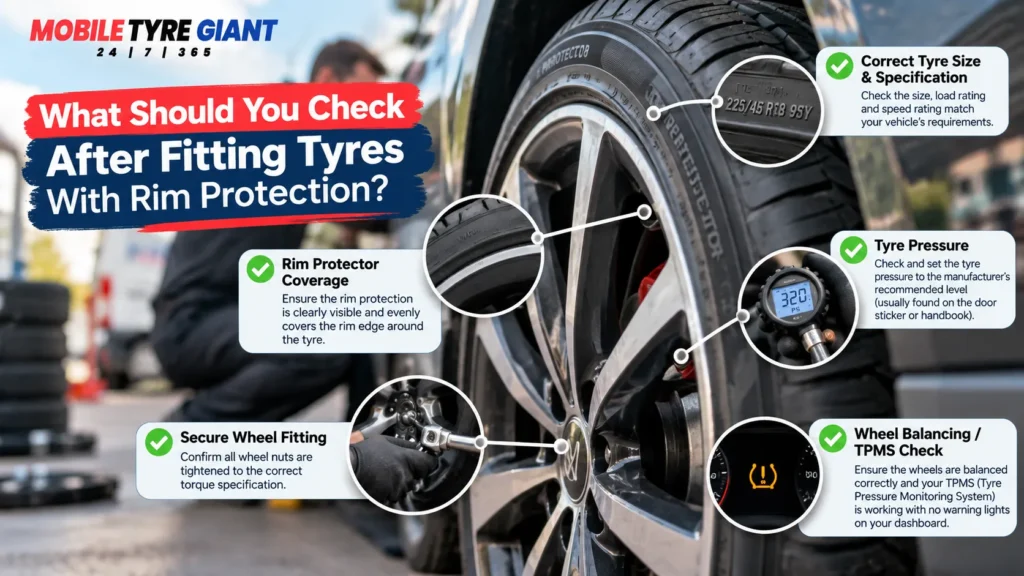
After fitting tyres with rim protection, check that the correct tyre model, size and specifications have been installed. An MFS, FR or FP marking may indicate a protective rubber flange, but it does not guarantee that the flange extends beyond your alloy wheel. The fitter should confirm that the tyres are compatible with the vehicle and that the completed wheel assemblies have been properly balanced and secured.
Before driving away, inspect the area where each tyre meets the wheel rim. Look for an even fit, visible damage or unexpected gaps around the bead area. Check that the inflation pressure matches the vehicle manufacturer’s recommendation and that any required TPMS reset has been completed. Our post-fitting tyre checklist explains the other important checks to make after having new tyres installed.
How Can You Tell if the Rim Protector Covers the Alloy Properly?
The most useful visual check is whether the raised rubber lip extends beyond the exposed outer edge of the alloy wheel. If it does, the rubber may make contact first during a minor brush against a kerb. However, the amount of overhang can vary depending on the tyre model, size and approved wheel width. A tyre with an MFS, FR or FP designation may offer less visible coverage than you expected.
Inspect the wheel from several angles while the vehicle is safely parked. Pay particular attention to alloys with exposed outer edges or unusual wheel profiles. Do not assume the tyre has been fitted incorrectly simply because the protective flange looks small. Some designs have more subtle protection than others. If you specifically purchased the tyres for their rim protection, ask the fitter to confirm that the correct version was supplied.
Do Rim Protection Tyres Need Special Fitting Equipment?
Tyres with rim protection generally use the same professional fitting principles as other compatible passenger-car tyres. However, care is important when working around expensive alloy wheels. A fitter should use appropriate equipment and procedures to avoid damaging the wheel finish, tyre bead or sidewall. The presence of a raised protective flange does not remove the need for correct mounting and inflation.
Wheel balancing remains necessary after a tyre has been mounted onto its rim. The fitter should also confirm the correct pressure, valve condition and wheel-nut tightening requirements. If your car has a tyre pressure monitoring system, its relevant servicing or reset procedure must be followed. Proper installation helps the entire tyre and wheel assembly operate correctly, not just the protective rubber lip.
What Should You Do if a Rim Protector Scrapes Against a Kerb?
If a tyre’s rim protector brushes against a kerb while parking, inspect the affected area before assuming everything is fine. A light surface scuff may only affect the outer rubber, but deeper damage can be more serious. Look closely at the protective flange, the nearby sidewall and the alloy wheel. The type of contact, the speed and the kerb’s shape all influence what may have been damaged.
A gentle parking scrape is different from striking a kerb with significant force. A harder impact may damage the tyre internally, bend the wheel or affect steering alignment. If you notice sudden pressure loss, vibration or a change in handling afterwards, arrange an inspection. Rim protection is intended to reduce some minor wheel-edge damage, not guarantee safety after an impact.
How Can You Tell if Rim Protector Damage Is Cosmetic or Serious?
Minor surface scuffing on a raised rubber protector may be cosmetic, particularly when there is no deeper cut or visible deformation. However, appearance alone cannot always establish the extent of the damage. Deep gouges, bulges, exposed reinforcing cords or damage extending into the main sidewall require professional attention. These warning signs can indicate problems beyond the protective rubber flange.
Avoid cutting away damaged rubber or using adhesive to conceal a mark. Such actions cannot confirm whether the tyre’s structure remains sound. If the protective lip has been badly torn or the tyre has suffered a strong impact, ask a specialist to inspect it. A tyre may need replacing even when the alloy wheel has escaped visible damage.
How Can You Maintain Tyres With Rim Protection?
Rim protection tyres do not normally require a separate maintenance routine. The protective flange forms part of the tyre, so the usual checks for inflation pressure, tread depth and tyre condition still apply. Keeping your wheels clean also makes it easier to identify new scratches or damage. Road dirt can sometimes hide cuts around the lower sidewall where the protective lip sits.
Clean the tyre and wheel using suitable products according to the tyre and wheel manufacturers’ instructions. Avoid harsh chemicals or abrasive tools that could damage the rubber or alloy finish. During cleaning, inspect the protective flange for fresh cuts, unusual wear or loose-looking sections. Regular inspection is particularly useful if you frequently park close to raised kerbs.
Can You Repair a Damaged Rim Protector Yourself?
A damaged rim protector should not be treated like a separate plastic wheel trim that can simply be glued back into place. It is moulded into the tyre, so cuts or tears must be assessed in the context of the tyre’s overall condition. Superficial scuffs may not require repair, but deeper damage should not be ignored.
Do not attempt to fill a cut with sealant, trim away a damaged section or attach additional rubber over the affected area. These methods do not restore structural integrity. If you are unsure whether the damage is limited to the protective lip, arrange an inspection. A qualified technician can determine whether the tyre remains suitable for normal use or requires replacement.
When Should You Arrange Professional Tyre Fitting or Replacement?
Professional fitting is advisable whenever you are replacing tyres and want to confirm that the selected model includes suitable rim protection. Before booking, provide the vehicle registration, approved tyre size and any relevant wheel specifications. Mention that you are looking for MFS, FR or FP protection rather than assuming every version of a particular tyre model includes it.
If your existing tyres are damaged, worn or unsuitable for continued use, arrange replacement rather than choosing a product solely for its protective flange. A professional mobile tyre fitting service can help fit suitable tyres at an appropriate home or workplace location. Confirm the required specifications and rim protection feature before the appointment so you know what is being supplied.
Final Words: Are Tyres With Rim Protection Worth It?
Tyres with rim protection can be a useful choice for drivers who want additional protection against minor alloy wheel scrapes. MFS, FR and FP are markings associated with protective rubber flanges near the rim, although the terminology varies between manufacturers. These features may help reduce everyday kerb rash, especially on exposed alloy wheels, but they cannot prevent every scratch or protect against serious impacts.
The best approach is to choose tyres that meet your vehicle’s specifications and provide the performance you need. Treat rim protection as a valuable extra rather than the main measure of tyre quality. Confirm the exact model and size before buying, inspect the protective flange after kerb contact and maintain the tyres properly. Correct fitment and good tyre condition remain essential for safe driving.
Need Tyres With Rim Protection?
Want to protect your alloy wheels from minor kerb scrapes? If you’re replacing worn or damaged tyres, ask about suitable MFS, FR or FP options and arrange convenient mobile tyre fitting at your home or workplace.
Frequently Asked Questions
Find quick answers to the most common questions our customers ask.
MFS stands for Maximum Flange Shield. It refers to a raised rubber feature designed to help protect the alloy wheel's outer edge from minor kerb contact.
FR commonly refers to Flange Rib, a protective rubber ridge near the wheel rim. It serves a similar purpose to other rim protection features.
FP usually means Fringe Protector. It identifies a built-in rubber feature intended to help reduce minor scraping damage around the wheel edge.
They describe similar rim protection features, but the terminology and design vary between manufacturers. The size and shape of the protective rubber are not standardised.
They can help reduce light kerb scrapes by providing a rubber buffer around the rim. However, sharp kerbs and stronger impacts can still damage the alloy.
No. Some low-profile tyres include a protective flange, while others do not. Check the exact tyre model and size before ordering.
Only when the tyres meet the vehicle's approved size and fitment requirements. The amount of rim coverage also depends on the wheel's dimensions.
No. Rim protection helps reduce minor cosmetic wheel damage, while run-flat technology provides limited mobility after pressure loss under specified conditions.
A light surface scuff may be cosmetic, but deeper cuts or visible sidewall damage need inspection. Never assume a badly damaged protector is harmless.
They may be worthwhile if you have expensive alloys or frequently park near kerbs. However, correct fitment, wet grip and overall tyre quality should come first.