

Most modern cars on UK roads use tubeless tyres, yet many drivers are unsure what the term actually means. You might have noticed the word TUBELESS on a tyre’s sidewall or heard someone mention tubeless tyres after a puncture. The name sounds straightforward, but understanding how these tyres hold air, what happens when they are damaged and whether they require special maintenance can help you make better decisions about your vehicle.
Imagine finding a screw embedded in your tyre after returning from work. The tyre still looks inflated, but you are unsure whether it is safe to drive. A tubeless tyre can sometimes lose air gradually after a small puncture, although sudden deflation is still possible. Knowing how the tyre works helps you understand what needs checking and when professional assistance is necessary.
What Are Tubeless Tyres and How Do They Work?
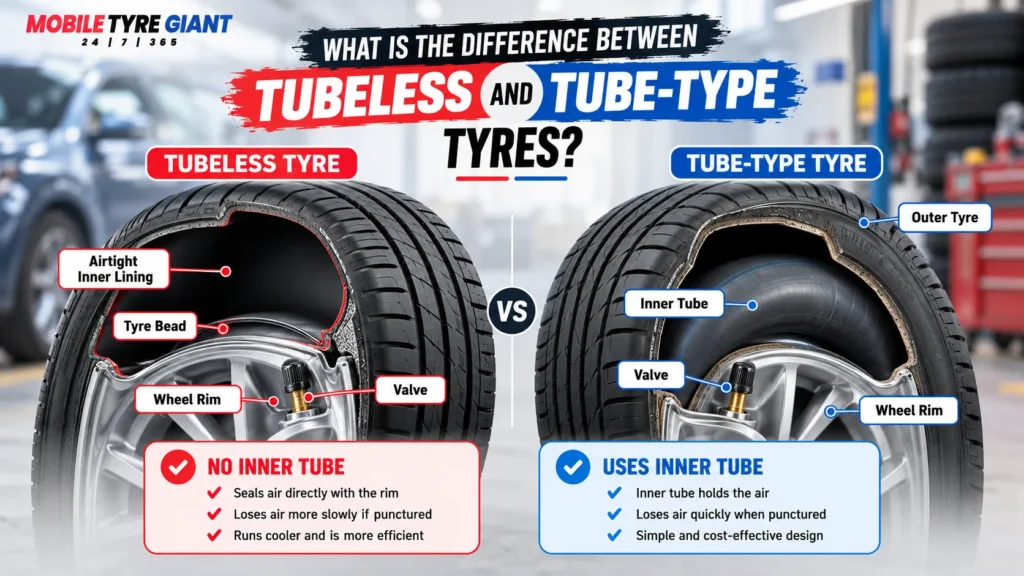
Tubeless tyres are pneumatic tyres designed to hold pressurised air without a separate inner tube. Instead of relying on an inflatable rubber tube, the tyre and wheel rim form an enclosed air chamber. A specially designed inner lining helps retain air inside the tyre, while its edges create a seal against the wheel. This construction has become standard on most modern passenger cars because it provides a practical and reliable way to maintain tyre pressure.
Despite the name, a tubeless tyre still needs air to support the vehicle’s weight and maintain its intended shape. The difference lies in how that air is contained. When you inflate a tubeless car tyre, air enters the space between the inside of the tyre and the wheel rim. A correctly fitted tyre, suitable wheel and functioning valve work together to keep that chamber sealed during normal driving.
What Holds the Air Inside a Tubeless Car Tyre?
A tubeless car tyre contains an airtight inner lining, commonly made using a rubber compound designed to reduce air permeability. This lining sits inside the tyre casing and helps prevent pressurised air from escaping through the tyre structure. The outer tread provides road contact, while the sidewalls support the tyre’s shape and flexibility. Each component performs a different function, even though the finished tyre looks like a single piece of rubber.
The inner lining is only one part of the air-retention system. The tyre must also fit correctly against the wheel rim, and the valve must seal properly. If any of these areas develops a fault, pressure may gradually decrease. For example, corrosion around the wheel’s bead seat can sometimes cause an air leak even when the tread has no puncture. Identifying the actual source of pressure loss is therefore important.
How Do the Tyre Bead, Wheel Rim and Valve Work Together?
The tyre bead is the reinforced edge that sits against the wheel rim. When the tyre is mounted and inflated correctly, its beads seat securely against the rim’s specially shaped surfaces. This creates a seal that helps keep the compressed air inside. The wheel itself must be compatible with the tyre and in suitable condition. Damage, corrosion or incorrect fitting can interfere with that seal and allow air to escape.
The valve provides the opening through which air enters and leaves the tyre. Once inflation is complete, the valve core helps retain pressure. Some vehicles also have tyre pressure monitoring sensors incorporated into their valve assemblies. A damaged valve or faulty seal may cause a slow leak that resembles a small puncture. If your tyre repeatedly needs inflating, checking the valve and bead area can be just as important as examining the tread.
Do Tubeless Car Tyres Need Liquid Sealant?
Ordinary tubeless car tyres do not generally require liquid sealant to hold air during normal use. Their airtight inner lining, correctly seated beads and wheel valve perform that job. This is different from many tubeless bicycle systems, which use liquid sealant to maintain an effective seal and help close small punctures. Confusing these two systems can lead drivers to assume that a tubeless car tyre automatically repairs itself.
Some specialised car tyres contain factory-applied self-sealing materials, while emergency puncture kits may introduce temporary sealant after a tyre is damaged. Neither arrangement should be confused with an ordinary tubeless tyre. Unless your tyre has a specific self-sealing design, you should not assume it contains puncture-sealing material. A nail, screw or cut can still allow air to escape and may require professional inspection.
Are Most Modern Car Tyres Tubeless in the UK?
Yes, the vast majority of modern passenger cars in the UK use tubeless tyres. You will find them on many everyday hatchbacks, family saloons, SUVs and electric vehicles. Their widespread use means most drivers already travel on tubeless tyres without giving the construction much thought. Inner-tube tyres are more commonly associated with certain classic vehicles, older wheel designs and specialised applications.
This does not mean every wheel and tyre combination is interchangeable. A vehicle must use tyres and wheels that are compatible with its approved specifications. The correct size, load capacity and speed rating remain essential regardless of whether the tyre is tubeless. When selecting replacements, our correct tyre size guide explains the main sidewall markings and why they matter for safe vehicle performance.
How Can You Tell Whether Your Car Tyres Are Tubeless?
The simplest way to identify a tubeless tyre is to inspect its sidewall markings while the vehicle is safely parked. Look for the word TUBELESS or the abbreviation TL. A tyre designed to use an inner tube may instead carry the marking TUBE TYPE or TT. These markings help identify the tyre’s intended construction, although the wheel’s compatibility must also be considered.
You may also notice a tyre size such as 205/55 R16 printed on the sidewall. The letter R indicates radial construction, not whether the tyre is tubeless. Similarly, a modern tread pattern does not prove that a tyre has no inner tube. If the markings are difficult to read or the vehicle has unusual wheels, consult the manufacturer’s information or ask a qualified tyre fitter.
Are Tubeless Tyres the Same as Run-Flat Tyres?
Tubeless and run-flat tyres are not the same thing. Tubeless describes how a tyre retains air without an inner tube. Run-flat describes a tyre designed to offer limited mobility after significant pressure loss, subject to its manufacturer’s conditions. Many run-flat car tyres are also tubeless, but an ordinary tubeless tyre does not automatically have run-flat capability.
This distinction becomes important during a puncture. If an ordinary tubeless tyre loses significant pressure, continuing to drive may damage its internal structure and create a serious safety risk. A run-flat tyre may permit restricted travel following pressure loss, depending on its design and specified limits. Never assume your tyre can be driven while flat simply because the word TUBELESS appears on its sidewall.
What Is the Difference Between Tubeless and Tube-Type Tyres?
The main difference between tubeless and tube-type tyres is how they retain air. A tube-type tyre uses a separate inflatable inner tube positioned inside the outer tyre. When inflated, that inner tube contains the compressed air. A tubeless tyre instead uses its internal lining and the seal between the tyre and wheel rim. Both systems require suitable components, correct inflation and routine inspections.
The construction also affects what happens when damage occurs. In a tube-type tyre, a puncture can damage the inner tube and allow air to escape. In a tubeless tyre, a small object may remain lodged in the tread and sometimes slow the loss of pressure. However, the rate of deflation depends on the damage, and neither design is immune to sudden failure. Tubeless construction should never be treated as puncture-proof protection.
Can You Fit an Inner Tube Inside a Tubeless Car Tyre?
An inner tube should not be added to a tubeless car tyre simply to deal with an air leak or avoid replacing damaged components. Although certain specialised tyre and wheel combinations may permit tubes when their manufacturers specifically approve them, this is not a routine solution for modern passenger cars. Incorrect combinations can introduce fitting, heat and durability problems. The tyre, wheel and tube must all be suitable for the intended application.
If your tubeless tyre keeps losing pressure, the correct approach is to identify why. The problem might involve a puncture, valve, bead seal or wheel damage. Repeatedly topping up the air without addressing the cause can leave the vehicle unsafe. Our guide on how to check tyre pressure explains how to measure inflation accurately and recognise common pressure-related problems. A qualified fitter can then determine whether the tyre can be repaired or needs replacing.
What Are the Main Advantages of Tubeless Tyres?
Tubeless tyres offer several practical advantages, which help explain why they are widely used on modern passenger cars. Their construction eliminates the separate inner tube and relies on an airtight lining, correctly seated tyre beads and a suitable wheel rim. This removes certain problems associated with inner tubes while providing a reliable system for everyday driving. For most UK motorists, the biggest benefit is a straightforward tyre design that works well with modern wheels and vehicle safety systems.
However, tubeless tyres are not automatically safer in every situation simply because they lack an inner tube. Their performance still depends on tread design, rubber compound, correct inflation and overall condition. A poorly maintained tubeless tyre can be just as dangerous as another type of damaged tyre. Understanding the real advantages, rather than assuming they are puncture-proof, helps drivers recognise what this construction can and cannot do.
Do Tubeless Tyres Lose Air More Slowly After a Puncture?
One useful characteristic of a tubeless tyre is that certain small punctures may cause gradual pressure loss rather than immediate deflation. For example, a nail embedded in the tread can sometimes partially restrict the opening it creates. The tyre may remain inflated long enough for the driver to notice a pressure warning or a change in handling. This possibility is one reason tubeless construction is often associated with more manageable puncture situations.
That does not mean a tubeless tyre will always lose air slowly. A large cut, damaged valve, tyre bead failure or serious structural problem can cause rapid deflation. Even a small puncture may release air faster than expected. Drivers should never rely on gradual pressure loss as a safety feature. If a tyre develops a puncture, its condition must be assessed before deciding whether further driving is appropriate.
Do Tubeless Tyres Reduce Heat and Inner-Tube Damage?
Because tubeless tyres do not contain a separate inner tube, there is no additional tube rubbing against the inside of the tyre during operation. This removes a potential source of friction and eliminates inner-tube pinch damage. A tube-type arrangement can sometimes suffer a pinch puncture when the tube becomes trapped or compressed during an impact. Without that separate component, the same type of inner-tube failure cannot occur.
Nevertheless, tubeless tyres still generate heat as their sidewalls flex during driving. Excessive heat can develop when pressure is too low, the vehicle is overloaded or the tyre is subjected to unsuitable operating conditions. Removing the inner tube does not eliminate these risks. A correctly inflated tyre operating within its load and speed limits is far more important than assuming its construction alone will prevent overheating.
What Are the Disadvantages of Tubeless Tyres?
Tubeless tyres also have limitations that drivers should understand. Their ability to retain air depends on several components working together, including the inner lining, tyre beads, wheel rim and valve. Damage to any of these areas may cause pressure loss. A tyre can therefore develop a slow leak without having an obvious nail or screw in its tread. Finding the source sometimes requires a professional inspection.
Correct fitting is another important consideration. A tubeless tyre must be compatible with its wheel and mounted using suitable equipment. A damaged or corroded rim can prevent the bead from sealing properly, while an unsuitable valve may cause repeated leaks. Although tubeless construction is standard on modern cars, that does not mean every problem can be fixed by simply adding more air.
Everyday situation | What tubeless construction offers | Important limitation |
Small tread puncture | Air may escape gradually in some cases | Rapid deflation remains possible |
Inner-tube pinch damage | No separate inner tube to become pinched | The tyre and wheel can still suffer impact damage |
Routine inflation | Air is retained by the tyre and wheel assembly | Valves and bead seals can develop leaks |
Puncture repair | Some tread punctures may qualify for permanent repair | Sidewall and structural damage may require replacement |
Normal driving | Reliable performance with compatible components | Correct pressure and maintenance remain essential |
Why Can Tubeless Tyres Leak Around the Rim or Valve?
A tubeless tyre relies on an effective seal between its bead and the wheel rim. If corrosion, dirt or physical damage affects the sealing surface, air may escape around the edge. This is sometimes called a bead leak. It may develop gradually, leaving the driver repeatedly topping up the tyre without finding an obvious puncture. The tyre itself may still have adequate tread and no visible damage.
A leaking valve can produce similar symptoms. Rubber valves may deteriorate over time, while valve cores and seals can become damaged or fail to close correctly. Some tyre pressure monitoring systems also have components that require attention when a leak develops. A specialist can inspect the sealing areas and identify the cause. Repeated inflation alone is not a permanent solution.
Are Tubeless Tyres More Difficult or Expensive to Repair?
The cost of dealing with a damaged tubeless tyre depends primarily on the fault rather than its tubeless construction. A suitable small puncture in the repairable tread area may be eligible for permanent repair. However, the tyre must be inspected properly, including its internal condition where required. A damaged valve or bead seal may need different work from a tread puncture. Consequently, not every air leak involves replacing the whole tyre.
Some damage makes repair unsuitable, even when the tyre still holds pressure. Serious sidewall damage, exposed reinforcing cords or evidence of being driven while significantly underinflated may require replacement. The condition of the wheel also matters if its sealing surface has been damaged. Professional assessment helps distinguish a straightforward fault from a more serious problem without automatically recommending a new tyre.
Are Tubeless Tyres Safe for Motorway Driving?
Yes, properly fitted and maintained tubeless tyres are suitable for normal motorway driving when they meet the vehicle manufacturer’s specifications. In fact, most modern cars already use them for everyday journeys, including motorway travel. Their suitability depends on their overall condition, correct inflation pressure, load capacity and speed rating. A tubeless tyre does not require a separate inner tube to remain safe at normal driving speeds.
However, motorway driving places sustained demands on tyres. Continuous high-speed travel causes the tyre structure to flex repeatedly and generate heat. Incorrect pressure or existing damage can increase the risk of failure. Before a long journey, check all tyres rather than concentrating only on one that has previously developed a problem. Tyre construction cannot compensate for poor maintenance.
Can a Tubeless Tyre Still Blow Out at High Speed?
Yes, a tubeless tyre can suffer sudden failure, particularly when significant damage or incorrect operating conditions are involved. Severe underinflation, structural deterioration, impact damage and excessive loading can all contribute to dangerous situations. The absence of an inner tube does not guarantee protection against a blowout. A tyre that appears inflated may also have hidden internal damage following a previous incident.
If a tyre suddenly loses pressure while driving, avoid sharp steering movements or harsh braking. Reduce speed smoothly and find a safe place to stop. Do not continue driving on a seriously deflated ordinary tubeless tyre. Our guide on whether you can drive with a flat tyre explains why even a short journey can cause further damage.
Do Tubeless Tyres Provide Better Grip in Wet Weather?
Tubeless construction does not automatically provide better wet-road grip than every tyre using an inner tube. Grip is influenced by the tread pattern, rubber compound, tyre design and inflation pressure. A high-quality tyre with suitable tread may perform well in wet conditions, but that performance comes from its overall engineering rather than simply being tubeless. Drivers should avoid treating the word TUBELESS as a wet-grip rating.
Tread depth becomes particularly important during heavy rain because the grooves help move water away from the road contact area. For most UK passenger-car tyres, the legal minimum is 1.6mm across the central three-quarters of the tread and around its entire circumference. However, grip can deteriorate before that limit is reached. Check tread condition regularly and reduce speed when road conditions require it.

What Warning Signs Suggest a Tubeless Tyre Is Unsafe?
A tubeless tyre may develop problems gradually, so recognising early warning signs is important. Repeated pressure loss, unusual vibration, pulling to one side and visible tyre damage all deserve attention. A tyre that needs inflating every few days may have a puncture, leaking valve or faulty bead seal. Its ability to remain partly inflated does not confirm that it is safe for continued use.
Visible damage also matters. Look for bulges, deep cuts, exposed cords or changes in the tyre’s shape. These can indicate problems beyond an ordinary air leak. Our guide to tyre sidewall damage explains how cuts, cracks and bulges differ. If a defect appears serious, do not assume that adding air will make the tyre safe again.
When Should You Stop Driving and Arrange an Inspection?
Stop as soon as it is safe if your vehicle becomes unstable, a tyre loses pressure rapidly or you notice severe vibration or unusual noises. Do not attempt to investigate the tyre beside moving traffic. Find a suitable safe location and assess the situation without putting yourself or other road users at risk. If the tyre is flat or visibly damaged, arrange appropriate assistance instead of trying to reach your destination.
A minor pressure change does not always mean that the tyre has suffered a puncture, but repeated pressure loss should never be ignored. Temperature changes, valve problems and wheel-sealing faults can all affect inflation. The important distinction is whether the tyre is maintaining its recommended pressure and remains in sound condition. Professional inspection can establish whether it needs attention, permanent repair or replacement.
Can a Punctured Tubeless Tyre Be Repaired Safely?
Yes, a punctured tubeless tyre can often be repaired safely, provided the damage meets the appropriate repair requirements. A small nail or screw hole in the central tread area may qualify for a permanent repair, but the location alone does not guarantee that the tyre is repairable. Its overall condition, the extent of the damage and the manufacturer’s instructions must also be considered. A qualified tyre specialist should inspect it before recommending any work.
The fact that a tubeless tyre still holds some air does not mean the damage is harmless. Even a small puncture can allow moisture to enter the tyre’s structure or lead to gradual pressure loss. If the vehicle has been driven while significantly underinflated, additional damage may have developed inside. Professional mobile tyre repair can help determine whether a suitable permanent repair is possible or whether replacement is the safer option.
Which Tubeless Tyre Punctures Are Suitable for Permanent Repair?
For many passenger-car tyres, a small penetration of up to 6mm within the permitted central tread repair area may be suitable for a permanent repair. However, that limit is not permission to repair every hole of that size. The tyre must also be structurally sound and free from damage that makes continued use unsafe. A puncture close to the shoulder, or damage affecting the sidewall, generally falls outside the permitted minor repair area.
Consider a screw embedded near the middle of a tyre’s tread. If the surrounding structure is undamaged and the tyre has not been driven while dangerously underinflated, repair may be possible. A similar puncture near the outer shoulder is a different situation because the tyre flexes differently in that area. The technician must follow the relevant British repair standard and manufacturer guidance rather than judging repairability by hole size alone.
Why Must a Tubeless Tyre Be Inspected Internally Before Repair?
A permanent tubeless tyre repair requires more than sealing the visible hole from the outside. The tyre must be removed from its wheel so the technician can inspect its inner lining and internal structure. This helps identify damage that cannot be seen from the tread surface. An apparently minor puncture may be accompanied by internal cracking, separation or deterioration caused by driving with insufficient air pressure.
After confirming that the tyre is suitable, the technician can prepare the damaged area and apply an approved repair system. The repair must seal the injury appropriately and restore the tyre’s air-retaining integrity according to the applicable standard. Simply covering the hole without checking the inside can leave serious problems undetected. The purpose of professional inspection is to establish whether the tyre can safely remain in service.
What Should You Do if You Find a Nail or Screw in a Tubeless Tyre?
Finding a nail or screw embedded in your tyre can be worrying, especially when the tyre still looks properly inflated. This is a common situation with tubeless tyres because the object may partially obstruct the hole it has created. As a result, pressure loss might be gradual rather than immediate. However, the tyre could still be damaged, and its condition should be assessed before you continue driving.
If you discover an embedded object while the vehicle is parked, avoid setting off on a long journey without having the tyre checked. Look for obvious deflation or other damage, but do not rely on appearance alone. A pressure warning light or repeated need for inflation may indicate an active leak. If the tyre is flat, visibly damaged or losing pressure rapidly, arrange suitable assistance rather than attempting to drive on it.
Should You Remove a Nail From a Tubeless Tyre Yourself?
It is generally better to leave an embedded nail or screw in place until a tyre specialist can examine the damage. Pulling it out may allow air to escape much more quickly, potentially leaving the tyre completely flat. The object also helps the technician locate the puncture during the initial inspection. Removing it at home does not repair the tyre or establish whether the internal structure remains safe.
You should also avoid inserting a makeshift plug or applying household adhesives. A temporary roadside repair may not provide the internal inspection required for a permanent repair. If the tyre has suffered significant pressure loss, do not assume that reinflating it makes further driving safe. The appropriate next step depends on the puncture location, tyre condition and whether the vehicle can be moved safely.
Why Does a Tubeless Tyre Keep Losing Air Without a Visible Puncture?
A tubeless tyre can lose pressure even when there is no obvious nail, screw or cut in the tread. Air may escape through a faulty valve, an imperfect bead seal or damage to the wheel rim. These problems can develop gradually, making them difficult to identify through a quick visual inspection. You might notice that one tyre needs topping up much more frequently than the others.
Pressure also changes naturally with temperature, particularly during colder weather. However, a tyre that consistently loses more air than the others should be investigated. Repeatedly inflating it without finding the cause can allow prolonged underinflation, increasing wear and heat generation. A proper leak diagnosis helps distinguish normal pressure variation from a fault that needs attention.
Can a Faulty Valve or Damaged Wheel Rim Cause a Slow Leak?
Yes, the valve and wheel rim are essential parts of a tubeless tyre’s air-retention system. A leaking valve core, damaged valve stem or deteriorated seal can allow air to escape. Some tyre pressure monitoring valves also have seals that require servicing or replacement. A technician can inspect these components and determine whether the valve assembly is responsible for the pressure loss.
The wheel rim can cause problems too. Corrosion around the bead seat may prevent the tyre from sealing evenly, while a bent or cracked rim can affect the airtight connection. This sometimes happens after striking a pothole or kerb. Repairing a tread puncture will not solve a leak originating from the wheel. The actual fault must be identified before an appropriate repair or replacement is chosen.
Can Emergency Tyre Sealant Fix a Tubeless Puncture?
Emergency tyre sealant can temporarily seal certain small tread punctures, depending on the kit and the extent of the damage. Many modern cars carry a sealant bottle and compressor instead of a spare wheel. These kits are intended to provide limited mobility so the driver can reach professional assistance. They are not equivalent to a permanent puncture repair and cannot restore a tyre with serious structural damage.
Before using a kit, follow the instructions supplied with your vehicle and the sealant product. Check its permitted speed and distance limits, as these vary. Sealant may not work for large cuts, sidewall damage, damaged valves or a tyre that has separated from its rim. If the tyre cannot maintain the required pressure after treatment, do not continue driving. Arrange appropriate recovery or tyre assistance instead.
Are External Tyre Plug Kits a Permanent Repair?
External plug kits are sometimes advertised as a quick way to fix a puncture without removing the tyre from its wheel. They typically involve inserting a repair material through the visible hole from outside. Although such products may temporarily reduce air loss, they do not provide the internal examination necessary for a permanent passenger-car tyre repair under British Standard BS AU 159.
This distinction matters because a tyre can look normal externally while having hidden damage inside. An external plug cannot establish whether the inner lining, casing or surrounding structure remains suitable for continued use. Emergency sealants and roadside plugs should therefore be treated as temporary measures where their instructions permit use. A tyre specialist must assess the tyre before it can be considered permanently repaired.
When Should a Tubeless Tyre Be Replaced Instead of Repaired?
Replacement is necessary when a tubeless tyre has damage that cannot be repaired safely. Examples include significant sidewall damage, a bulge, damaged reinforcing cords, serious casing deterioration or a puncture outside the permitted repair area. A tyre may also be unsuitable for repair if it has been driven while severely underinflated. Even when the original puncture looks small, hidden internal damage can make continued use unsafe.
The tyre’s existing wear and condition must also be considered. A tyre below the legal tread-depth requirement cannot be made roadworthy simply by repairing a puncture. Excessive deterioration or unsuitable previous repairs may also rule out another repair. Our guide on when to replace your tyres explains the main warning signs, including worn tread and structural damage. The safest decision depends on the complete tyre inspection, not just whether the puncture can be sealed.
How Are Tubeless Car Tyres Fitted Correctly?
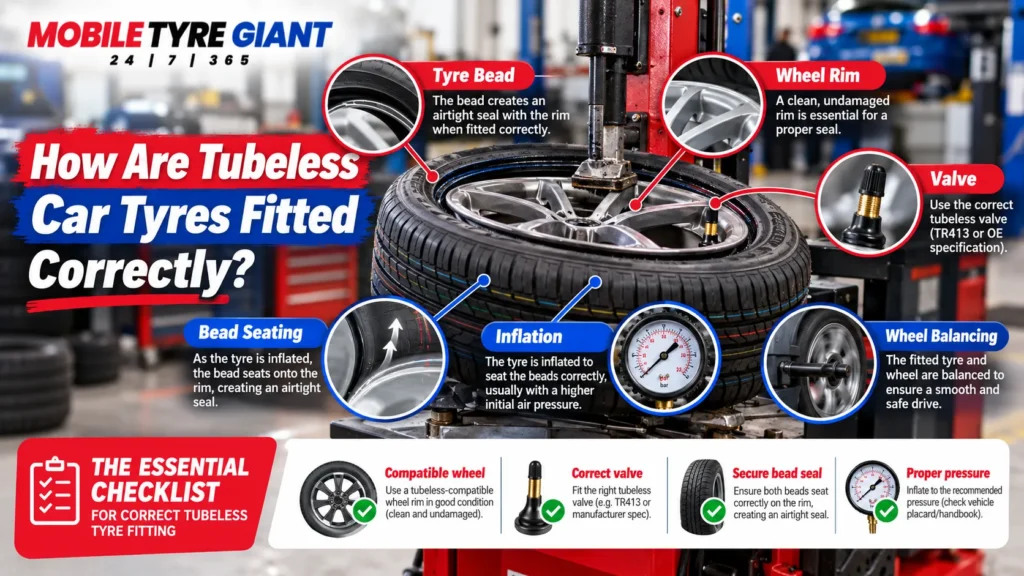
Tubeless tyres must be fitted using suitable equipment and a wheel that is compatible with their construction. Unlike tube-type tyres, they rely on an airtight seal between the tyre beads and wheel rim to maintain pressure. A qualified fitter checks the wheel’s condition, examines the valve and ensures the tyre meets the vehicle manufacturer’s specifications. Correct mounting is important because even a new tyre can lose air if the sealing surfaces are damaged or the installation is unsuitable.
Once the tyre is mounted, the technician inflates it according to the manufacturer’s fitting procedures and checks that the beads are seated correctly. The completed wheel assembly should then be balanced before being fitted securely to the vehicle. Its operating pressure must match the vehicle manufacturer’s recommendation. These steps help ensure that the tubeless tyre retains air properly and performs as intended during normal driving.
Why Do the Wheel Rim, Tyre Bead and Valve Matter?
The wheel rim plays an essential role in keeping a tubeless tyre airtight. Its sealing surfaces must be suitable for the tyre and free from damage that could interfere with the bead. Corrosion, cracks or distortion may allow air to escape even when the tyre itself is in good condition. A professional fitter inspects these areas before completing the installation and should investigate any suspected sealing problem.
The valve is equally important because it provides the route for inflation while preventing air from escaping afterwards. A damaged valve stem, faulty core or deteriorated seal can lead to a slow leak. Vehicles fitted with direct tyre pressure monitoring systems may also require appropriate sensor and valve servicing. Checking these components during fitting can help avoid repeated pressure loss after the vehicle returns to the road.
Can You Fit a Tubeless Car Tyre at Home?
Fitting a tubeless car tyre is not a suitable DIY task without the correct training and specialist equipment. Removing the old tyre, mounting the replacement and seating its beads all require appropriate procedures. Incorrect inflation or unsuitable equipment can be dangerous. The wheel must also be inspected, the tyre balanced and the completed assembly installed according to the manufacturer’s specifications.
If you need a new tyre, professional mobile tyre fitting may provide a convenient alternative to visiting a garage. A qualified technician can bring the equipment needed to fit and balance a suitable replacement at an appropriate location. This is particularly helpful when an existing tyre is unsafe to drive on. Always choose a safe place for the work rather than attempting roadside repairs beside moving traffic.
What Maintenance Do Tubeless Tyres Need?
Tubeless tyres do not generally require special maintenance beyond the checks recommended for modern car tyres. However, their construction does not make them maintenance-free. Correct inflation, adequate tread depth and sound sidewalls remain essential for safe driving. The wheel rim and valve must also maintain an effective seal. Ignoring these areas can allow small problems to develop into more serious faults.
A useful habit is to examine the tyres whenever you wash the car or prepare for a longer journey. Look for embedded objects, cracks, bulges and unusual tread wear. Pay attention if one tyre appears softer than the others or repeatedly needs inflating. These symptoms deserve investigation even when the vehicle still handles normally. Early attention may prevent additional damage and unnecessary replacement costs.
How Often Should You Check Tubeless Tyre Pressure?
Check tyre pressures at least once a month and before long journeys, preferably when the tyres are cold. Use the values recommended by your vehicle manufacturer rather than the maximum pressure shown on the tyre sidewall. If you are carrying additional passengers or heavy luggage, check whether the manufacturer specifies different pressures for that load. Correct inflation supports handling, braking and tyre longevity.
Remember that the tyre pressure monitoring system is not a substitute for manual checks. Some systems only warn you after a significant pressure change has occurred. A tyre may gradually lose pressure without immediately triggering a dashboard warning. If the same tyre repeatedly falls below its recommended pressure, arrange a leak inspection instead of continually topping it up.
What Should You Check After New Tubeless Tyres Are Fitted?
After having tubeless tyres replaced, confirm that the correct tyre size and specifications have been installed. Check that the fitter has set the recommended pressure, balanced the wheel and securely refitted it. Ask about any tyre pressure monitoring system reset required for your vehicle. A new tyre should not be losing air, producing strong vibration or causing unusual steering behaviour.
During your first journey, notice whether the car drives smoothly and whether any pressure warning appears. A slight change in road noise or steering feel can occur when worn tyres are replaced, but pronounced vibration or pulling needs attention. Our post-fitting tyre checklist explains the checks to make before and after tyre replacement. Contact the fitter if anything suggests the installation requires another inspection.
When Should You Arrange Professional Help for Tubeless Tyres?
Professional assistance is advisable whenever a tubeless tyre suffers a puncture, develops repeated pressure loss or shows visible structural damage. A qualified technician can examine the tyre, valve and wheel to establish where the fault originated. This is important because an air leak does not always mean that the tread has been punctured. The correct solution depends on the actual cause and the tyre’s overall condition.
Do not continue driving on a seriously deflated tyre simply because it is tubeless. Operating with insufficient pressure can damage the internal structure and make an otherwise repairable puncture unsuitable for repair. If the tyre is flat or visibly damaged, arrange assistance at a safe location. Depending on the inspection findings, the solution may involve a suitable permanent repair, valve work or tyre replacement.
How Can a Tyre Specialist Decide Between Repair and Replacement?
A specialist first considers the location and extent of the damage, along with the tyre’s age, wear and internal condition. Certain small punctures within the permitted tread repair area may qualify for a permanent repair. However, sidewall damage, serious structural deterioration or evidence of prolonged driving while underinflated can make replacement necessary. A professional should explain why the tyre is or is not repairable.
A suitable repair can allow a sound tyre to remain in service without unnecessary replacement. However, attempting to preserve a tyre with serious damage can create unacceptable risks. If you are uncertain about its condition, ask for an inspection before deciding. The aim is to restore safe, reliable performance rather than simply stop air escaping for a short period.
Final Words: Are Tubeless Tyres a Good Choice for UK Drivers?
Tubeless tyres are a practical and reliable choice for modern vehicles, which explains why they are widely used on UK roads. They retain air without a separate inner tube and can offer advantages when dealing with certain punctures. However, they are not puncture-proof, self-repairing or immune to sudden pressure loss. Their safety depends on correct fitting, suitable wheels, proper inflation and regular inspections.
Understanding how tubeless tyres work helps you recognise problems before they become more serious. Check pressures and tread condition regularly, investigate repeated air loss and seek professional assistance whenever damage is suspected. A correctly maintained tubeless tyre is designed for normal everyday driving, including longer motorway journeys. Good maintenance and timely repairs are what keep it performing safely throughout its usable life.
Need Help With Your Tubeless Tyres?
Is your tubeless tyre losing air or damaged? If a professional inspection confirms replacement is needed, arrange convenient mobile tyre fitting at your home or workplace.
Frequently Asked Questions
Find quick answers to the most common questions our customers ask.
Tubeless tyres eliminate the separate inner tube and associated pinch damage. They are widely used on modern cars, but their safety still depends on correct fitting and maintenance.
Check the tyre sidewall for the word TUBELESS or the abbreviation TL. Most modern passenger cars use tubeless tyres, but the wheel must also be compatible.
Ordinary tubeless car tyres do not require liquid sealant during normal use. Their airtight inner lining, wheel bead seal and valve retain the air.
Yes, serious punctures, impact damage, valve failures or structural problems can cause rapid deflation. Tubeless construction does not guarantee gradual pressure loss.
An embedded nail may slow air loss, but it does not make the tyre safe. Arrange an inspection and avoid driving if the tyre is deflated or damaged.
Yes, certain small punctures within the permitted tread repair area may be permanently repaired. The tyre must first meet the relevant repair and safety requirements.
Its lifespan depends on mileage, driving conditions, pressure, wear and age-related deterioration. Replace it when its condition or tread depth makes continued use unsafe.
Yes, most modern alloy wheels are designed for compatible tubeless tyres. The wheel must be suitable, undamaged and capable of maintaining an effective airtight seal.
Yes, but tubeless construction alone does not determine winter grip. Suitable winter or all-season tyre designs and adequate tread condition matter more.
Check tyre pressure, tread depth and condition at least monthly and before long journeys. Investigate repeated pressure loss, visible damage or unusual handling promptly.