

Driving through London during a heatwave can place additional demands on your vehicle, particularly its tyres. Whether you are sitting in slow-moving traffic on the North Circular, commuting across the city or joining the M25 for a longer journey, rising temperatures can affect tyre pressure and operating conditions. Hot roads, heavy loads and existing tyre problems can increase the risk of a breakdown. Understanding these factors is an important part of staying safe.
Many drivers believe that tyres become dangerously overinflated whenever the weather turns hot. Others assume that releasing a little air will prevent a blowout. Both ideas can lead to mistakes. Modern car tyres are designed to accommodate normal pressure increases during driving, provided they are correctly maintained. The real priority is identifying incorrect inflation, existing damage and other conditions that make a tyre vulnerable during extreme heat.
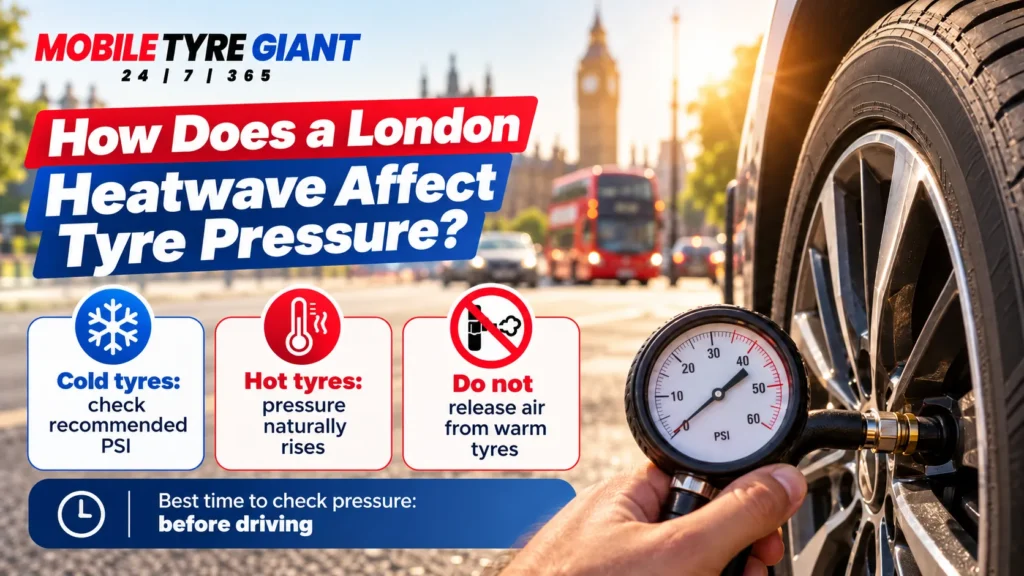
How Does a London Heatwave Affect Tyre Pressure?
Air pressure inside a tyre changes as its temperature rises or falls. During a London heatwave, higher outdoor temperatures can increase the pressure inside your tyres, even before you start driving. Once the vehicle begins moving, repeated tyre flexing generates additional heat. This means the pressure displayed after travelling through the city may be higher than the reading taken earlier that morning.
A higher reading is not automatically a problem. Vehicle manufacturers account for normal pressure increases when specifying the correct cold inflation values. However, tyres that were already incorrectly inflated may behave differently under demanding conditions. Long journeys, excessive loads and sustained driving can increase the stresses they experience. Knowing the difference between normal temperature-related changes and a genuine inflation problem helps prevent unnecessary adjustments.
How Much Can Tyre Pressure Increase in Hot Weather?
As a general indication, tyre pressure may increase by around 1 to 2 PSI for every 10°C rise in tyre temperature. The exact change depends on the starting pressure and operating conditions. For example, a tyre inflated correctly on a relatively cool morning may display a noticeably higher pressure after travelling across London on a hot afternoon. This increase does not necessarily mean it was overinflated before the journey.
Road temperature can also differ significantly from the surrounding air temperature. Dark road surfaces absorb heat from sunlight, while the tyres generate their own heat as they roll. Consequently, a pressure reading taken after motorway driving cannot be compared directly with the manufacturer’s cold-pressure recommendation. The safest approach is to establish the correct inflation before travelling and avoid making unnecessary changes while the tyres are hot.
Should You Let Air Out of Your Tyres During a Heatwave?
You should not release air from a hot tyre simply because its pressure has risen above the recommended cold value. Doing so can leave the tyre underinflated when it cools. That creates a different and potentially more serious problem because insufficient pressure increases sidewall flexing and heat generation. The additional stress can damage the tyre internally, particularly during prolonged driving.
Imagine checking your tyres after an hour on the M25 and finding that the readings are several PSI higher than they were before leaving home. If the tyres were correctly inflated when cold, this may be a normal operating increase. Do not reduce the pressure just to match the cold figure. If a reading is unusually high, a warning appears or you suspect a fault, arrange an appropriate check rather than guessing.
Why Can Hot Weather Increase the Risk of a Tyre Blowout?
Hot weather can contribute to tyre failures when other problems are already present. Underinflated tyres, damaged sidewalls, excessive loading and internal deterioration can all make a tyre less capable of handling the demands of a journey. Higher operating temperatures may then increase the stress on an already weakened structure. This is particularly concerning on longer journeys involving sustained speeds.
London drivers face a mixture of demanding conditions, from repeated braking and acceleration in congested streets to longer journeys on surrounding motorways. Potholes and kerb impacts may also leave damage that is not immediately obvious. A tyre can still appear inflated despite having a structural problem. Regular checks for pressure, tread wear and visible defects are therefore essential during periods of unusually hot weather.
How Do Underinflation and High Temperatures Combine?
When a tyre contains too little air, its sidewalls flex more than intended as the wheel rotates. This repeated movement generates additional heat and places greater strain on the internal structure. During a heatwave, the tyre may already be operating in warmer conditions, making proper inflation especially important. Prolonged underinflation can lead to deterioration and increase the likelihood of serious tyre failure.
A tyre does not have to look completely flat to be dangerously underinflated. Some modern low-profile tyres can appear reasonably normal even when pressure is significantly below the recommended level. This is why visual inspection alone is insufficient. Regular pressure measurements, together with the essential checks covered in tyre safety guidance, can help identify problems before they develop into more serious faults.
Can High Temperatures Alone Cause a Healthy Tyre to Burst?
A properly maintained tyre should not burst simply because London experiences a hot summer day. Modern pneumatic tyres are designed with a substantial margin to accommodate normal inflation pressure changes. Although heat affects tyre pressure, the temperature increase associated with ordinary summer weather is not generally enough to cause a sound, correctly inflated tyre to burst on its own.
The situation changes when a tyre has an existing weakness. A damaged casing, serious sidewall cut or prolonged underinflation can make a failure more likely under demanding conditions. A vehicle carrying excessive weight may place further stress on its tyres. Rather than fearing every rise in temperature, drivers should focus on maintaining correct inflation and identifying faults before starting a journey.
What Is the Correct Tyre Pressure for London Summer Driving?
There is no single tyre pressure suitable for every car during a London heatwave. The correct value depends on the vehicle, tyre specification and load being carried. Manufacturers provide recommended cold inflation pressures, usually displayed inside the driver’s door opening, behind the fuel filler flap or in the vehicle handbook. Front and rear pressures may differ, particularly when the car is fully loaded.
Do not use the maximum pressure moulded into the tyre sidewall as your everyday inflation target. That figure is not the vehicle manufacturer’s normal driving recommendation. You should also avoid deliberately adding or removing several PSI just because the weather forecast predicts high temperatures. Use the manufacturer’s specified values for the applicable driving and loading conditions, then monitor the tyres regularly.
When Should You Check Tyre Pressure During a Heatwave?
The best time to check tyre pressure is before your first journey, when the tyres have not been warmed by driving. Early morning is often convenient during a heatwave, but the important point is that the tyres are at ambient temperature rather than hot from recent use. Use a reliable gauge and check every tyre individually. A spare wheel should also be checked where one is fitted.
The Highway Code recommends checking tyre pressures weekly, before travelling and while the tyres are cold. Additional checks are worthwhile before longer journeys, particularly when carrying passengers and luggage. The correct steps for checking tyre pressure include using the vehicle’s recommended values and measuring each tyre accurately. If you can only reach an air pump after driving, follow the vehicle manufacturer’s guidance for warm-tyre measurements rather than automatically releasing air.
Can a Tyre Pressure Warning Light Be Caused by Hot Weather?
Temperature changes can affect the pressures displayed by a vehicle’s tyre pressure monitoring system, but a warning light should never be dismissed as a normal consequence of hot weather. Some systems directly measure inflation pressure, while others detect changes indirectly through wheel rotation. A warning may indicate actual pressure loss, an incorrectly stored reference value or a system fault. The precise behaviour depends on the vehicle.
If a tyre pressure warning appears during a hot journey, find somewhere safe to stop and assess the situation. Check for obvious damage or deflation without exposing yourself to moving traffic. When safe, use a reliable pressure gauge and follow the manufacturer’s instructions. If a tyre is seriously underinflated, damaged or repeatedly losing air, arrange professional assistance. Resetting the warning without addressing the underlying problem is not a safe solution.
What Tyre Checks Should You Make Before Driving in a London Heatwave?
Before setting off during a London heatwave, checking your tyres can help identify problems that might become more serious during the journey. High temperatures alone do not make correctly maintained tyres unsafe, but existing faults can increase the risk of failure. A tyre that is already worn, damaged or losing pressure may struggle under prolonged driving conditions. Taking a few minutes to examine all four tyres is particularly worthwhile before a busy day of travelling.
Start by checking tread depth, visible condition and signs of pressure loss. Examine the sidewalls for cracks, bulges or cuts, and look for objects embedded in the tread. Remember to check the spare tyre if your vehicle carries one. These simple inspections are useful whether you are driving through central London, commuting along the A40 or preparing for a longer journey around the M25.

Is Your Tyre Tread Deep Enough for a Summer Downpour?
Summer heatwaves do not guarantee dry roads throughout the day. Sudden thunderstorms can bring heavy rainfall, leaving standing water on London’s busy roads. Adequate tread depth is important because tyre grooves help disperse water and maintain contact with the road. Worn tyres may struggle to clear water effectively, increasing the risk of aquaplaning and reducing braking performance in wet conditions.
For most UK passenger cars, the legal minimum tread depth is 1.6mm across the central three-quarters of the tyre’s width and around its entire circumference. However, wet-weather performance can deteriorate before reaching that limit. Knowing how to check tyre tread depth helps identify uneven wear and tyres approaching replacement. Use a suitable tread depth gauge and measure several positions rather than checking just one groove.
Are the Tyre Sidewalls Free From Bulges, Cuts and Cracks?
A tyre’s sidewall helps support the vehicle and flexes continuously while driving. Damage to this area can weaken the tyre’s structure, particularly when the vehicle is travelling at speed or carrying additional weight. Before a hot-weather journey, examine the sidewalls for visible cuts, cracking, unusual swelling or exposed reinforcing material. Pay particular attention to tyres that have recently struck a kerb or pothole.
A bulge can indicate damage to the internal structure and should be treated as a serious warning sign. Deep cuts and other structural defects can also make a tyre unsafe, even when it still holds air. The different types of tyre sidewall damage explain why cosmetic marks and structural defects should not be treated alike. If significant damage is suspected, arrange an inspection instead of continuing normal driving.
Can an Embedded Nail or Damaged Valve Cause Trouble in Hot Weather?
A nail or screw embedded in the tread may create a slow puncture without making the tyre look obviously flat. Some drivers notice the problem only after receiving a pressure warning or repeatedly needing to inflate the tyre. This becomes particularly concerning before a long journey because operating with insufficient pressure generates additional heat and can damage the tyre internally.
Faulty valves and damaged wheel-rim seals can cause similar pressure loss. If one tyre consistently loses more air than the others, do not assume the weather is responsible. The problem needs to be identified and corrected. Avoid removing an embedded object yourself, as this may allow air to escape more rapidly. A professional inspection can determine whether a permanent repair is possible or replacement is necessary.
Which Warning Signs Make a Tyre Unsafe During a Heatwave?
Some tyre problems reveal themselves before you begin driving, while others become noticeable once the vehicle is moving. Repeated pressure warnings, unusual vibration, pulling to one side or visible deformation may indicate a fault. These symptoms should not be dismissed simply because the weather is unusually hot. A correctly maintained tyre should continue operating normally within its intended conditions.
Heatwave journeys can become particularly demanding when a vehicle is heavily loaded or travelling for extended periods. If a tyre already has structural damage or has been operated at dangerously low pressure, additional heat and stress may increase the risk of failure. Responding to early warning signs is therefore more effective than waiting until the tyre becomes completely flat or the vehicle becomes difficult to control.
What Does Repeated Pressure Loss or a TPMS Warning Mean?
A tyre pressure monitoring system can alert you when inflation pressure changes beyond its programmed threshold. However, a warning does not automatically reveal the cause. It might indicate a puncture, valve leak, incorrectly adjusted pressure or a monitoring-system issue. During hot weather, tyre pressure changes naturally, but repeated pressure loss should not be treated as a normal heatwave effect.
If the warning appears before leaving home, check the affected tyre using an accurate gauge when it is cold. Compare the reading with the vehicle manufacturer’s recommendation. Look for obvious damage and investigate significant differences between tyres. If the tyre is seriously underinflated or repeatedly losing air, arrange professional assistance before travelling. Resetting the warning light without resolving the fault may leave an unsafe condition unnoticed.
Should You Ignore Steering Vibration or Pulling in Hot Weather?
Unexpected steering vibration or pulling can indicate problems with a tyre, wheel or suspension system. Possible causes include wheel imbalance, uneven tread wear, incorrect alignment or tyre damage. The symptoms may become more noticeable at certain speeds, particularly when joining faster roads after travelling through London traffic. Although heat does not automatically cause these problems, existing faults should be investigated.
If the vehicle develops strong vibration, unusual tyre noise or unstable handling, reduce speed smoothly and stop somewhere safe. Do not attempt to diagnose the problem beside moving traffic. A tyre that has suffered internal damage may not show obvious external signs. Professional inspection can help establish whether the fault involves the tyre itself or another component. Avoid continuing a long journey until a potentially serious problem has been addressed.
How Do London Roads and Summer Traffic Affect Tyre Safety?
Driving in London involves frequent changes in speed, narrow streets, busy junctions and a mixture of road surfaces. These conditions can place different demands on tyres compared with steady driving on open roads. Repeated braking and cornering contribute to normal wear, while potholes and accidental kerb contact can cause sudden damage. A heatwave adds another reason to ensure that tyres are already in good condition.
Higher temperatures can also affect road surfaces. Prolonged heat and sunlight may contribute to deterioration, with weakened surfaces becoming more vulnerable to cracking and potholes. However, not every rough surface creates an immediate tyre hazard. The main concern is identifying and avoiding damage that could compromise the tyre’s structure before a demanding journey.
Can Potholes and Kerb Strikes Increase Blowout Risk?
Striking a pothole or raised kerb can damage the tyre’s internal structure even when the outer rubber appears relatively normal. The impact may compress the tyre against the wheel rim, affecting the sidewall or reinforcing materials. A damaged wheel can also cause pressure loss. If the vehicle continues operating with an undetected defect, the tyre may become more vulnerable during later journeys.
This is particularly relevant on urban routes where road surfaces can be uneven and parking spaces are tight. After a significant impact, check for bulges, cuts, unusual vibration and pressure loss. If the steering feels different, the wheel or alignment may also need attention. Do not assume that a tyre is undamaged simply because it remained inflated immediately after hitting a pothole.
Does Stop-Start London Traffic Make Tyres Overheat?
Stop-start traffic places repeated acceleration, braking and turning forces on tyres. During a heatwave, the surrounding road surface and air may also be warmer than usual. However, ordinary congestion does not automatically cause a healthy, correctly inflated tyre to overheat dangerously. Tyres are designed to operate across a range of normal driving temperatures and conditions.
The more significant concerns are incorrect inflation, existing structural damage, excessive loading and prolonged demanding use. For example, a seriously underinflated tyre can generate additional heat because its sidewalls flex excessively. Heavy traffic may make a journey longer, but time spent in congestion is not the same as continuous high-speed tyre operation. Proper maintenance remains the most reliable way to reduce avoidable heat-related risks.
Does Carrying Passengers and Luggage Increase Tyre Stress?
Vehicle loading directly affects how much weight the tyres must support. During summer holidays, drivers may carry extra passengers, luggage and equipment for longer journeys. A fully loaded vehicle can require different inflation pressures from those recommended for everyday use. These values are normally provided in the vehicle handbook or on the manufacturer’s tyre-pressure label.
Before leaving London for a weekend trip or holiday, check the vehicle’s loading limits and the appropriate cold tyre pressures. Never exceed the permitted vehicle or tyre load capacity. Avoid assuming that tyres should simply be inflated to their maximum sidewall pressure. Correct loading and inflation help maintain handling, braking and tyre performance throughout the journey, particularly during sustained motorway travel in hot weather.
How Should You Prepare for a Motorway Journey During a London Heatwave?
Preparing your vehicle for a long motorway journey during hot weather involves more than checking the temperature outside. Your tyres need to be correctly inflated, suitable for the vehicle’s load and free from damage. This is particularly important when travelling from London along the M25, M1 or M4, where sustained driving places different demands on tyres compared with short urban journeys. Existing tyre faults can become more serious when a vehicle is travelling for extended periods.
Before leaving, check the manufacturer’s recommended cold tyre pressures, including any adjustments required for passengers and luggage. Examine the tyres for unusual wear, embedded objects and visible damage. If your vehicle has a spare wheel, confirm that it is serviceable and properly inflated. These preparations do not guarantee that a puncture will never occur, but they can reduce the likelihood of preventable tyre problems interrupting your journey.
What Should You Carry in Case of a Summer Tyre Emergency?
A charged mobile phone, drinking water and essential vehicle information can be particularly useful during a summer breakdown. Make sure you know whether your car carries a spare wheel, an emergency inflation kit or neither. If a locking wheel nut key is required, check that it is available before travelling. A high-visibility garment and the contact details for appropriate breakdown assistance can also be helpful.
However, carrying emergency equipment does not mean you should attempt to change a tyre beside fast-moving motorway traffic. A hard shoulder or emergency area can still be hazardous, even when the vehicle is stationary. The safest response may involve recovery or professional assistance at another location. Keep essential items accessible without overloading the vehicle, and avoid searching through luggage beside the carriageway after a breakdown.
Do You Need to Stop Regularly to Cool Your Tyres?
Healthy tyres that are correctly inflated and used within their specified limits are designed to operate at normal driving temperatures. A London heatwave does not automatically mean you must stop every few miles to let them cool. However, taking regular breaks remains sensible during longer journeys, especially when hot weather increases driver fatigue. Rest stops also provide an opportunity to notice changes in the vehicle’s condition.
If you stop at motorway services, avoid immediately releasing air because the tyres feel hot or their pressure readings are higher than the cold recommendations. This increase may be normal after driving. Never pour cold water over tyres in an attempt to manage their operating temperature. If you notice an unusual smell, visible damage or serious pressure loss, arrange appropriate inspection rather than simply waiting for the tyres to cool.
What Should You Do if a Tyre Blows Out During a Heatwave?
A tyre blowout can be frightening, particularly when travelling at motorway speeds. You may hear a loud bang, followed by a flapping noise, strong vibration or the vehicle pulling unexpectedly to one side. Although the experience can feel sudden and violent, your first priority is to maintain control. Reacting with harsh braking or abrupt steering may make the vehicle more difficult to manage.
A blowout during hot weather does not necessarily mean the temperature alone caused the failure. The tyre may have been underinflated, structurally damaged or weakened by an earlier impact. Regardless of the cause, focus on responding safely rather than trying to understand what happened while the vehicle is moving. The correct immediate actions can help you bring the car to a safer stopping position.
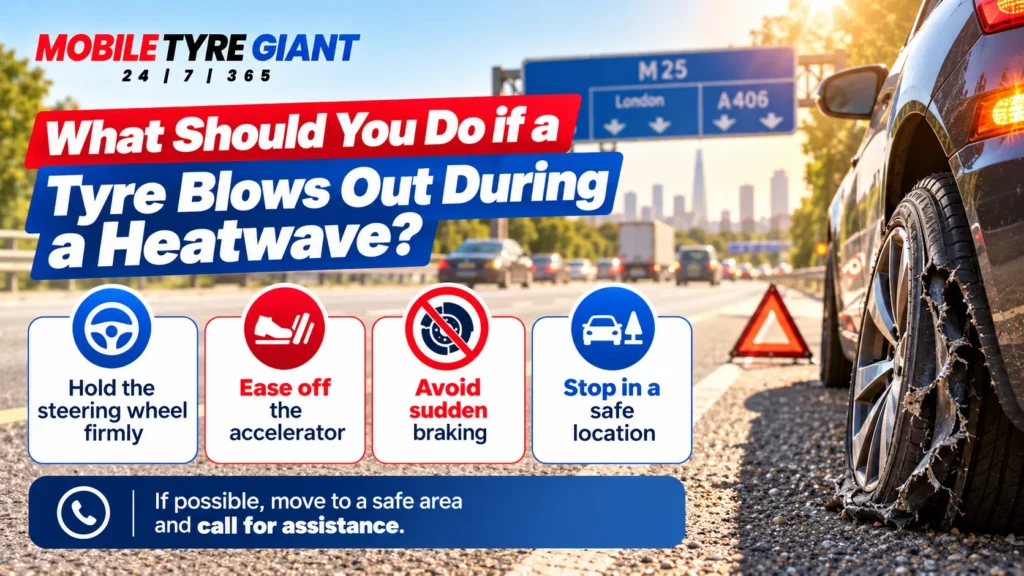
How Can You Stay in Control After a Sudden Tyre Blowout?
Keep a firm grip on the steering wheel and concentrate on maintaining the vehicle’s direction. Avoid stamping on the brake pedal or making sudden steering movements. Ease off the accelerator progressively and allow the vehicle to slow in a controlled manner. As speed decreases and the vehicle becomes more stable, check your surroundings before moving towards a suitable stopping place.
The vehicle’s behaviour will depend on which tyre has failed, its remaining pressure and the driving conditions. A front tyre failure may create noticeable steering pull, while a rear tyre failure can affect stability. There is no reason to accelerate sharply or attempt a sudden lane change. The appropriate response is to maintain control, reduce speed smoothly and stop safely. The different warning signs and actions are explained further in what to do if a tyre blows out while driving.
Where Should You Stop if Your Tyre Fails on the M25?
If the vehicle remains controllable and it is safe to continue, aim for a motorway service area or leave at the next suitable exit. These locations generally offer more protection from moving traffic than stopping beside the carriageway. However, do not continue driving for several miles on a shredded, completely flat or severely damaged tyre simply because a service area appears nearby. Further driving may reduce control and worsen the damage.
If reaching an exit or service area is impossible, move towards an emergency area or hard shoulder where available, following the Highway Code. Stop as far left as safely possible and activate your hazard warning lights. Where it is safe to leave the vehicle, exit on the side away from traffic and move well clear, preferably behind a safety barrier where one is available. Never attempt a tyre change or place a warning triangle on the motorway.
What if Your Vehicle Stops in a Live Motorway Lane?
Stopping in a live motorway lane creates an immediate danger because other vehicles may approach at high speed. If you cannot move to a place of relative safety and cannot safely exit the vehicle to get clear of traffic, stay inside with your seat belt fastened. Keep the hazard warning lights on and call 999 immediately, asking for the police. Do not step outside to inspect the tyre or retrieve equipment.
If you have reached a hard shoulder or emergency area and can leave safely, follow the Highway Code’s instructions for getting clear of the vehicle and moving traffic. Avoid standing in front of or behind the car where another vehicle could strike it. The intense heat may make waiting uncomfortable, but personal safety remains the priority. Use the motorway emergency telephone where appropriate, and follow the instructions given by emergency or recovery services.
Can You Continue Driving After a Tyre Problem in Hot Weather?
Whether you can continue driving depends on the condition of the tyre and the nature of the problem. A minor puncture with gradual pressure loss is different from a complete blowout or serious sidewall failure. Hot weather does not automatically make every puncture irreparable, but driving while significantly underinflated can cause additional internal damage. A tyre that appears to hold air after reinflation may still be unsafe.
Do not assume that replacing lost air immediately restores the tyre’s original condition. The casing, sidewalls and wheel may need inspection, particularly after travelling with very low pressure. If the tyre is visibly torn, badly deflated or causing unstable handling, avoid continuing the journey. Appropriate professional assessment is necessary before deciding whether a permanent repair, replacement or recovery is required.
Can an Emergency Sealant Kit Fix a Heatwave Puncture?
Emergency tyre sealant kits may temporarily deal with certain small tread punctures, depending on the product and the damage involved. Some modern cars carry a sealant bottle and compressor instead of a spare wheel. These kits are designed to provide limited mobility in suitable circumstances, allowing the driver to reach professional assistance. They should not be treated as equivalent to a permanent puncture repair.
The manufacturer’s instructions determine whether a particular kit can be used and what speed or distance restrictions apply. Sealant cannot reliably repair major sidewall damage, a shredded tyre or a serious structural failure. It should also never be applied in an unsafe motorway stopping location. If the tyre cannot maintain the required pressure or the kit is unsuitable for the damage, arrange appropriate assistance rather than attempting to continue.
When Is Mobile Tyre Fitting Safer Than Continuing the Journey?
Mobile tyre fitting may be suitable when the vehicle is parked in a location that can be accessed and worked around safely. For example, a motorway service-area car park or another suitable parking location can provide a more practical environment for tyre replacement than an exposed roadside. The technician must be able to assess the tyre, access the affected wheel and carry out the work without unacceptable risk from passing traffic.
A vehicle stopped on a hard shoulder or in an emergency area presents different safety considerations, and roadside fitting cannot be assumed possible. Live motorway lanes are not normal tyre-fitting locations. The circumstances explained in whether a mobile tyre fitter can work on a motorway help clarify why location matters. If the vehicle cannot be accessed safely, recovery may be necessary before tyre work can begin.
What Should You Check Before Driving Again After a Tyre Emergency?
After a puncture or blowout has been dealt with, confirm that the vehicle is suitable to return to the road. A professional should check that the replacement or repaired tyre meets the vehicle’s specifications and is correctly inflated. The wheel should also be inspected if it struck debris or suffered significant impact damage. A new tyre alone cannot correct a bent wheel or another mechanical problem.
Pay attention to unusual vibration, pulling or dashboard warnings when driving resumes. If the vehicle behaves differently, stop somewhere safe and arrange further inspection rather than attempting to complete the journey regardless. Drivers leaving a motorway emergency area must use its emergency telephone and follow the operator’s advice before rejoining the carriageway. Safe motorway driving depends on resolving the tyre problem and returning to traffic correctly.
How Can You Maintain Your Tyres During a London Heatwave?
Keeping your tyres in good condition throughout a London heatwave involves regular maintenance rather than making sudden adjustments when temperatures rise. Correct inflation, sufficient tread depth and sound sidewalls remain the foundations of tyre safety. A properly maintained tyre is designed to handle normal summer driving conditions, including the pressure increase that occurs as it warms during use. The main concern is preventing existing problems from becoming more serious.
Whether you regularly drive through central London or commute along the North Circular, make tyre inspections part of your routine. Look for unusual wear, embedded objects and signs of pressure loss. Pay attention to how the vehicle handles, particularly after striking a pothole or kerb. A few minutes spent checking the tyres before travelling may help prevent an avoidable breakdown on a particularly hot day.
Can Parking in Direct Sunlight Damage Your Tyres?
Parking in direct sunlight can expose tyres to higher temperatures and ultraviolet radiation. However, leaving a healthy tyre in the sun for a few hours does not automatically make it unsafe. Tyres are manufactured to withstand normal outdoor conditions. The greater concern is prolonged exposure over time, particularly when the rubber is already ageing or showing signs of deterioration.
If your vehicle is parked outdoors for extended periods, regularly inspect the sidewalls for cracking and other damage. Choosing a shaded parking space may reduce prolonged exposure to intense sunlight where practical. However, shade is not a substitute for checking tyre condition. If you notice deep cracking, unusual deformation or pressure loss, arrange a professional assessment rather than assuming the damage is only cosmetic.
How Often Should You Check Tyres During Several Hot Days?
Check your tyre pressures at least weekly, as advised by the Highway Code, and before significant journeys. Measurements should be taken when the tyres are cold, using the vehicle manufacturer’s recommended values. During prolonged hot weather, additional checks are sensible if you are covering substantial mileage or carrying extra passengers and luggage. Remember that a reading taken immediately after driving may be higher because the tyres are warm.
Tyre condition deserves regular attention too. Examine the tread, sidewalls and visible wheel areas for damage or uneven wear. Compare pressures between checks rather than reacting to a single higher reading after driving. If one tyre consistently loses air while the others remain stable, investigate the cause. Temperature changes are normal, but repeated pressure loss may indicate a puncture, leaking valve or another fault.
When Should You Replace a Tyre Before Another Heatwave Journey?
A tyre should be replaced when its condition makes continued use unsafe, regardless of the weather. Serious sidewall damage, exposed reinforcing cords, structural bulges and tread below the legal limit are reasons not to continue normal driving. Hot weather can increase the demands placed on an already weakened tyre, particularly during prolonged journeys. Replacing a defective tyre before travelling is safer than relying on it to survive another journey.
The decision should be based on tread depth, visible condition and professional inspection where necessary. Do not assume a tyre is safe simply because it remains inflated or has covered relatively few miles. Equally, heatwave conditions alone do not mean that every tyre needs replacing. Knowing when to replace tyres helps distinguish normal wear from damage requiring attention before a journey.
Can Older or Previously Repaired Tyres Handle Summer Driving?
An older tyre may remain usable if it is in suitable condition and meets the applicable safety requirements. However, age-related deterioration can occur even when plenty of tread remains. Exposure to sunlight, storage conditions and normal use can affect the rubber over time. Check the tyre manufacturer’s age-related inspection and replacement recommendations, and have any concerning cracking or deterioration assessed professionally.
A previously repaired tyre can also be suitable for normal summer driving when it has received an approved permanent repair and remains structurally sound. However, temporary sealants and external plugs should not be confused with a compliant permanent repair. If the tyre loses pressure again or develops unusual vibration, arrange an inspection. Previous damage, repair quality and current condition matter more than the outdoor temperature alone.
When Should You Arrange Professional Tyre Assistance in London?
Professional assistance is worthwhile when you discover repeated pressure loss, visible damage or unusual tyre-related symptoms before a journey. A specialist can inspect the tyre and determine whether the problem involves a puncture, valve, wheel rim or internal damage. This is particularly important if you have already driven with insufficient inflation pressure. Adding air may temporarily restore pressure without resolving the underlying fault.
If a tyre is no longer suitable for use, mobile tyre replacement may provide a convenient option at an appropriate home, workplace or parking location. The vehicle must be positioned somewhere safe for the technician to work. If it has stopped in a hazardous location, appropriate recovery may be needed first. Never put yourself or others at risk by attempting tyre work beside fast-moving traffic.
What Information Should You Give a Mobile Tyre Fitter?
Before arranging assistance, have your vehicle registration, tyre size and location available. Explain what happened, including whether the tyre has lost pressure, suffered a kerb impact or developed a visible bulge. Mention any dashboard warnings and whether the vehicle is parked safely. Accurate information helps the technician understand the circumstances and determine what equipment or replacement tyre may be required.
It is also useful to explain whether your vehicle uses run-flat tyres or has unusual wheel specifications. If you are unsure which details matter, the information a mobile tyre fitter needs can help you prepare. Avoid guessing about tyre damage or describing a temporary sealant treatment as a permanent repair. Clear details make it easier to arrange suitable assistance.
What Should You Check After a Replacement Tyre Has Been Fitted?
After a tyre has been replaced, confirm that the new tyre meets the vehicle’s approved specifications. The technician should ensure that the wheel is correctly fitted, the assembly is balanced where required and the inflation pressure matches the manufacturer’s recommendation. Any necessary tyre pressure monitoring system procedure should also be completed. Correct installation is especially important before returning to a long summer journey.
During the first drive, pay attention to unusual vibration, pulling or warning messages. If the vehicle does not behave normally, stop somewhere safe and arrange further inspection. Avoid assuming that replacing a damaged tyre automatically resolves every problem caused by an earlier impact. Wheel damage or alignment faults may require separate attention. A properly completed installation should leave the vehicle suitable for its intended use.
Final Words: How Can You Prevent Tyre Blowouts During a London Heatwave?
London heatwave driving can place additional demands on tyres, but high temperatures alone do not normally cause a healthy, correctly inflated tyre to burst. The greater risks involve underinflation, existing damage, excessive loading and prolonged demanding use. Checking cold tyre pressure, examining tread and sidewall condition, and responding to unusual symptoms are practical ways to reduce the likelihood of a tyre-related breakdown.
Before travelling through London or joining the M25, make sure your tyres meet the vehicle manufacturer’s requirements and remain in good condition. Never release air simply because a hot tyre shows a higher pressure reading. Replace damaged or unsafe tyres before setting off, and seek professional help when the cause of a problem is unclear. Good maintenance and sensible driving are the foundations of safer journeys during a heatwave.
Worried About Your Tyres in a Heatwave?
Hot weather can put extra stress on worn or damaged tyres. Stay safer on London’s roads with professional mobile tyre replacement at your home or workplace.
Frequently Asked Questions
Find quick answers to the most common questions our customers ask.
Yes, air pressure rises as tyre temperature increases. This is normal during summer driving, so compare cold tyre readings with the manufacturer's recommendations.
No, do not release air simply because a tyre is hot. Doing so could leave it underinflated when it cools.
A healthy, correctly inflated tyre should tolerate normal summer conditions. Blowout risks increase when tyres are damaged, underinflated or overloaded.
Check pressures before driving, when the tyres are cold. Early morning is often convenient because the tyres have not warmed through use.
Hot road surfaces can contribute to operating temperatures, but heat alone is rarely the whole explanation. Existing defects and incorrect inflation are important risk factors.
The Highway Code recommends weekly cold-pressure checks. Check again before long journeys and whenever you suspect pressure loss.
Temperature changes can affect tyre pressure, but a warning light may indicate a genuine fault. Check the tyre safely and investigate repeated warnings.
Yes, worn tread may disperse water less effectively, increasing aquaplaning risk. UK passenger-car tyres generally require at least 1.6mm of legal tread depth.
A tyre with an unresolved puncture may lose pressure and develop further damage. Arrange an inspection before motorway driving rather than relying on repeated inflation.
Hold the steering wheel firmly, avoid sudden braking and reduce speed smoothly. Stop somewhere safe and follow the Highway Code's breakdown procedures.