
Hooking a caravan or trailer to your car changes more than the view in your mirrors. The extra load can affect how the vehicle sits, steers and responds to bumps. That makes tyre pressure when towing worth checking before you set off. Yet there is no single PSI figure that suits every car and trailer combination. The safest starting point is the pressure specified for your vehicle and its actual load.
Picture a family car packed with passengers, luggage and weekend supplies. Add a caravan to the towball, and the rear axle may carry more weight than during the school run. Tyres that felt fine yesterday might now be working under different conditions. Getting the pressure right helps them support the load and perform as intended. This guide begins with the checks that matter most, then explains how to choose the correct settings without guessing.
Quick Pre-Towing Tyre Pressure and Load Checklist
You do not need a workshop full of equipment to begin a sensible towing check. A reliable pressure gauge, your vehicle information and a few minutes of attention make a useful start. Check the tow car and trailer separately rather than assuming their requirements match. Aim to complete these checks before loading the family into the car. The table below gives you a straightforward order to follow.
What to Check | What to Confirm |
Tow-car tyres | Cold pressures match the manufacturer’s towing or load guidance |
Caravan or trailer tyres | Pressures match the trailer and tyre specifications |
Tyre condition | No dangerous cuts, bulges or other visible damage |
Tyre suitability | Correct size, specification and load rating |
Weight limits | Car, trailer, combined and axle limits are respected |
Noseweight | Within the limits for the car, towbar and coupling |
Final safety checks | Hitch, breakaway cable or secondary coupling, lights and load security |
Treat this as a starting point, not permission to tow if something seems wrong. A tyre can look properly inflated while its pressure is still too low. Likewise, a neatly packed trailer may exceed an important weight limit. If you notice a bulge, persistent pressure loss or an uncertain load figure, resolve it before travelling. For broader checks, this tyre safety guide explains the warning signs worth recognising.
Do You Need to Increase Tyre Pressure When Towing?
Sometimes you do, particularly when towing adds significant load to the car’s rear axle. However, increasing every tyre by the same amount is not a safe general rule. Some manufacturers provide dedicated towing pressures, while others list figures for a fully laden vehicle. Those recommendations can also differ between the front and rear wheels. Start with the instructions for your exact car and fitted tyre size.
Imagine two drivers leaving the same campsite with caravans of similar weight. One drives an estate car carrying four passengers; the other drives a different vehicle with just the driver aboard. Their approved pressures need not be identical because the vehicles and loads differ. Copying a number from a forum or another car’s door label overlooks those differences. If the instructions are unclear, obtain vehicle-specific advice rather than choosing an arbitrary PSI increase.
Why Towing Affects Your Car’s Tyres
When a trailer is attached, its noseweight places a downward force through the towball. That force changes the load carried by the tow car’s axles, often increasing the burden on the rear. Passengers, camping gear and luggage add further weight inside the car. Tyres flex as they roll, and incorrect inflation under load can create excess heat. Over time, that can increase wear and the likelihood of tyre damage.
You might notice the car sitting lower at the back after everything is packed. That observation is a prompt to inspect the loading, not a method for calculating tyre pressure. Similarly, vague steering or an unsettled ride should never be solved by guessing at the air valve. Correct inflation matters, but so do tyre load ratings and the vehicle’s permitted axle weights. Pressure adjustments cannot make an overloaded combination safe or legal.
Should Rear Tyre Pressure Be Higher When Towing?
For many cars, the recommended rear pressure is higher under heavy loading or towing conditions. The rear tyres may have to support additional load transferred through the towball. However, that does not mean every towing vehicle needs the same rear-pressure increase. Some manufacturers specify different values for both axles, depending on the load. Others include a separate towing instruction in the handbook.
The important distinction is between a recommendation and a guess. Look at the pressure label carefully, especially if it shows symbols for passengers or luggage. Match the figures to your tyre size and the manufacturer’s description of the loading condition. Check the reading with cold tyres before departure, not immediately after a motorway drive. If the car feels unstable despite correct settings, inspect the loading and mechanical condition instead of simply adding more air.
How to Find the Correct Tyre Pressure for Towing
Begin with the vehicle handbook, particularly any section covering towing or heavy loads. You may also find a tyre-pressure label on the driver’s door pillar or inside the fuel filler flap. It often lists pressures in PSI or bar for different wheel sizes and loading conditions. Check that the figures refer to the tyres actually fitted to your car. Do not treat the maximum pressure marked on a tyre’s sidewall as the car manufacturer’s target.
If the label lists several sets of numbers, take a moment to read the accompanying symbols. A row showing more passengers or luggage usually refers to a heavier loading condition. Some cars have separate advice for pulling a trailer, so the handbook matters as much as the label. Once you know the target figures, use a dependable gauge to measure all four tyres while cold. This step-by-step guide explains how to check tyre pressure correctly without relying on guesswork.
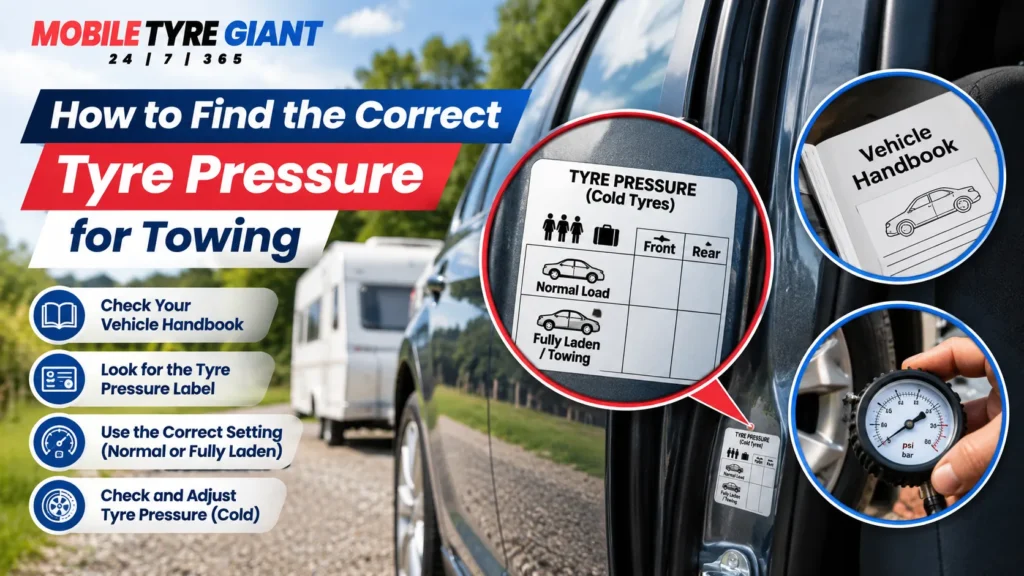
Normal vs Fully Laden Tyre Pressure
Normal tyre pressure is designed for the everyday loading conditions specified by your car manufacturer. Fully laden pressure applies when the vehicle carries a heavier load, such as several passengers and a boot full of luggage. When towing a caravan, the additional force at the towball can make these settings particularly important. However, the correct towing pressure is not automatically the highest number on the vehicle label. Some manufacturers provide separate instructions specifically for towing.
Think of a car travelling to work with one person aboard compared with the same car leaving for a holiday. The tyres may need to support very different loads, even though the vehicle itself has not changed. This is why comparing normal and fully laden settings matters before attaching a trailer. You should always select the pressure recommended for your vehicle’s actual operating conditions. For a broader explanation of how different loading conditions affect inflation, this tyre pressure guide provides useful background information.
Feature | Normal Tyre Pressure | Fully Laden Tyre Pressure |
Intended use | Manufacturer-specified everyday loading | Heavier loading conditions |
Passenger and luggage load | Usually lighter | Usually greater |
Front and rear pressures | May be different | May require different settings |
Towing suitability | Not automatically appropriate | May apply when recommended for towing |
Where to check | Vehicle handbook or pressure label | Vehicle handbook or pressure label |
What if Your Handbook Does Not List Towing Tyre Pressures?
Not every vehicle handbook provides a separate tyre pressure chart for towing. Some manufacturers give only normal and fully laden recommendations, leaving drivers unsure which figures apply. In the absence of specific towing instructions, established UK tyre safety guidance recommends using the fully laden rear tyre pressure. Where normal and fully laden rear pressures are identical, further guidance may be needed for the additional hitch load. Any adjustment must remain within the tyre and vehicle manufacturer’s permitted limits.
Suppose your handbook shows identical rear tyre pressures for everyday driving and carrying passengers. It might be tempting to add several PSI simply because another caravan owner recommends it. However, tyre construction, vehicle design and noseweight all influence what is appropriate. Contact the vehicle manufacturer or a qualified tyre specialist if the correct setting remains unclear. Taking time to confirm the figures is safer than experimenting with pressure during a journey.
Do Caravan and Trailer Tyres Need Different Pressures?
Yes, caravan and trailer tyres often require different inflation pressures from the tyres fitted to the towing car. Their operating conditions can be quite different because of the weight they carry and their tyre construction. Some trailers use commercial-grade tyres designed for heavier loads and higher operating pressures. Others have tyre specifications that require a different approach. The important point is that the towing vehicle’s pressure label does not tell you what pressure to use in the trailer.
Imagine checking your car tyres before departure and finding that the pressures match the handbook perfectly. That does not mean your caravan tyres are ready for the journey. They could still be underinflated, incorrectly specified or unsuitable for the weight being carried. Each vehicle needs its own inspection using the relevant manufacturer information. Treating them separately helps prevent avoidable tyre problems when travelling at speed.
Finding the Correct Caravan or Trailer Tyre Pressure
Start with the caravan or trailer handbook, which may provide recommended inflation pressures for the fitted tyres. Some manufacturers also display this information on a plate or label attached to the trailer. Check the tyre size and construction before selecting a pressure figure. The correct value may depend on the actual loaded weight, particularly where different tyre options are approved. If the information is missing, obtain the relevant specifications from the trailer or tyre manufacturer.
A caravan that spends most of the year on a driveway still needs its tyres checked before travelling. Pressure can gradually decrease during storage, even when there is no obvious puncture. You might notice that a tyre looks slightly flatter than the others, but appearances alone cannot confirm the pressure. Use an accurate gauge to check every fitted tyre and the spare, where provided. Never use the maximum sidewall pressure as a substitute for the correct operating recommendation without confirming that it applies.
Understanding Trailer Tyre Load Ratings
Every tyre has a load rating that indicates how much weight it can support under its specified operating conditions. This is particularly important for caravans because a substantial amount of their weight is carried through relatively few tyres. The load index appears within the markings printed on the tyre sidewall. For example, a load index of 91 represents a rated capacity of 615kg per tyre under the applicable conditions. That number is a specification, not permission to exceed the trailer’s weight limits.
Before towing, check that the tyres are suitable for the trailer’s permitted and actual loads. A tyre with an insufficient load rating may experience excessive stress, even when it appears properly inflated. Increasing the pressure cannot turn an unsuitable tyre into one with a higher approved load capacity. If the markings are unfamiliar, this guide to choosing the correct tyre size explains how tyre dimensions and load ratings are identified. Always confirm the complete specification before replacing a tyre.
Why You Cannot Copy Your Car’s PSI for Trailer Tyres
Using the same tyre pressure for your car and trailer might seem convenient, but it ignores their different requirements. A car tyre supports the vehicle while also contributing to steering, braking and handling. Trailer tyres must support their assigned loads under conditions determined by the trailer’s design. Their construction and recommended operating pressure may differ considerably from those of a passenger car. Copying the car’s PSI could leave the trailer tyres incorrectly inflated.
Consider a driver who checks the car’s pressure label and applies those figures to every tyre on the caravan. The numbers might look reasonable on the gauge, yet still be unsuitable for the trailer. Underinflation can cause excessive flexing and heat build-up, while overinflation can affect tyre wear and road contact. Neither condition should be treated as harmless simply because the trailer appears to tow normally. Always confirm the caravan’s own pressure specification before setting off.

How to Check Car and Trailer Tyres Before Towing
Checking the tyres before towing should become as familiar as checking your mirrors before pulling away. Start with the towing car, then inspect the caravan or trailer separately. Confirm the recommended pressures, examine the visible tyre surfaces and look for unusual wear. Pay attention to the sidewalls, where cracks, cuts or bulges may indicate damage. A pressure reading alone cannot tell you whether a tyre is safe.
Park on firm, level ground where you can inspect the wheels without traffic passing close beside you. Good daylight makes it easier to spot damage that might be missed in a poorly lit driveway. Walk around the entire combination rather than concentrating only on the towing car’s rear tyres. Check the spare tyres, where fitted, and make sure the valves have suitable caps. If you discover damage or persistent pressure loss, have the tyre assessed before starting the journey.
Check Tyre Pressure When Cold
Tyre pressure should be checked when the tyres are cold, ideally before the car or trailer has been driven. As tyres roll along the road, friction and repeated flexing generate heat that increases the air pressure inside them. A reading taken immediately after motorway driving may therefore be higher than the normal cold-pressure reading. Releasing air to match the cold recommendation while the tyre is still hot could leave it underinflated later. Checking before departure gives you a more reliable starting point.
Use a dependable pressure gauge and compare the result with the correct manufacturer recommendation for each axle. Remove the valve cap, press the gauge firmly against the valve and allow the reading to settle. If the pressure needs adjustment, inflate or deflate the cold tyre to the appropriate figure, then check it again. Replace the valve cap and look for signs of leakage around the valve. Repeat the process for the remaining car and trailer tyres so that no wheel is overlooked.
Inspect Tread Depth, Sidewalls and Tyre Age
Tyre condition becomes particularly important when your car is carrying additional weight or pulling a trailer. In the UK, car and light trailer tyres must have at least 1.6mm of tread across the central three-quarters of the tyre and around its entire circumference. However, meeting this legal minimum does not automatically mean a tyre is in good condition. Look for uneven tread wear, deep cuts, exposed cords and unusual bulges. A simple tread depth gauge can help you check whether the tyres meet the legal requirement.
Caravan tyres deserve extra attention because they may spend months standing in one position. Even with plenty of tread remaining, ageing rubber can develop cracks or other signs of deterioration. Examine both the visible and inner sidewalls wherever safely accessible. If you notice anything suspicious, this guide to tyre sidewall damage explains the warning signs that require attention. Never assume a tyre is safe simply because it still holds air.
Check Tyre Size, Load Index and Spare Tyres
Tyres must be suitable for the vehicle and the weight they are expected to carry. Their sidewall markings identify important specifications, including tyre size, load index and speed rating. The load index indicates the maximum load a tyre can support under its specified operating conditions. When towing, these ratings become especially important because the load on individual axles may increase. Check the manufacturer’s requirements before replacing tyres or changing their specifications.
Spare tyres are another detail that drivers sometimes overlook before a long journey. A spare that has been sitting unused for years may have lost pressure or developed cracks. Check its condition, pressure and compatibility with the vehicle or trailer it serves. Remember that a car’s spare wheel will not necessarily fit a caravan or trailer. Having a suitable spare can be useful, but changing a wheel in an unsafe roadside location should never be attempted.
Inspect Tyre Valves and Check TPMS Warnings
Tyre valves are small components, but they play an important role in maintaining pressure. A damaged valve stem or leaking valve core can allow air to escape gradually. During your inspection, look for visible cracks, damage or missing valve caps. If one tyre repeatedly loses pressure, do not simply inflate it every morning and ignore the problem. Arrange an inspection to identify the cause before towing.
Many modern cars also use a Tyre Pressure Monitoring System, commonly called TPMS. It can warn you when certain pressure problems occur, but it does not replace checking tyres manually. Your car’s system may not monitor the caravan or trailer tyres unless compatible equipment is installed. If a warning appears, check the relevant tyre pressures and investigate the problem using the vehicle manufacturer’s instructions. Do not reset the warning simply to make the dashboard light disappear.
How Do Towing Weight Limits and Noseweight Affect Tyre Safety?
Correct tyre pressure is only one part of towing safely. The amount of weight carried by your car and trailer also matters. Every towing vehicle has specified weight limits that must be respected, including limits for individual axles. Carrying too much weight can place excessive stress on tyres, suspension and braking components. Even properly inflated tyres cannot compensate for a vehicle carrying more weight than it is permitted to support.
Think about loading a car for a family holiday. Passengers, suitcases, food, camping equipment and other belongings all contribute to its total weight. Attaching a caravan introduces another factor because the trailer coupling transfers a downward load onto the towball. That load affects how weight is distributed between the car’s axles. Understanding these limits helps you avoid problems that cannot be solved with a pressure gauge.
What Is Noseweight and Why Does It Matter?
Noseweight is the downward force applied by a loaded trailer or caravan coupling onto the towing vehicle’s towball. It influences how the combined vehicle and trailer behave on the road. Too little noseweight can contribute to instability, while excessive noseweight can overload the towbar or rear axle. The correct figure depends on your vehicle and trailer specifications. Always stay within the relevant limits set by the car, towbar and trailer coupling manufacturers.
You can measure noseweight using a suitable gauge designed for the purpose. Take the measurement with the caravan loaded as it will be during the journey and follow the measuring equipment’s instructions. Avoid relying on how low the rear of the car appears to sit. A vehicle can look reasonably level while still exceeding an important weight limit. If the measurement is unsuitable, review the loading arrangement before travelling.
Gross Train Weight, Axle Loads and Trailer Weight Limits
Gross train weight is the maximum permitted combined weight of the loaded towing vehicle and loaded trailer. It is normally listed on the vehicle manufacturer’s plate and must not be exceeded. The vehicle also has limits for its own maximum laden weight and individual axle loads. The maximum permitted trailer weight is another specification that needs checking. These limits apply together, so meeting one does not mean the entire towing combination is legal.
For example, a car might be capable of towing a particular trailer while already carrying too much weight over its rear axle. Alternatively, the combined weight could exceed the gross train weight even though the trailer is within its individual limit. Check the vehicle handbook, manufacturer’s plate and trailer weight information before departure. A public weighbridge can help establish actual loaded weights when estimates are unreliable. The following table explains the main terms drivers should understand.
Weight Term | What It Means |
Gross Vehicle Weight | Maximum permitted laden weight of the car |
Gross Train Weight | Maximum permitted combined weight of the car and trailer |
Axle Weight Limit | Maximum permitted load on an individual axle |
Maximum Towing Weight | Maximum trailer weight permitted by the vehicle manufacturer under specified conditions |
Noseweight Limit | Maximum permitted downward load at the towing connection |
MTPLM | Maximum technically permitted laden mass of a caravan |
How to Distribute Weight Safely When Towing
Where you place heavy items can influence how the caravan behaves behind your car. Poorly distributed weight may contribute to instability even when the total load appears acceptable. Heavy belongings should generally be secured low down and close to the trailer axle, following the manufacturer’s loading instructions. Avoid placing excessive weight at either extreme end of the caravan. Make sure everything is properly secured so it cannot shift during braking or cornering.
Imagine placing several heavy suitcases at the very back of a caravan. That arrangement could reduce noseweight and make the combination less stable. Moving the load to a more suitable position may improve the weight distribution, but the actual noseweight must still be measured. Check that individual axle loads and the trailer’s permitted weight remain within their limits. A balanced, secure load is an important part of preparing for a predictable journey.
Why Increasing Tyre Pressure Cannot Fix an Overloaded Vehicle
One mistake is assuming that adding more air allows tyres to carry unlimited extra weight. Tyre pressure and load capacity are connected, but they are not interchangeable. Every tyre has a specified load rating, and every vehicle has permitted weight limits. Increasing pressure beyond the appropriate recommendation does not legally increase those limits. It can also introduce additional handling or tyre-performance problems if the new pressure is unsuitable.
If your car or trailer is overloaded, the solution is to reduce or redistribute the load appropriately. Remove unnecessary belongings and check the actual weights rather than trying to compensate through inflation. Confirm that the tyres have the correct specifications and are inflated according to the applicable manufacturer guidance. If the combination still exceeds a permitted limit, do not tow until the problem is resolved. Safe towing depends on suitable tyres, correct pressure and properly controlled loading working together.
Common Tyre Pressure and Loading Mistakes to Avoid When Towing
Even experienced drivers can overlook simple mistakes when preparing to tow a caravan or trailer. Incorrect inflation, unsuitable tyres and poorly distributed weight can affect stability, handling and overall safety. These problems are not always obvious when the vehicle is parked on a driveway.
A car may feel perfectly normal during everyday driving but behave differently once a loaded trailer is attached. Rather than relying on familiar driving habits, check the specifications for your particular towing setup. Understanding the following mistakes can help you identify problems before they become dangerous.
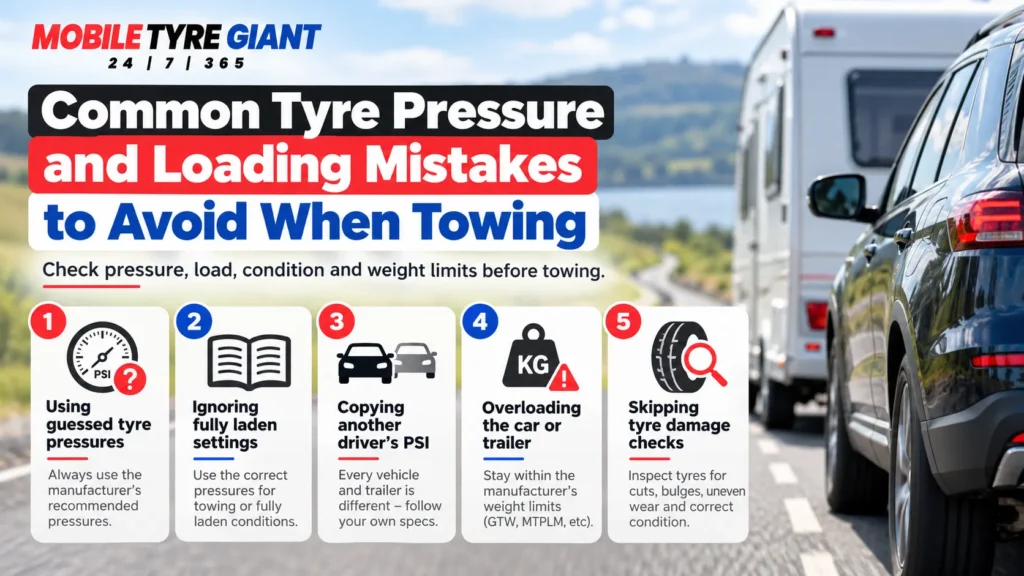
Copying Another Driver’s Tyre Pressure Settings
It is tempting to follow tyre pressure advice from another caravan owner, especially when they appear to have a similar car. However, two vehicles can have different tyre sizes, load ratings and manufacturer recommendations. A pressure that works for one vehicle may be unsuitable for another.
For example, a driver might recommend 40 PSI for their rear tyres because it improves their towing experience. That figure does not automatically apply to your car. Always check your manufacturer’s instructions and the actual loading conditions before adjusting tyre pressure when towing.
Confusing Maximum Sidewall PSI With Recommended Pressure
The maximum pressure printed on a tyre sidewall is not necessarily the correct pressure for everyday driving or towing. It indicates a tyre specification rather than a universal inflation target. Using it without checking the vehicle manufacturer’s recommendations can result in incorrect inflation.
Imagine seeing a maximum pressure marking of 50 PSI and assuming that more air must provide greater towing safety. That assumption ignores the vehicle’s design and loading requirements. The correct pressure should be based on the applicable manufacturer guidance, not simply the highest number printed on the tyre.
Ignoring Overloading, Tyre Damage or Poor Load Distribution
Even correctly inflated tyres cannot compensate for an overloaded vehicle or trailer. Excessive weight places additional stress on tyres, suspension and braking components. Poor load distribution can also make a caravan less stable, particularly during cornering or sudden manoeuvres.
Before departure, check the permitted weights and examine how belongings are arranged. Heavy items should be positioned securely according to the trailer manufacturer’s guidance. If you discover damaged tyres or excessive loading, resolve the issue before travelling rather than hoping the vehicle will cope.
When Should You Get a Tyre Checked Before Towing?
A proper tyre inspection can reveal problems that are difficult to recognise during ordinary driving. Slow pressure loss, unusual wear and visible damage may indicate that a tyre needs professional attention. Towing places additional demands on the vehicle, making unresolved tyre problems particularly concerning.
If something looks unusual, avoid relying solely on the tyre’s appearance or a dashboard warning system. A tyre can maintain pressure while still having structural damage. Identifying the cause before travelling is more sensible than discovering the problem on a busy motorway.
Warning Signs That Mean You Should Not Set Off
Certain tyre problems should stop your towing plans until they have been assessed. These include visible bulges, exposed cords, serious cuts, persistent air loss and tyres that do not meet legal requirements. Unusual vibration or significant changes in handling also deserve investigation.
For example, suppose one rear tyre repeatedly loses pressure overnight. Adding more air may temporarily restore the reading, but it does not repair the underlying fault. Continuing to tow without identifying the cause could leave you dealing with a failure during the journey.
When Professional Tyre Inspection or Replacement Is Needed
A qualified tyre technician can assess whether a damaged tyre is suitable for repair or requires replacement. The decision depends on the location, extent and type of damage. Sidewall damage and certain structural defects generally make a tyre unsuitable for repair.
If a tow-car tyre develops a puncture or persistent leak, arranging mobile tyre repair may provide a practical way to have it assessed without driving on a potentially unsafe tyre. Always confirm that the service is suitable for your vehicle and circumstances. Caravan and trailer tyre work should also be confirmed separately.
Final Before-You-Tow Checklist: Is Your Car Ready?
Before starting your journey, complete one final inspection of the towing car and trailer. This should include tyre pressures, tyre condition, load limits and the equipment connecting both vehicles. A few careful checks can help identify problems that might otherwise go unnoticed.
Keep the checklist somewhere accessible, such as your glovebox or phone. Make it part of your normal preparation whenever you tow. The following table brings together the essential checks discussed throughout this guide.
Final Check | Action Before Departure |
Car tyre pressure | Confirm correct cold pressures for the towing conditions |
Trailer tyre pressure | Check the trailer manufacturer’s specifications |
Tread and sidewalls | Look for unsafe wear, cracks, cuts or bulges |
Tyre load ratings | Confirm tyres are suitable for the required loads |
Noseweight | Measure and confirm it is within applicable limits |
Vehicle and trailer weights | Check permitted gross, axle and towing limits |
Spare tyres | Check condition, pressure and suitability |
Wheel fixings | Confirm the correct tightening torque |
Towing connection | Check the hitch and safety connection |
Lights and indicators | Test that the required lights operate correctly |
Load security | Secure belongings and check weight distribution |
Final Tyre Pressure, Condition and Weight Checks
Begin your final inspection with the tyres while they are cold. Confirm that each tyre has the correct pressure, suitable load rating and no obvious damage. Check the vehicle and trailer weights using the relevant manufacturer specifications.
Pay particular attention to the car’s rear axle and the trailer’s actual loaded condition. Make sure the measured noseweight is acceptable and that heavy belongings are properly secured. If a reading or specification seems wrong, investigate it before leaving.
Coupling, Breakaway Cable, Lights and Load Security
Tyre safety is only part of preparing a vehicle for towing. Check that the trailer coupling is correctly attached and secured. Inspect the breakaway cable or secondary coupling, as applicable, and follow the manufacturer’s connection instructions.
Test the indicators, brake lights and other required trailer lights before moving. Confirm that loose equipment cannot shift during braking or cornering. Finally, ensure your mirrors provide an adequate rearward view and that the combination is ready for the road.
Final Words: Tow Safely With the Right Tyre Pressure and Load Checks
Towing safely starts with understanding how tyre pressure, vehicle loading and trailer weight work together. There is no universal tyre pressure that suits every towing setup. The correct settings depend on the manufacturer’s recommendations, tyre specifications and actual load carried.
Before every towing journey, check the car and trailer tyres, inspect their condition and confirm that all weight limits are respected. Pay attention to noseweight, load distribution and the towing connection rather than focusing on tyre pressure alone. A consistent preparation routine helps you travel with greater confidence and reduces the risk of preventable tyre problems.
Towing Soon? Get Your Car Tyres Ready!
Worn or damaged tyres before a towing trip? Get suitable replacement tyres fitted at your home or workplace for a safer, more confident journey.
Frequently Asked Questions
Find quick answers to the most common questions our customers ask.
You may need higher pressures, particularly at the rear. Follow your vehicle manufacturer's towing or fully laden recommendations rather than adding an arbitrary amount of air.
Yes, incorrect pressure can contribute to instability. Poor weight distribution, unsuitable noseweight, excessive speed and other factors can also cause caravan snaking.
No. Caravan and car tyres may have different pressure requirements because of their construction and loading. Always check their respective manufacturer specifications.
Not necessarily. The maximum marked pressure is not automatically the recommended operating pressure. Use the relevant vehicle or trailer manufacturer's guidance.
Check car and trailer tyre pressures before every towing journey, ideally while the tyres are cold. Inspect them regularly during extended trips.
No. TPMS provides useful warnings but cannot replace manual pressure checks or visual inspections. Your car's system may not monitor the caravan tyres.
Not automatically. Tyres can deteriorate through ageing and prolonged storage. Check for cracking, bulges and other damage, and follow the manufacturer's age-related guidance.
Have the tyre inspected before departure. Repeated inflation does not fix a puncture, leaking valve or other fault that could become dangerous.
If the vehicle's loading conditions have changed, check the manufacturer's recommended pressures for driving without the trailer. Make adjustments when the tyres are cold.