

Putting a little extra air into a tyre can seem harmless. Some drivers even assume that a firmer tyre will stay inflated for longer or improve fuel economy, but tyre pressure is not a case of more being better. Your vehicle manufacturer specifies a pressure that helps the tyre support the vehicle while maintaining the intended contact with the road. When the pressure rises noticeably above that recommendation, the tyre becomes stiffer and its behaviour can change. The ride may feel harsher, the tread may begin wearing differently and the tyre may become less forgiving when it hits potholes or sharp road imperfections. These changes are why an over-inflated tyre should be corrected rather than ignored.
The important point is that over-inflation means pressure above the vehicle manufacturer’s recommended setting, not simply a number that looks high on a pressure gauge. One car may legitimately require a pressure that would be too high for another. Front and rear pressures can also differ, and manufacturers may specify higher settings when the vehicle is heavily loaded. Before deciding that a tyre is over-inflated, compare the cold reading with the correct figure for that vehicle and load condition. Our guide on how to check tyre pressure explains how to find the manufacturer’s figure and take a reliable reading.
What Does an Over-Inflated Tyre Mean?
An over-inflated tyre contains more air pressure than the vehicle manufacturer recommends for the current driving condition. As pressure increases, the tyre becomes stiffer and the size and shape of its contact patch with the road can change. That contact patch is the relatively small area of rubber carrying the vehicle’s load at any moment. Tyres are designed to operate within a recommended pressure range so the tread, sidewall and internal structure can work together as intended. Running significantly above that recommendation can disturb this balance.
Over-inflation should not be confused with the normal pressure increase that happens while driving. Air inside a tyre warms as the tyre flexes and travels along the road, and warmer air produces a higher pressure reading. A tyre set correctly when cold may therefore show several PSI more after a motorway journey without anything being wrong. This is why pressures are normally compared with the manufacturer’s recommendation when the tyres are cold. Releasing air simply because a hot tyre shows a higher reading can leave it under-inflated once it cools.
How Much Tyre Pressure Is Too High?
There is no universal PSI, bar or kPa figure that counts as over-inflated for every car. A pressure of 36 PSI may be correct for one vehicle and above the normal recommendation for another. The only meaningful comparison is with the manufacturer’s specified pressure for your particular vehicle, tyre setup, axle and load. You can normally find those figures around the driver’s door frame, inside the fuel filler flap or in the vehicle handbook. Some labels provide different pressures for light and fully loaded driving, so make sure you are reading the correct row.
Do not use a generic internet figure simply because it appears to be a common tyre pressure. It is also important not to confuse the pressure information moulded into the tyre sidewall with the vehicle’s normal recommended inflation setting. The tyre may be approved for use on many different vehicles, while each vehicle manufacturer specifies its own operating pressure. If the placard uses bar or kPa but your gauge displays PSI, convert the manufacturer’s figure rather than guessing. Understanding the correct starting number is the first step towards recognising genuine over-inflation.
What Are the Symptoms of Over-Inflated Tyres?
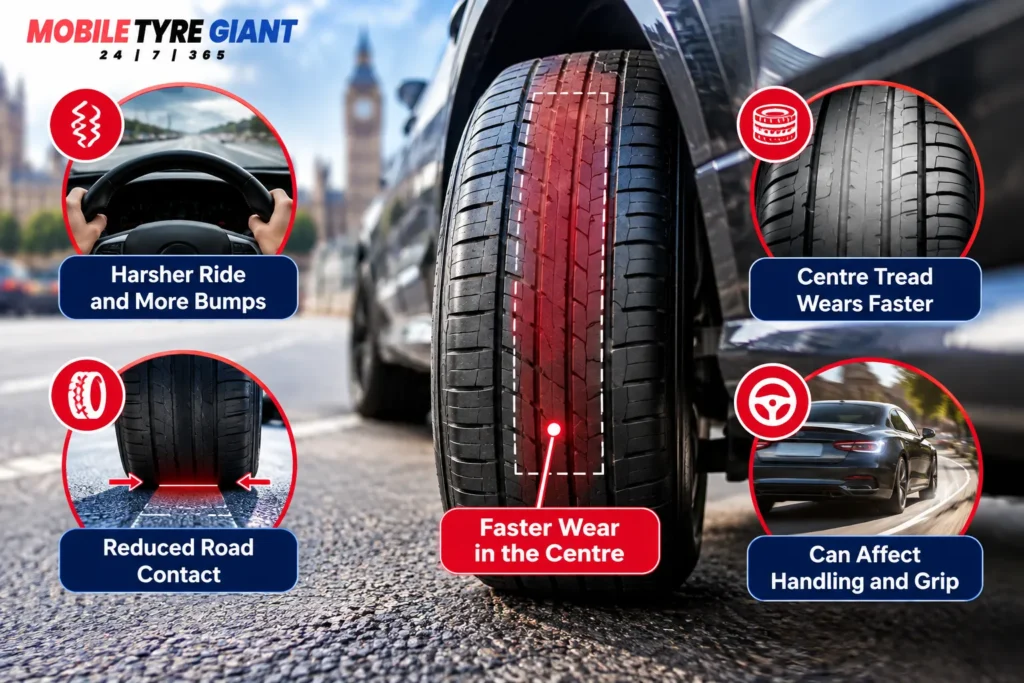
One possible symptom is a noticeably firmer or harsher ride. Because additional pressure makes the tyre stiffer, it may absorb less of the small imperfections normally softened by the tyre before the suspension responds. Expansion joints, broken road surfaces and small bumps can therefore feel sharper through the cabin. The steering may also feel slightly different, particularly if one axle or one tyre is inflated significantly more than the others. These changes are not a reliable diagnosis on their own because suspension settings, tyre construction and road conditions can create similar sensations.
The most dependable symptom is still the pressure reading itself. If a cold tyre consistently measures above the manufacturer’s recommended pressure, it is over-inflated regardless of whether the car feels unusual. You may also notice accelerated wear towards the centre of the tread over time, although pressure is not the only possible cause of an unusual wear pattern. Regularly checking pressure alongside tread condition gives you a much clearer picture than waiting for the vehicle to feel different. The broader tyre safety guide explains how pressure, tread and uneven wear should be checked together.
Can Over-Inflated Tyres Cause Centre Tread Wear?
Excessive pressure can contribute to increased wear through the central section of the tread. When the tyre is running above its recommended pressure, the way the tread carries the vehicle load can change and the centre may experience more concentrated wear. Over many miles, the middle grooves can therefore become shallower faster than the shoulders. This is the opposite of the classic pattern associated with prolonged under-inflation, where wear is often more noticeable towards the tyre shoulders. Checking tread across the full width helps reveal these differences.
Centre wear should still be treated as a clue rather than an automatic diagnosis. Vehicle setup, tyre construction and driving conditions can influence the way a tread wears, so a worn centre does not prove that over-inflation was the only cause. Measure the actual pressure and compare it with the manufacturer’s specification before drawing conclusions. If the pressure is consistently too high and the central tread is wearing faster, correcting the pressure is an important first step. If the wear is already severe, the tyre may still need further inspection even after the pressure has been corrected.
Do Over-Inflated Tyres Look Different?
A severely over-inflated tyre may appear very firm, but moderate over-inflation is often difficult to identify just by looking at it. Modern radial tyres are designed to hold their shape, so a tyre can be several PSI away from the recommended figure without displaying an obvious visual warning. This is why squeezing the sidewall or judging the tyre from a distance is not a reliable pressure test. A pressure gauge provides much more useful information than appearance.
The tread may provide visual evidence only after the problem has existed for some time. Faster wear through the centre compared with the shoulders can suggest excessive pressure, particularly when the pattern appears consistently across the tyre. However, waiting for visible wear means the tyre has already spent considerable mileage operating incorrectly. Monthly pressure checks can identify the problem much earlier. Correcting excess pressure before an obvious wear pattern develops gives the tyre a better chance of continuing to wear evenly.
How Does Over-Inflation Change the Tyre’s Contact With the Road?
A tyre does not place its entire tread on the road at once. Instead, a relatively small contact patch carries the load and transfers steering, braking and acceleration forces between the vehicle and road surface. Inflation pressure plays an important part in controlling the shape and behaviour of this patch. When pressure rises significantly above the vehicle manufacturer’s recommendation, the tyre becomes stiffer and the effective contact area can be reduced. That can change how evenly forces are transmitted through the tread.
This matters most when the tyre is being asked to generate grip, such as during braking, cornering or driving on a wet surface. A correctly inflated tyre is designed to work with the vehicle’s suspension, steering and braking systems under the conditions anticipated by the manufacturer. Excessive pressure moves the tyre away from that intended setup. The difference may not feel dramatic during gentle driving on a dry road, but it can become more relevant when grip is limited or the car needs to respond quickly.
Can Over-Inflated Tyres Reduce Grip?
Yes, running tyres significantly above the recommended pressure can reduce the amount and consistency of rubber contacting the road, which can affect grip and handling. The effect may be particularly noticeable on wet or uneven surfaces where maintaining predictable contact becomes more important. A tyre that is too stiff may also react more sharply to surface changes instead of conforming to them as intended. TyreSafe specifically warns that over-inflation can reduce road contact and worsen handling and braking performance.
This does not mean that increasing a tyre by a tiny amount will suddenly make the vehicle uncontrollable. The level of risk depends on how far the pressure is from the manufacturer’s specification, along with speed, road conditions, tyre condition and vehicle load. The sensible approach is not to experiment with pressure in search of extra performance. Use the manufacturer’s cold-pressure recommendation and adjust it only when the vehicle guidance calls for a different setting, such as when carrying a heavier load.
Why Might an Over-Inflated Tyre Feel Harsh Over Bumps?
Part of a tyre’s job is to absorb small road imperfections before their movement reaches the suspension and vehicle body. Air pressure gives the tyre its supporting stiffness, but too much pressure can make that stiffness excessive. The sidewall and tread then flex less when they meet small bumps, expansion joints and broken surfaces. Instead of absorbing as much of that disturbance, the tyre can pass more of the impact into the suspension. The result may be a ride that feels sharper or less comfortable than usual.
This increased stiffness also matters when a tyre hits a pothole or sharp road edge. A tyre operating at the correct pressure has a controlled amount of flexibility that helps it cope with normal road inputs. An excessively stiff tyre may be less able to deform around a sudden impact, potentially making the tyre or wheel more vulnerable to road-hazard damage. That does not mean every over-inflated tyre will be damaged by a pothole, but it removes some of the compliance designed into the tyre. Keeping pressure at the recommended level provides a better balance between load support, comfort and impact absorption.
What Are the Main Risks of Driving With Over-Inflated Tyres?
Driving with tyres significantly above the vehicle manufacturer’s recommended pressure can affect more than ride comfort. The tyre becomes stiffer, its contact with the road can change and the tread may not distribute load as evenly as intended. This can influence grip, braking response and the way the vehicle reacts to rough surfaces. The effects are usually more noticeable when the pressure is substantially too high rather than only slightly above the recommended figure. Road conditions, speed, tyre age and tread depth also influence how serious those effects become.
Over-inflation can also increase the amount of stress transmitted through the tyre when it hits potholes, broken road edges or sharp debris. A correctly inflated tyre has a controlled amount of flexibility that helps it absorb everyday road impacts. When the tyre is excessively stiff, less of that impact may be absorbed through normal sidewall flex. That does not guarantee immediate damage, but it can make the tyre and wheel less forgiving when the road suddenly becomes rough. Correct pressure therefore supports both normal road contact and the tyre’s ability to cope with changing surfaces.
Can Over-Inflated Tyres Affect Braking Distance?
Over-inflation can affect braking because tyre pressure influences the contact patch between the tread and the road. If pressure is significantly higher than recommended, the tyre can become stiffer and the effective contact area may become less favourable for transferring braking force. On a dry, smooth road the difference may not always feel dramatic to the driver, but reduced or less consistent road contact becomes more important when emergency braking is required. Braking performance also depends on tyre tread, road surface, vehicle speed and weather, so pressure should be considered as part of the whole tyre condition.
Wet roads make that relationship even more important because the tyre needs to clear water while maintaining enough rubber contact to generate grip. A tyre already operating outside its intended pressure can make that job more difficult. The safest approach is not to experiment with extra pressure in search of sharper steering or lower fuel consumption. Keep the tyres at the manufacturer’s recommended cold setting and use the higher loaded setting only when the vehicle guidance specifically requires it.
Are Over-Inflated Tyres More Dangerous in the Rain?
They can be. Wet-road grip depends heavily on tread condition, tread depth, tyre design and how effectively the tyre maintains contact with the road. An excessively inflated tyre may have a smaller or altered contact patch, which can reduce the amount of rubber consistently interacting with the surface. The tyre may also feel less compliant over uneven wet roads, where maintaining predictable contact becomes especially important. These effects can combine with worn tread to make the vehicle feel less settled during steering or braking.
Over-inflation should not be treated as the only cause of poor wet-weather grip, though. Low tread depth, damaged tyres, unsuitable speed and standing water are all major factors. If the tread is already worn heavily through the centre because of long-term pressure problems, correcting the pressure cannot restore the rubber that has disappeared. Measure the tread across the full tyre and consider replacement if wear has become severe. Our guide on when to replace tyres explains the wider condition and tread signs that should be checked.

Can Over-Inflated Tyres Be More Vulnerable to Pothole Damage?
An over-inflated tyre can become less flexible when it meets a sudden road impact. When a correctly inflated tyre hits a pothole, the sidewall and tread can deform within their designed limits and absorb part of the shock. With excessive pressure, the tyre is stiffer and has less ability to flex around the edge of the impact. More force can therefore be transmitted through the tyre into the wheel and suspension. Depending on the severity of the impact, this can contribute to tyre damage, wheel damage or changes in alignment.
UK roads can make this particularly relevant because potholes are often difficult to judge in poor light or standing water. A hard impact can damage a tyre even when the pressure was correct, so over-inflation is not required for pothole damage to occur. It simply removes some of the tyre’s normal compliance. After a significant impact, look for bulges, cuts, pressure loss, vibration or steering changes rather than assuming everything is fine because the tyre remained inflated. Our pothole tyre damage guide covers the main warning signs to check after a hard road impact.
Can Too Much Pressure Damage the Wheel Rim?
Excessive tyre pressure does not normally damage a wheel rim by itself while the vehicle is simply parked or travelling on a smooth road. The concern is more about how the tyre responds when it encounters a sudden impact. A stiffer tyre can transfer more of the shock from a pothole or sharp road edge into the wheel rather than absorbing as much through controlled flex. If the impact is severe enough, the wheel may bend or crack regardless of pressure, but an excessively firm tyre can reduce the amount of cushioning available.
This is another reason not to inflate tyres above the recommended setting simply to make them feel firmer. The manufacturer has already balanced pressure requirements against load, handling and tyre behaviour. If the vehicle frequently carries additional weight, use the manufacturer’s specified loaded pressure instead of inventing a higher figure. Correctly following the loaded setting gives the tyre additional support without moving outside the pressures the vehicle was designed to use.
Can Over-Inflated Tyres Cause a Blowout?
Over-inflation is often associated with the idea that a tyre will suddenly explode because there is too much air inside it. In normal road use, the situation is more complicated. Tyres are designed to tolerate pressures above their everyday operating settings, so a tyre that is only slightly above the vehicle recommendation will not normally burst simply because of that difference. The more realistic concern is that excessive pressure can make the tyre less forgiving of impact damage and can combine with existing structural weakness, age, road hazards or severe over-inflation to increase the risk of failure.
A damaged tyre is much more concerning than a healthy tyre that is a little above its recommended cold pressure. Bulges, exposed cords, deep cuts or previous impact damage indicate structural problems that should not be ignored. If a tyre is already weakened, continuing to drive with incorrect pressure adds another variable the tyre does not need. Correct the pressure and inspect the tyre rather than assuming that releasing a little air automatically makes damaged rubber safe again.
Does Tyre Pressure Increase Further When Driving?
Yes. Tyre pressure normally rises during driving because the tyre warms as it flexes and interacts with the road. This is expected behaviour and is one reason vehicle pressure recommendations are generally based on cold tyres. If a tyre was already set too high when cold, its pressure will rise further as it warms, but that does not mean you should routinely stop and release air during a journey. Doing so can leave the tyre below the correct pressure after it cools.
The more useful approach is to correct the cold pressure before driving. If you have only checked the tyre after a long journey, note the reading and check it again once the tyres have properly cooled. Comparing a hot reading directly with the cold recommendation can create unnecessary confusion. If you need to convert between PSI, bar and kPa while checking the manufacturer’s figure, the tyre pressure conversion guide provides the equivalent values and formulas.
Will TPMS Warn You About Over-Inflated Tyres?
Not necessarily. Tyre pressure monitoring systems are primarily designed to alert drivers to significant pressure loss, and the behaviour varies between vehicles. Some direct TPMS systems can display individual tyre pressures, which makes it easier to notice when one tyre is higher than the others. However, many systems simply illuminate a warning when pressure falls below a set threshold. A tyre can therefore be over-inflated without triggering the dashboard warning light.
This is why TPMS should support regular pressure checks rather than replace them. Use a reliable gauge and compare each cold tyre with the vehicle manufacturer’s recommended setting. If your dashboard displays individual pressure values, remember that they may rise after driving as the tyres warm. A higher warm reading does not automatically mean you need to release air. Always judge the pressure against the correct checking conditions and vehicle guidance.
Can One Over-Inflated Tyre Affect Vehicle Handling?
Yes, a significant pressure difference between tyres can alter the way the vehicle feels. If one front tyre is much harder than the other, steering response or grip may feel less balanced from side to side. Different pressures across an axle can also contribute to uneven tyre behaviour during braking and cornering. The effect depends on how large the pressure difference is and whether another issue such as tyre wear or alignment is already present.
Check all four tyres rather than correcting only the one that looks unusual. Front and rear pressures may legitimately differ, but tyres on the same axle are normally intended to follow the manufacturer’s corresponding specification unless the vehicle guidance states otherwise. If one tyre repeatedly becomes higher or lower than the others without you adjusting it, make sure the gauge is reliable and the pressure is being checked under comparable conditions. Consistent readings make it easier to distinguish a real tyre issue from a measurement problem.
Is Over-Inflation Worse Than Under-Inflation?
Both conditions are undesirable, but they affect tyres differently. Under-inflation causes greater flexing, heat generation and rolling resistance and is strongly associated with tyre overheating and structural failure when severe. Over-inflation makes the tyre stiffer, can alter the contact patch, contribute to centre wear and reduce compliance over rough roads. One should not be used to compensate for fear of the other. The correct target remains the manufacturer’s recommended pressure.
Drivers sometimes deliberately add several extra PSI because they believe this provides a safety margin against becoming under-inflated later. That approach can simply replace one pressure problem with another. Tyres should instead be checked regularly so gradual pressure loss is identified before it becomes significant. Correct inflation is not the highest pressure the tyre can tolerate or the lowest pressure that avoids a warning light. It is the pressure specified for the vehicle and current load condition.
Should You Add Extra PSI to Improve Fuel Economy?
It is not advisable to exceed the manufacturer’s recommendation simply to try to reduce fuel consumption. Higher pressure can reduce rolling resistance in some circumstances, but deliberately over-inflating tyres changes the balance between efficiency, grip, wear, comfort and impact absorption that the vehicle manufacturer intended. Any small potential efficiency benefit is not a good reason to operate the tyres outside their specified pressure.
A better approach is to prevent under-inflation through regular checks. Tyres operating below their recommended pressure can increase rolling resistance, so keeping them correctly inflated already supports efficient driving without deliberately exceeding the specification. Check pressures monthly and before long journeys, and use the vehicle’s loaded settings when carrying additional passengers or luggage. Correct pressure provides a much more sensible balance than trying to gain efficiency by simply adding extra air.
How Do You Fix an Over-Inflated Tyre Safely?
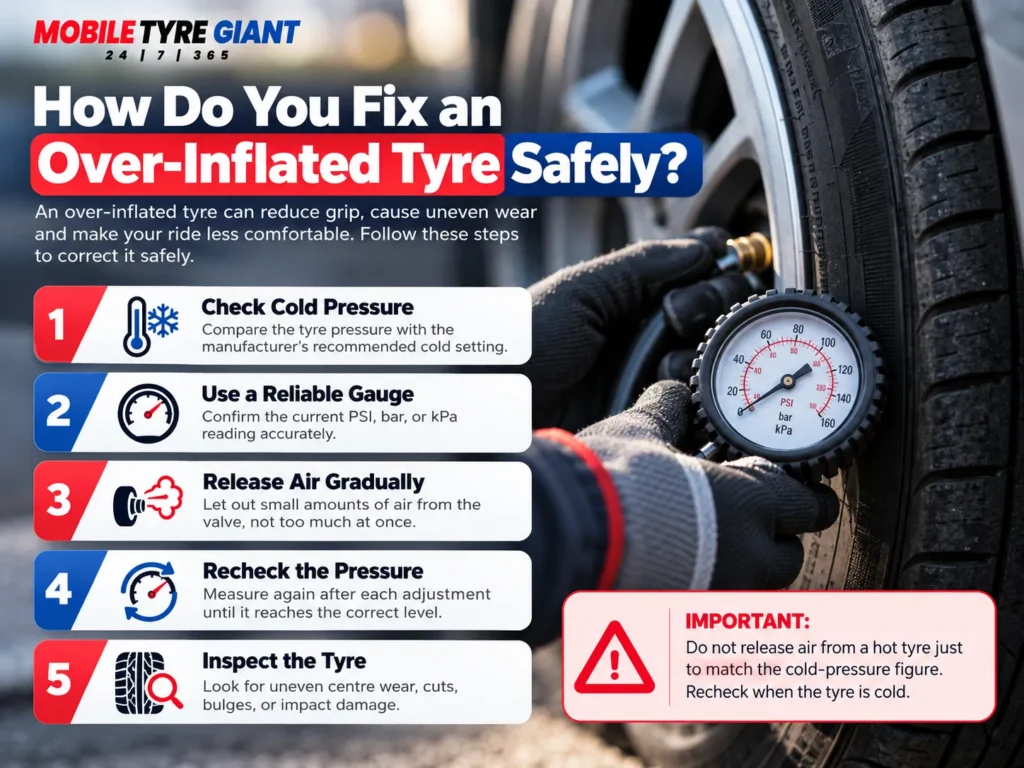
Fixing an over-inflated tyre usually means reducing the pressure until it matches the vehicle manufacturer’s recommended cold setting. Start by confirming the correct figure on the driver’s door area, fuel filler flap or vehicle handbook rather than guessing what the pressure should be. If the tyres are cold, measure the current pressure with a reliable gauge and compare it with the correct front or rear specification. If the reading is higher than recommended, release a small amount of air and check again. Continue gradually until the pressure is close to the manufacturer’s target rather than letting out a large amount at once.
The process becomes less straightforward if the tyres are already warm from driving. Pressure naturally rises as the tyre heats, so immediately reducing a warm tyre to the cold recommendation can leave it too low once the tyre cools. If possible, allow the tyres to cool and then make the final adjustment. If you have accidentally released too much air, reinflate the tyre rather than driving with it below the recommended level. Under-inflation creates its own handling, wear and heat problems, which are explained further in our guide to how under-inflated tyres affect your vehicle.
How Do You Release Air From an Over-Inflated Tyre?
Remove the valve cap and locate the small pin in the centre of the tyre valve. Most pressure gauges or inflation tools include a small point or bleed function that can press this pin and release air. Let out only a short burst at a time, then take another pressure reading. It is much easier to release another small amount than to correct a tyre that has suddenly been dropped several PSI below its target. Keep repeating this process until the gauge shows the manufacturer’s recommended pressure.
You should hear a short hiss as air leaves the tyre, but there is no need to keep the valve held open for a long period. If the pressure is significantly too high, work gradually rather than trying to judge the correct amount by sound or time. Once the desired pressure is reached, make sure the valve stops leaking and refit the valve cap. Check the remaining tyres as well because the same inflation mistake may have been made across the whole vehicle.
Should You Let Air Out of a Hot Tyre?
Usually, you should avoid reducing a hot tyre simply to make its pressure match the cold figure printed on the vehicle placard. Pressure increases naturally as tyres warm during normal driving, which means the higher reading may be completely expected. If you release air while the tyre is hot, the pressure can fall below the correct specification after the tyre cools. This can turn an apparent over-inflation problem into genuine under-inflation.
If you know the tyre was substantially over-inflated before driving, the situation is different because some correction may be necessary. However, the most accurate final adjustment should still be made once the tyres have returned to a cold condition. Record the warm reading if useful, then check again later rather than repeatedly changing pressure during the journey. Consistent cold-pressure measurements provide a much clearer picture of whether the tyre is actually over-inflated.
Can You Drive With Over-Inflated Tyres?
Whether you should continue driving depends on how far the pressure is above the recommendation and whether the tyre shows any signs of damage. A tyre that is only slightly above its target is different from one that has been inflated far beyond the vehicle specification. If you discover a moderately high reading while the vehicle is safely parked, correcting it before driving is usually the sensible option. There is little benefit in deliberately continuing with pressure you already know is wrong.
If the tyre is extremely firm, has recently suffered a hard impact or shows a bulge, cut or other structural concern, avoid treating pressure adjustment as the complete solution. Reducing the pressure cannot reverse physical tyre damage. The vehicle may need inspection before further driving, especially if handling has also changed. If a tyre is no longer safe for continued use, mobile tyre replacement can avoid requiring the vehicle to travel unnecessarily on a questionable tyre.
What if the Pressure Is Only Slightly Above the Recommendation?
A small difference above the recommended pressure does not usually mean the tyre is about to fail. Pressure gauges have tolerances, temperatures vary and a tyre may have warmed slightly even after a short journey. For example, seeing 34 PSI when the cold recommendation is 33 PSI is very different from finding the tyre at a much higher pressure. The correct response is to consider the checking conditions rather than reacting to every tiny difference.
If the tyre is cold and the reading is consistently above the target, adjust it back to the manufacturer’s figure. If the tyre is warm, allow it to cool before deciding whether pressure needs to be released. There is no benefit in trying to make every reading match to an unrealistic fraction of a PSI. The aim is accurate, consistent inflation within the vehicle manufacturer’s intended setting, not constant adjustment for small temporary fluctuations.
Can Over-Inflation Permanently Damage a Tyre?
Short-term mild over-inflation will not automatically destroy a healthy tyre. The concern increases when the pressure is significantly excessive, the condition continues for a long period or the tyre experiences impacts while running too hard. Prolonged over-inflation can contribute to abnormal tread wear, particularly through the centre, and repeated road shocks can place additional stress on the tyre and wheel. Once tread rubber has worn away, lowering the pressure cannot restore it.
Physical structural damage is more important than pressure history alone. A tyre that has developed a bulge, deep cut, exposed cords or impact damage needs proper assessment regardless of whether the current pressure has been corrected. Tyres can also develop internal damage that is not immediately obvious from the outside after a severe pothole strike. Correcting the pressure solves the inflation problem, but it does not automatically confirm that the tyre remains structurally sound.
What Should You Check After Driving on Over-Inflated Tyres?
Start by inspecting the tread across its full width rather than looking only at the centre from one angle. Compare the central grooves with the inner and outer shoulders and look for unusual wear patterns. Check the sidewalls for cuts, cracking, bulges or areas that look different from the rest of the tyre. Also think about whether the vehicle has recently hit potholes, kerbs or sharp road edges while the tyres were over-inflated. A known impact combined with new vibration or steering changes deserves closer attention.
Continue monitoring the pressure over the following days once it has been corrected. If the tyre remains stable and no physical damage is visible, the pressure mistake may have been caught before it caused significant harm. If the tyre continues to behave differently, loses pressure or produces vibration, arrange an inspection. Do not assume that a tyre is safe purely because its pressure number now looks correct. Pressure is only one part of tyre condition.
How Do You Know You Have Reduced the Pressure to the Correct Level?
The correct level is the manufacturer’s recommended cold pressure for the relevant axle and loading condition. After releasing air, measure the tyre again with the same reliable gauge rather than relying on how firm it feels. If the car has different front and rear specifications, check each axle against its own figure. A tyre at the correct pressure may still look slightly compressed where it touches the road, so visual appearance should not override an accurate gauge reading.
Repeat the measurement once more if you have made a significant adjustment. This helps confirm that the gauge was seated properly and that you did not accidentally release additional air while disconnecting it. Once all tyres are set correctly, replace the valve caps and note the readings if you are monitoring a previous pressure issue. Regular follow-up checks will confirm whether the tyres are staying close to their recommended values.
Should All Four Tyres Be Set to the Same PSI?
Not necessarily. Many vehicles specify different pressures for the front and rear tyres because axle loads and vehicle design differ. The pressure label may also provide separate settings for normal driving and for carrying several passengers or heavy luggage. Setting all four tyres to one convenient number can therefore be incorrect even if that number is suitable for one axle. Always read the full pressure label before adjusting the tyres.
This becomes especially important after someone has over-inflated all four tyres to the same figure. Correcting them does not necessarily mean releasing each one until they all match. Instead, restore each tyre to the appropriate manufacturer specification. If the front tyres require 33 PSI and the rear tyres require 30 PSI under normal load, those two different values are intentional. Correct pressure means following the vehicle specification, not making every gauge reading identical.
How Can You Prevent Tyres From Becoming Over-Inflated Again?
The easiest prevention is to check the target pressure before using an inflator rather than relying on memory. Pressure recommendations can differ between vehicles and may change depending on load, so guessing is unnecessary when the correct information is already provided by the manufacturer. Confirm the unit on the pump as well. Entering a familiar number while the machine is displaying a different unit can create a major pressure mistake very quickly.
Use the same reliable pressure gauge where possible and check tyres when they are cold. If you use a petrol station inflator, compare the final reading with your own gauge if something seems unusual. Avoid adding “a few extra PSI for luck” because that changes the pressure the vehicle was designed to use. Regular checking is a better way to protect against pressure loss than deliberately over-inflating the tyres in advance.
Can an Inaccurate Gauge Cause Over-Inflation?
Yes. If a gauge reads lower than the true pressure, you may keep adding air because you believe the tyre is still below its target. The tyre can then become over-inflated even though you followed the number shown on the device. This is one reason suspicious or inconsistent readings should be checked before making large adjustments. If the same tyre gives very different results on repeated measurements, do not continue inflating until you understand why.
Compare the gauge with another reliable tool if possible, particularly when a reading seems far outside what you normally expect. Digital and analogue gauges can both become inaccurate through poor calibration, damage or wear. What matters is not the display type but whether the instrument gives dependable readings. A trustworthy gauge, correct cold-pressure target and careful adjustment are the simplest combination for avoiding both over-inflation and under-inflation.
What Should You Do if You Accidentally Over-Inflate a Tyre?
If you accidentally add too much air, do not panic and do not start driving simply to reduce the pressure naturally. Park the vehicle safely, confirm the manufacturer’s recommended pressure and check the tyre with a reliable gauge. If the tyre is cold, release small amounts of air through the valve and recheck the pressure after each adjustment. Working gradually is important because it is easy to remove too much air and turn over-inflation into under-inflation. Once the correct figure is reached, check the valve for any obvious leakage and refit the valve cap.
If the tyre was already driven while significantly over-inflated, correct the pressure and then inspect the tyre rather than assuming the problem ends there. Look for unusual centre tread wear, sidewall bulges, cuts, vibration or any change in how the vehicle feels. A short period of mild over-inflation may not have caused lasting damage, but prolonged or severe over-inflation deserves more attention. If you are unsure about the tyre’s condition or do not want to continue driving on it, professional mobile tyre fitting can provide assistance at your location.
Should You Use the Valve to Release Excess Air?
Yes. The tyre valve is designed to allow pressure to be adjusted, so releasing air through the valve is the normal way to correct over-inflation. Remove the valve cap and use the bleed feature on a suitable pressure gauge or carefully press the valve pin for a very short period. Recheck the pressure after each small release. Avoid holding the valve open for several seconds at a time because pressure can fall more quickly than expected, particularly on a passenger-car tyre.
Once the correct pressure is reached, listen briefly for any continued hissing around the valve. A valve that leaks after adjustment may need further inspection. Replace the valve cap because it helps keep dirt and moisture away from the valve mechanism, although the valve core itself provides the main air seal. If the tyre continues changing pressure after you have corrected it, monitor it closely rather than assuming your initial over-inflation was the only issue.
What if the Tyre Pressure Becomes Too Low After Releasing Air?
It is common to release slightly too much air when correcting an over-inflated tyre, especially if you hold the valve open for too long. If the pressure drops below the manufacturer’s recommended figure, simply reinflate the tyre to the correct setting. Do not leave it a few PSI low just because it was previously too high. Under-inflation creates a different set of problems, including increased flexing, heat generation, rolling resistance and shoulder wear. The goal is not merely to lower the pressure but to bring it back to the correct value.
Use a compressor or inflator to add air gradually, then recheck with the same reliable gauge. If your inflator has an automatic cut-off, make sure the correct unit and target pressure are selected before starting. Once the tyre reaches the recommended setting, check it again after disconnecting the inflator because a small amount of air can escape during removal. Correcting pressure carefully in both directions is better than repeatedly overshooting the target.
Do You Need to Reset TPMS After Correcting Over-Inflation?
That depends on the vehicle and the type of tyre pressure monitoring system fitted. Some direct TPMS systems automatically update after the tyre pressures have been corrected and the vehicle has been driven for a short period. Other vehicles require the driver to confirm or store the new pressures through the dashboard menu. Indirect systems may also need a recalibration procedure after the tyres have been adjusted. The correct method should be explained in the vehicle handbook.
A TPMS warning that remains after pressures have been checked properly does not automatically mean the tyre is still over-inflated. The system may need time to update, may require a reset or may have a sensor-related problem. If a valve or sensor fault is suspected, professional TPMS valve replacement may be required depending on the diagnosis. Always verify the actual tyre pressure with a gauge before assuming the dashboard warning itself is incorrect.
How Often Should You Check for Over-Inflation?
Tyre pressure should normally be checked at least once a month and before long journeys. Regular checks help identify both excessive pressure and gradual pressure loss before either has enough time to create noticeable tyre wear. Seasonal temperature changes can also move readings up or down, which makes periodic checking especially useful during significant changes in weather. Use a cold tyre reading wherever possible and compare each tyre with the correct manufacturer’s specification.
You should also check pressures after someone else has inflated the tyres, particularly if they were adjusted at a garage, petrol station or during maintenance. Mistakes can happen simply because the wrong pressure figure or unit was selected. A quick check with your own trusted gauge gives you an independent confirmation. It also helps establish a normal pattern so an unusual reading stands out more clearly in the future.
Should Tyre Pressure Be Checked Before a Long Motorway Journey?
Yes. Checking tyre pressure before a long journey is a sensible part of basic vehicle preparation. Motorway driving involves sustained speed and tyre temperatures will rise as the journey continues, so starting with the correct cold pressure is important. Check the manufacturer’s loaded setting as well if the vehicle will be carrying several passengers, luggage or other additional weight. Do not simply add extra air because you are travelling further than usual.
Inspect the tyres at the same time for cuts, bulges, uneven tread wear and sufficient tread depth. Pressure is only one part of tyre condition. A tyre can have the correct PSI and still be unsuitable for a long journey because of structural damage or excessive wear. Spending a few minutes checking before departure is much easier than discovering a tyre problem after joining a motorway.
Quick Checklist for Over-Inflated Tyres
The simplest way to deal with over-inflation is to confirm the pressure, correct it carefully and then check whether the tyre has suffered any lasting effects. Do not rely on visual appearance or ride feel alone because moderate over-inflation can be difficult to recognise without a gauge. The table below provides a quick guide to the main signs and sensible next steps.
What You Notice | What It May Mean | What to Do |
Cold pressure above manufacturer figure | Tyre may be over-inflated | Release air gradually and recheck |
Harsher ride | Tyre may be too stiff | Confirm cold pressure |
Centre tread wearing faster | Possible prolonged over-inflation | Correct pressure and inspect tread |
Higher pressure after driving | Normal heat-related increase may be involved | Recheck when cold |
Bulge or cut after pothole impact | Possible structural damage | Avoid unnecessary driving and inspect |
TPMS reading seems unusual | Pressure or sensor issue possible | Check manually with a gauge |
Pressure differs greatly from other tyres | Wrong inflation or measurement issue | Confirm gauge, unit and vehicle specification |
This checklist should be used as a guide rather than a substitute for proper tyre inspection. The same symptom can sometimes have more than one cause, particularly when tread wear, alignment or impact damage is involved. If the pressure is corrected but the tyre continues behaving differently, investigate the condition rather than repeatedly changing the pressure. Once the tyre is correctly inflated, the reading should remain reasonably stable apart from normal temperature-related changes.
How Can You Avoid Over-Inflating Tyres in the Future?
Always begin with the manufacturer’s recommended pressure rather than a number remembered from another car or copied from the tyre sidewall. Check whether the figure applies to the front or rear axle and whether the vehicle is lightly or heavily loaded. Confirm whether your gauge or inflator is displaying PSI, bar or kPa before entering the target. Many avoidable inflation mistakes happen because the correct number is entered using the wrong unit.
It also helps to use the same reliable pressure gauge whenever possible. If you become familiar with how your normal cold readings look, unusual values are easier to recognise. Avoid deliberately adding extra pressure as a buffer against future air loss. Regular monthly checks are a better strategy because they allow you to correct small changes before they become significant. Correct inflation is about consistency rather than guessing high and hoping the pressure gradually falls into the right range.
Should You Add Extra Pressure in Winter?
You should not automatically add extra PSI just because the weather becomes colder. Lower temperatures can reduce tyre pressure, but the correct response is to measure the tyres when cold and adjust them back to the manufacturer’s recommended figure. If cold weather causes the reading to fall below specification, add enough air to restore the correct pressure. Do not then add several additional PSI as a seasonal safety margin unless the vehicle manufacturer specifically instructs you to do so.
The same principle applies when temperatures rise again. Pressure may increase as ambient conditions become warmer, which is why regular checks throughout the year are more useful than seasonal guesswork. Following the vehicle specification keeps the tyre within its intended operating conditions. Temperature explains why pressure changes, but it does not replace the manufacturer’s recommended target.
Final Words: Correct Pressure Is Better Than More Pressure
Over-inflated tyres can create a harsher ride, contribute to centre tread wear, reduce tyre compliance and alter the way the tread contacts the road. They may also be less forgiving when they encounter potholes or sharp road edges. The safest response is to confirm the manufacturer’s recommended cold pressure and adjust the tyre back to that figure using a reliable gauge. More pressure is not automatically safer, more efficient or better for tyre life.
If over-inflation has continued for a long period, inspect the tread and sidewalls even after the pressure has been corrected. Releasing excess air can fix the pressure, but it cannot replace worn tread or repair impact damage. Regular monthly checks, correct pressure units and careful use of the vehicle placard make over-inflation easy to avoid. The goal is simple: keep each tyre at the pressure the vehicle manufacturer intended for the axle and load condition.
Over-Inflated Tyres Causing Problems?
If your tyres feel too hard, show centre wear or have been inflated above the recommended pressure, get the tyre condition checked before the problem gets worse.
Frequently Asked Questions
Find quick answers to the most common questions our customers ask.
Common signs can include a harsher ride, increased sensitivity to bumps and faster wear through the centre of the tread. Some drivers may also notice changes in handling, although moderate over-inflation may produce no obvious driving symptoms. The most reliable way to confirm the problem is to check the cold tyre pressure against the vehicle manufacturer's recommended figure.
Significant over-inflation can affect tyre contact with the road, contribute to uneven wear and reduce the tyre's ability to absorb impacts from rough surfaces. The level of risk depends on how excessive the pressure is, tyre condition, speed and road conditions. Correct the pressure rather than continuing to drive with a known over-inflation problem.
Slight over-inflation does not normally cause a healthy tyre to suddenly burst, but severe pressure errors can increase stress and may make the tyre less forgiving of pothole or impact damage. Existing cuts, bulges, ageing or structural weakness can increase the risk further. A damaged tyre should be inspected even after its pressure has been corrected.
Yes. Prolonged excessive pressure can contribute to faster wear through the central section of the tread because the tyre's shape and load distribution change. Centre wear can have other causes as well, so confirm the actual pressure and inspect the entire tread before assuming over-inflation is solely responsible.
They can. Significant over-inflation can reduce or alter the tyre's effective contact patch and make the tyre stiffer, which may affect grip and handling. This can become more noticeable on wet or uneven roads where consistent contact with the surface is particularly important.
Check the tyre when cold, remove the valve cap and release air through the valve in short bursts. Measure the pressure after each adjustment and stop once it matches the vehicle manufacturer's recommended setting. Avoid releasing a large amount at once because it is easy to make the tyre under-inflated.
Normally, no. Tyre pressure naturally rises as tyres warm during driving, so reducing a warm tyre to the cold recommended pressure can leave it under-inflated after cooling. If possible, allow the tyre to cool and then make the final adjustment using the manufacturer's cold-pressure figure.
It depends on the vehicle. Some cars may legitimately specify pressures close to 40 PSI under certain conditions, while 40 PSI could be too high for another vehicle. Always compare the reading with the manufacturer's pressure label rather than using a universal PSI limit.
Not always. Many TPMS systems are primarily designed to detect significant pressure loss rather than excessive pressure. Some vehicles display individual tyre pressures, which can make over-inflation easier to notice, but a normal warning system may not alert you when the pressure is too high.
Neither is the correct target. Under-inflation and over-inflation create different problems, including excessive heat and shoulder wear at low pressure or increased stiffness and centre wear at high pressure. The safest approach is to keep the tyres at the vehicle manufacturer's recommended pressure for the relevant axle and load.