
A delivery van might complete dozens of stops before most drivers have finished their morning commute. Each sharp turn, heavy load and kerbside stop puts additional demands on its tyres. Over time, these working conditions can lead to uneven tread wear, damaged sidewalls and premature tyre replacement. For businesses relying on daily deliveries, worn tyres can mean more than another maintenance bill. They can interrupt routes, delay customers and leave vehicles unavailable when needed most.
Understanding tyre wear on delivery vans starts with recognising how commercial driving differs from ordinary motoring. A van travelling through crowded streets experiences different stresses from one cruising along a motorway. Tyre pressure, vehicle weight, wheel alignment and driving habits all influence how quickly the tread wears. Some deterioration is unavoidable, but many common problems can be identified before they become serious. Knowing what causes the damage is the first step towards protecting your tyres and reducing avoidable downtime.
Why Do Delivery Van Tyres Wear Out Faster?
Delivery vans often work under demanding conditions that passenger cars rarely experience throughout an entire day. They repeatedly accelerate, brake, turn and stop while carrying changing amounts of cargo. Every movement places forces through the small contact patches where the tyres meet the road. Frequent manoeuvring can increase tread wear, particularly when combined with unsuitable pressure or heavy loads. This explains why delivery mileage alone does not tell the whole story.
Consider two vans travelling 100 miles during a working day. One spends most of its journey travelling steadily along a motorway, while the other completes numerous deliveries across busy residential streets. The second vehicle encounters repeated junctions, speed humps, tight corners and parking manoeuvres. These conditions can place greater demands on its tyres, although actual wear also depends on vehicle setup and maintenance. Understanding this difference helps businesses plan inspections around working conditions rather than mileage alone.
How Does Stop-Start Driving Affect Van Tyres?
Stop-start driving is a normal part of parcel delivery, grocery distribution and urban courier work. Every time a driver accelerates, the tyres transmit force to move the loaded vehicle forward. Braking creates another demand as the tyres help slow the van against the road surface. When these actions happen repeatedly throughout a route, they can contribute to faster tread wear. Aggressive acceleration and sudden braking increase those demands further.
Picture a courier completing deliveries along a narrow street on a rainy afternoon. The van pulls away from one address, brakes at a junction and turns sharply into another road. These movements require the tyres to maintain grip while managing changes in speed and direction. Smooth acceleration, sensible following distances and earlier braking can help reduce unnecessary stress. Drivers cannot eliminate stop-start traffic, but they can avoid making it harder on their tyres.
Can Kerbs, Potholes and Tight Turns Damage Delivery Van Tyres?
Kerbs and potholes present particular challenges for delivery drivers working in confined spaces. Repeated contact with raised kerbs can scrape the sidewall or damage the tyre’s internal structure. Striking a pothole may also affect the wheel, suspension or alignment. Some damage becomes immediately visible, while other problems appear later through vibration or unusual wear. Even a brief impact deserves attention if the vehicle begins handling differently.
Imagine reversing into a crowded loading bay with very little room between the van and the kerb. A wheel catches the raised edge, producing a sharp thump that seems harmless at first. Later, the driver notices a bulge or fresh abrasion near the tyre’s sidewall. Such damage should not be dismissed simply because the tyre still holds air. Careful parking and prompt inspection after significant impacts can prevent a damaged tyre from remaining in service.
What Causes Premature Tyre Wear on Delivery Vans?
Premature tyre wear occurs when a tyre deteriorates faster or less evenly than expected under its operating conditions. Incorrect inflation, excessive loading and mechanical faults are among the possible causes. The way a delivery van is driven can also influence wear over time. However, the same visible symptom may have several contributing factors. Identifying the actual cause matters more than assuming that every worn tyre simply needs replacing.
For example, a van with rapidly wearing front tyres might have an alignment problem, unsuitable inflation pressure or worn suspension components. Replacing those tyres without investigating the vehicle could allow the same problem to return. Fleet operators should therefore examine tyre condition alongside pressure records, driving conditions and maintenance history. A developing wear pattern often provides an early warning that something needs attention. Acting on that warning can protect both the replacement tyres and the vehicle.
Incorrect Tyre Pressure and Uneven Tread Wear
Incorrect tyre pressure is one of the most important causes of avoidable wear on working vans. When pressure is too low, the tyre flexes excessively and may develop increased wear around its shoulders. Too much pressure can contribute to greater wear towards the centre of the tread. Both conditions can affect handling and reduce the tyre’s useful service life. Low pressure is particularly concerning because excessive flexing also generates heat.
Delivery vans frequently carry different amounts of cargo throughout the day, making pressure management especially important. Some vehicles have separate manufacturer-recommended pressures for lightly loaded and heavily loaded operation. The correct setting depends on the vehicle, approved tyre specification and load being carried. The explanation of van tyre load ratings, pressure and replacement provides more detail about these requirements. Drivers should use the manufacturer’s guidance rather than copying pressure figures from another van.
Overloading and Poor Weight Distribution
A delivery van’s tyres must support the vehicle and everything carried inside it. When cargo exceeds the permitted weight, additional stress is placed on the tyres, wheels and suspension. Overloading can increase tyre flexing, heat generation and the likelihood of damage or abnormal wear. The problem may become more serious when inflation pressure is already too low. Stronger tyres or additional air pressure do not increase the van’s legal carrying capacity.
Uneven weight distribution can also create problems without the vehicle necessarily exceeding its overall weight limit. Heavy parcels concentrated towards one end may place excessive load on a particular axle. Imagine stacking dense boxes at the back of a van while leaving the front of the cargo area almost empty. This arrangement can affect vehicle balance and increase demands on the rear tyres. Loads should be positioned securely and distributed according to the vehicle’s permitted axle weights.
Wheel Alignment and Suspension Problems
Wheel alignment affects how the tyres sit against the road as the van travels. When alignment is incorrect, parts of the tread may scrub against the surface instead of rolling as intended. This can contribute to excessive wear on an inner or outer shoulder. Worn suspension components may also allow unwanted wheel movement, producing irregular tread patterns. Repeated pothole impacts or kerb strikes can make these problems more likely.
A delivery driver might first notice the van pulling towards one side or the steering wheel sitting slightly off-centre. Another warning could be one front tyre wearing noticeably faster than the other. These symptoms deserve investigation rather than an immediate assumption about their cause. Understanding how suspension problems contribute to tyre wear can help explain why mechanical condition matters. Correcting underlying faults before fitting replacement tyres reduces the risk of repeated abnormal wear.
What Are the Early Warning Signs of Tyre Wear on Delivery Vans?
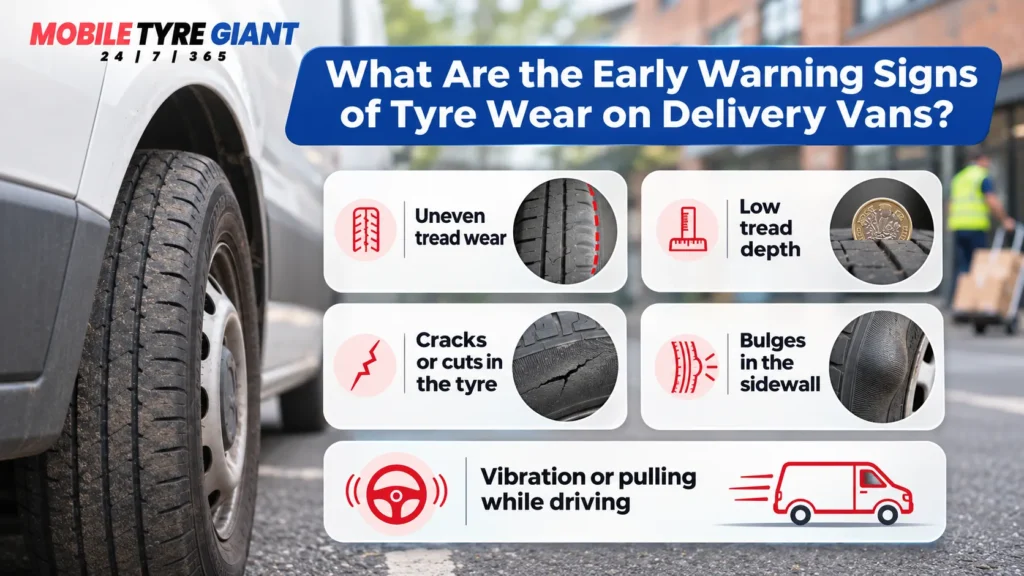
Premature tyre wear is not always obvious from a quick glance at the vehicle. The tread may look acceptable on the outside while the inner shoulder is wearing rapidly. Drivers might also notice vibration, changes in steering behaviour or repeated pressure loss. Visible cuts, bulges and exposed reinforcing material are more serious warning signs requiring prompt attention. Identifying these problems early is particularly important when a van completes demanding routes every day.
A useful inspection should examine the tread across its full width and at several positions around the circumference. Compare tyres on the same axle and look for differences in wear or visible damage. For most UK light vans, the legal minimum tread depth is 1.6mm across the central three-quarters and around the entire circumference. However, a tyre can be unsafe even when its remaining tread exceeds that minimum. Regular checks and timely professional assessment help prevent gradual wear from becoming an unexpected roadside problem.
How Can You Recognise Different Tyre Wear Patterns on Delivery Vans?
Tyre wear on delivery vans does not always develop evenly across the tread. Sometimes the outer edges disappear faster, while other tyres develop worn patches or a noticeably rough surface. These patterns can provide useful clues about inflation pressure, wheel alignment and mechanical condition. For fleet operators, recognising the differences can help identify problems before another tyre needs replacing. However, tread appearance alone cannot confirm the exact cause.
Imagine inspecting two delivery vans parked beside each other after a busy shift. One has tyres worn along both shoulders, while the other shows unusual dips around the tread. Although both vehicles have uneven tyre wear, the underlying reasons could be completely different. A proper inspection considers tyre pressure, loading, driving conditions and the vehicle’s mechanical components. Understanding these common patterns makes it easier to decide what needs professional attention.
Tyre wear pattern | Possible causes | Recommended action |
Both shoulders wearing | Underinflation, overloading or demanding cornering conditions | Check pressure, loading and tyre condition |
Centre tread wearing | Excessive inflation pressure for the load or other fitment issues | Verify correct pressure and tyre specification |
Inner or outer edge wearing | Wheel misalignment or suspension problems | Arrange alignment and suspension checks |
Feathered tread | Incorrect toe alignment or worn steering components | Inspect steering and alignment |
Cupping or scalloping | Wheel imbalance, worn dampers or suspension issues | Investigate balancing and mechanical condition |
Flat spots | Wheel lock-up during braking or prolonged stationary loading | Assess tyre damage and investigate the cause |
Shoulder Wear: Why Are Both Tyre Edges Wearing Faster?
Shoulder wear occurs when the outer sections of the tread become noticeably shallower than the centre. Underinflation is a common cause because the tyre can flex excessively under the vehicle’s weight. This places additional demands on its shoulders, particularly when carrying heavy loads. Delivery vans that regularly travel with unsuitable inflation pressure may develop this pattern over time. Frequent turning and demanding driving conditions can also contribute.
Imagine a loaded van completing deliveries while its tyres are below the recommended pressure. Each corner and braking manoeuvre adds stress to tyres already working harder than intended. The driver might not notice anything unusual until the shoulders become visibly worn. Checking pressure when the tyres are cold can help identify an inflation problem. The correct figures depend on the vehicle and its load, making accurate tyre pressure checks particularly important.
Centre Tread Wear: Is Excessive Tyre Pressure Responsible?
Centre wear develops when the middle portion of the tread wears faster than the surrounding shoulders. Excessive inflation pressure relative to the load can contribute to this condition. The tyre’s contact with the road may become concentrated more heavily towards its centre. Over time, this can lead to an uneven tread profile and reduced usable tyre life. However, tyre construction, fitment and driving conditions can also influence the pattern.
Delivery drivers should not assume that higher pressure automatically makes a loaded van safer. Tyres need to be inflated according to the manufacturer’s recommendations for the operating conditions. A van travelling lightly loaded may require different settings from the same vehicle carrying its maximum permitted load. Pressure should be measured using a reliable gauge rather than judged by appearance. If centre wear continues despite correct inflation, a professional should investigate other possible causes.
Inner or Outer Edge Wear: Could Wheel Alignment Be the Problem?
When one side of a tyre wears faster than the other, wheel alignment deserves attention. Incorrect toe or camber settings can cause the tyre to contact the road unevenly. The inside shoulder may become significantly worn while the outer tread still appears healthy. On busy delivery routes, repeated kerb strikes and pothole impacts can contribute to alignment or suspension problems. These issues may develop gradually without an obvious warning light.
A driver might notice the steering wheel sitting slightly off-centre or the van pulling towards one side. However, uneven edge wear can also occur without noticeable steering symptoms. Worn suspension bushes and other mechanical faults may produce similar results. Inspecting only the visible outer shoulder can allow serious inner-edge wear to go unnoticed. Alignment measurements and suspension checks help identify the cause before replacement tyres develop the same problem.
Feathering and Heel-to-Toe Wear: What Does a Rough Tread Mean?
Feathering creates an uneven texture along the edges of individual tread ribs. One side of a rib feels relatively smooth, while the opposite edge develops a sharper ridge. This pattern is commonly associated with incorrect toe alignment or worn steering and suspension components. The tyre may appear reasonably normal until examined closely. Feathering can become more pronounced when the vehicle continues operating with an unresolved fault.
Heel-to-toe wear is slightly different because the leading and trailing edges of tread blocks wear at different rates. The result can resemble a series of small steps around the tyre’s circumference. Tyre construction, inflation, wheel position and operating conditions may all influence this pattern. Drivers sometimes notice increased road noise before recognising the uneven tread. A technician should distinguish between these patterns before recommending alignment, tyre repositioning or other corrective work.
Cupping or Scalloping: Why Are There Dips in the Tread?
Cupping, also called scalloping, produces irregular low spots around the tyre’s circumference. Instead of wearing smoothly, sections of the tread develop a wavy or scooped appearance. This can happen when the tyre’s contact with the road becomes inconsistent as the wheel rotates. Worn shock absorbers, wheel imbalance and other suspension problems are possible contributors. The resulting vibration or road noise may become increasingly noticeable.
Consider a delivery van that starts producing a rhythmic humming noise during faster journeys. Its tyres may have developed alternating high and low sections across the tread. Simply replacing the affected tyres without investigating the mechanical condition could allow the problem to return. Wheel balancing may be needed when imbalance is identified, while worn suspension components require appropriate repair. A thorough inspection should determine which faults are contributing before corrective work begins.
Flat Spots: Can Harsh Braking or Long Parking Cause Them?
Flat spots are localised areas where part of the tread becomes noticeably flatter or more worn. Permanent damage can develop when a wheel locks and slides across the road during severe braking. A different form of temporary flat-spotting can occur when tyres remain loaded in one position during prolonged parking. These conditions should not be confused with ordinary tread wear from everyday stopping. Delivery vans may encounter different risks depending on their routes and operating schedules.
A driver might notice vibration after a severe braking incident or when restarting a vehicle that has remained parked for an extended period. Some temporary vibration caused by stationary loading may improve as the tyres warm and regain their normal shape. However, significant flat spots, persistent vibration or suspected structural damage require professional assessment. Do not assume the tyre is safe simply because the vibration becomes less noticeable. The appropriate response depends on the tyre’s condition and the cause of the problem.

How Should Fleet Operators Investigate Uneven Tyre Wear?
Recognising a tyre wear pattern is only the beginning of an effective inspection. Fleet operators should also establish how quickly the damage developed and whether other vehicles show similar symptoms. Start by checking inflation pressure, approved tyre specifications and the condition of the vehicle’s steering and suspension. Record the affected tyre position and measure tread depth across several points. These details can help technicians identify whether the problem involves operating conditions or a mechanical fault.
A consistent inspection record is particularly useful when delivery vans cover substantial daily mileage. If several vehicles develop similar wear patterns, loading practices, tyre maintenance or route conditions may deserve closer examination. The existing fleet tyre tread-depth policy explains how businesses can establish replacement thresholds and record measurements. Remember that correcting the underlying problem cannot restore tread rubber that has already worn away. The final decision should consider remaining tread depth, tyre damage and whether the vehicle is safe to continue operating.
How Can Delivery Fleets Prevent Premature Tyre Wear?
Preventing tyre wear on delivery vans starts with consistent maintenance rather than waiting for visible damage. Delivery vehicles face demanding working conditions, but that does not mean excessive tyre wear is unavoidable. Correct inflation, sensible loading and smooth driving can all help tyres perform as intended. Regular inspections also make it easier to identify problems before they become expensive. For fleet operators, the goal is to prevent avoidable deterioration while keeping vehicles safe and available for work.
Think of tyre maintenance as part of the daily delivery routine rather than an occasional workshop task. A driver who checks their vehicle regularly is more likely to notice a problem developing. Small changes in pressure or tread condition can provide valuable early warnings. Addressing those changes promptly may prevent further damage and unnecessary downtime. A practical prevention strategy combines driver awareness with scheduled professional inspections.
Maintain the Correct Tyre Pressure for Every Load
Correct inflation is essential for maintaining even tyre wear on commercial vehicles. Underinflated tyres flex excessively, generating heat and placing additional stress on their shoulders. Excessive pressure can also contribute to abnormal wear and affect road contact. Delivery vans are particularly sensitive to unsuitable pressure because their loads often change throughout the working day. Always use the vehicle manufacturer’s recommended settings for the approved tyres and operating load.
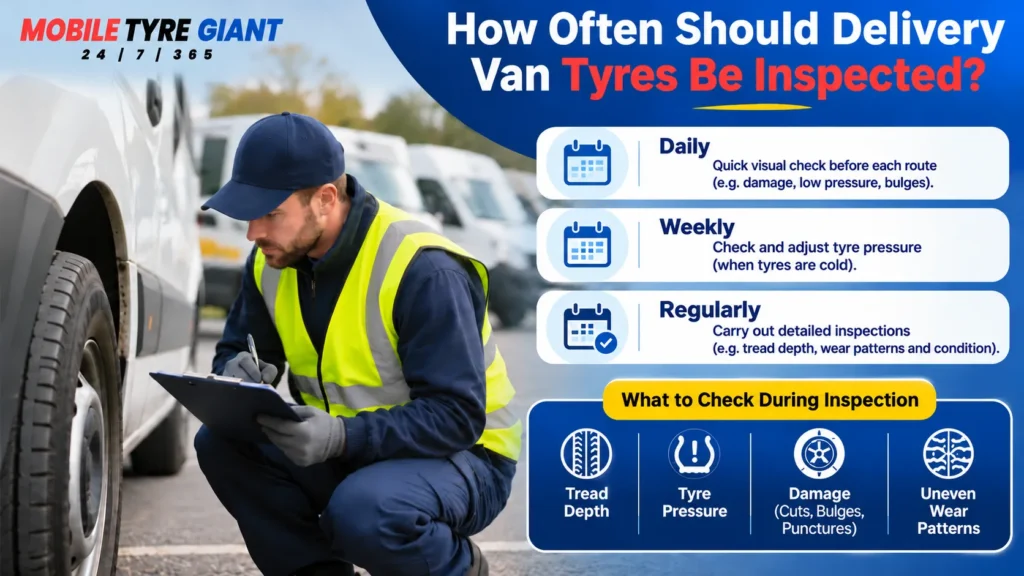
Tyre pressure should be measured when the tyres are cold using a reliable gauge. For busy delivery fleets, weekly pressure measurements provide a useful routine alongside daily visual checks. Drivers should also inspect the valves and investigate tyres that repeatedly lose air. Some vans have different recommended pressures for lightly loaded and heavily loaded conditions. Following the correct specifications helps maintain consistent tyre performance without relying on guesswork.
Control Cargo Weight and Distribute Loads Properly
Overloading places unnecessary stress on tyres, wheels, suspension and braking components. Every delivery van has a maximum permitted vehicle weight and individual axle weight limits. Exceeding these limits can contribute to excessive tyre flexing, heat buildup and accelerated wear. Even when the overall vehicle weight is legal, poorly distributed cargo may overload an individual axle. Fleet operators should therefore consider where the weight sits, not just how much cargo is being carried.
Imagine a van carrying heavy parcels concentrated near its rear doors. The rear axle may experience substantially more load than intended, especially when the cargo is positioned incorrectly. Distributing and securing goods according to the vehicle’s loading guidance helps reduce this risk. Drivers should also account for equipment, passengers and other items included in the vehicle’s total weight. Proper loading supports safer handling and reduces unnecessary demands on the tyres.
How Do Driving Habits Affect Delivery Van Tyre Life?
Driving behaviour plays an important role in how quickly commercial tyres deteriorate. Delivery routes involve repeated acceleration, braking, steering and parking manoeuvres throughout the working day. These actions are unavoidable, but unnecessary harshness can increase the forces acting on the tread. Smooth vehicle control helps reduce avoidable stress without requiring drivers to travel unusually slowly. Small improvements in everyday driving can make a meaningful difference over time.
Consider two drivers operating similar vans along comparable delivery routes. One accelerates sharply between stops and brakes heavily at junctions. The other anticipates traffic, maintains appropriate following distances and slows down progressively. Their tyres may experience different levels of stress despite travelling similar distances. Driver training should therefore include practical techniques that encourage smooth and controlled vehicle movements.
Reduce Harsh Braking, Acceleration and Cornering
Repeated aggressive acceleration increases the forces transferred through a tyre’s contact patch. Sudden braking creates additional friction and may contribute to faster tread deterioration. Sharp cornering can also place greater demands on the tyre shoulders, particularly when the van carries a substantial load. These effects may become more noticeable on routes with frequent stops and tight junctions. Encouraging smoother driving helps limit unnecessary wear while supporting vehicle control.
Drivers should look further ahead and anticipate traffic changes whenever possible. Maintaining a suitable following distance allows more time to brake progressively rather than suddenly. Gentle acceleration when leaving delivery points can also reduce abrupt tyre loading. However, avoiding harsh driving must never take priority over making an emergency stop when necessary. The objective is sensible, predictable driving rather than compromising safety.
Avoid Kerb Strikes, Potholes and Unnecessary Tyre Scrubbing
Delivery drivers regularly encounter narrow streets, raised kerbs and restricted loading areas. Contact with these obstacles can damage tyre sidewalls, wheels and suspension components. Repeatedly turning the steering wheel while the van is stationary can also scrub the tread against the road surface. These problems are particularly relevant when manoeuvring heavily loaded vehicles in confined spaces. Careful positioning can help reduce avoidable damage during everyday deliveries.
Drivers should approach loading bays slowly and allow enough room when manoeuvring near kerbs. Where safe, avoid potholes without making sudden steering movements that could endanger other road users. If a significant impact occurs, inspect the affected tyre and wheel at the earliest safe opportunity. New vibrations, steering changes or visible bulges require prompt professional attention. Reporting these incidents early can prevent a damaged tyre from remaining in service unnoticed.
How Often Should Delivery Van Tyres Be Inspected?
A consistent inspection routine is one of the most effective ways to identify developing tyre problems. Delivery vans may encounter hazards during almost every shift, making occasional checks insufficient on their own. Drivers should complete a walkaround inspection before using the vehicle and report visible defects. Fleet managers should supplement these checks with scheduled pressure measurements and more detailed tyre inspections. The appropriate frequency depends on mileage, loading, working conditions and maintenance history.
A van operating on rough construction-site access roads may require closer monitoring than one travelling mainly on smooth motorways. Similarly, high-mileage urban delivery routes can expose tyres to frequent kerb contact and road damage. Inspection schedules should reflect these differences rather than applying identical intervals without consideration. A vehicle that develops new symptoms also needs attention before its next planned inspection. Consistency matters, but flexibility is equally important when problems arise.
Introduce Daily Driver Walkaround Checks
Daily checks help drivers identify obvious tyre defects before beginning their delivery routes. Each inspection should include visible tread condition, sidewall damage, cuts, bulges and signs of significant underinflation. Drivers should also look for damaged wheels and objects embedded in the tread. These checks do not replace accurate pressure measurements or detailed workshop inspections. However, they provide an important opportunity to recognise problems before the vehicle enters service.
A straightforward reporting process makes daily inspections more effective. Drivers should know how to record defects and whom to contact when a problem is discovered. Dangerous tyre defects must be addressed before the vehicle continues operating. Where an operator licence applies, additional recording requirements may also need to be followed. Clear responsibilities help prevent minor observations from being forgotten during a busy working day.
Schedule Wheel Alignment, Balancing and Suspension Inspections
Maintaining the mechanical condition of a delivery van helps protect its tyres from abnormal wear. Incorrect alignment can cause the tread to scrub unevenly against the road. Wheel imbalance may create vibration, while worn suspension components can contribute to irregular tyre contact. These conditions should be investigated when symptoms appear rather than treated as inevitable consequences of delivery work. Replacing worn tyres without correcting an underlying mechanical fault may simply allow the damage to return.
Not every vehicle needs wheel balancing or alignment adjustment at a fixed mileage. Instead, inspections should respond to manufacturer guidance, tyre wear patterns, steering behaviour and significant impacts. Persistent vibration can be a reason to investigate whether mobile wheel balancing is appropriate. A qualified technician should also check alignment and suspension components when symptoms indicate a possible fault. Preventative maintenance is most useful when it addresses the actual cause of the problem.
Keep Accurate Tyre Maintenance and Inspection Records
Good records help fleet managers recognise recurring tyre problems across individual vehicles. Recording tyre pressures, tread measurements, damage and replacement dates creates a clearer picture of tyre condition. Including vehicle mileage and tyre position makes it easier to compare wear over time. If one van repeatedly develops the same problem, its maintenance history may reveal useful patterns. These records can also support decisions about inspection frequency and future tyre requirements.
Fleet managers do not necessarily need complicated software to begin tracking tyre condition. A consistent digital record or organised inspection sheet can provide a practical starting point. The important thing is to record accurate information and follow up when unusual patterns appear. Scheduled fleet tyre checks can support detailed assessments of pressure, tread wear and physical condition. Combining reliable records with timely maintenance helps businesses reduce preventable tyre problems and keep delivery vehicles operating safely.
When Should Delivery Van Tyres Be Replaced?
Knowing when to replace delivery van tyres is essential for maintaining safety and avoiding unexpected breakdowns. Tyres gradually lose tread through normal driving, but premature or uneven wear can shorten their useful life. Frequent deliveries, changing loads and demanding road conditions make regular inspections particularly important. Waiting until a tyre becomes completely worn can increase the risk of losing grip, especially on wet roads. The safest approach is to assess tread depth, visible damage and overall tyre condition together.
There is no universal mileage at which every delivery van tyre needs replacing. One vehicle might cover substantial motorway distances with relatively even wear, while another experiences faster deterioration on urban routes. Tyre quality, driving behaviour, inflation pressure and mechanical condition all influence replacement timing. Fleet managers should therefore avoid using mileage as their only replacement criterion. Inspection findings provide a more reliable basis for deciding when tyres should be removed from service.
What Is the Legal Tyre Tread Depth for Delivery Vans in the UK?
For most light delivery vans weighing up to 3.5 tonnes, the legal minimum tyre tread depth is 1.6mm. This must be maintained across the central three-quarters of the tread and around its entire circumference. The minimum applies even when the van is used for short local deliveries. However, a tyre can become unsafe before reaching this limit if it develops structural damage. Drivers should never treat the legal minimum as a guarantee of adequate tyre condition.
A tread depth gauge provides a more reliable measurement than judging the grooves by eye. Check several locations around each tyre because wear may not develop evenly. Fleet operators may choose a replacement threshold above the legal minimum based on working conditions and safety policies. Heavier commercial vehicles can be subject to different legal requirements, so vehicle classification matters. Regular measurements help identify tyres approaching replacement before they interrupt scheduled deliveries.
When Does Uneven Wear or Visible Damage Require Replacement?
Uneven tyre wear does not automatically mean immediate replacement, but it always deserves investigation. A tyre with excessive shoulder wear, exposed reinforcement or significant structural damage may no longer be suitable for use. Sidewall bulges are particularly concerning because they can indicate internal structural failure. Deep cuts, tread separation and serious cracking also require professional assessment. Continuing to operate with a dangerous tyre can put the driver and other road users at risk.
Imagine discovering that one front tyre has almost no tread remaining along its inner edge. The outer tread might still look acceptable, but that does not make the tyre safe. Replacing it may be necessary, alongside investigating the alignment or suspension fault responsible. Otherwise, the replacement tyre could develop the same problem. Addressing both the tyre condition and its underlying cause is essential for preventing repeated damage.
Can a Damaged Delivery Van Tyre Be Repaired Instead of Replaced?
Not every damaged delivery van tyre needs immediate replacement. Some punctures in suitable areas of the tread may qualify for a professional permanent repair. However, the decision depends on the damage location, tyre construction and overall condition. Sidewall damage, exposed cords or internal deterioration can make repair unsuitable. A tyre that has been driven while severely underinflated may also have hidden damage.
Fleet managers should avoid assuming that every puncture means purchasing another tyre. A competent inspection can determine whether repair meets the appropriate safety requirements. The distinction between emergency tyre repair and replacement is particularly useful when a van develops a puncture during deliveries. Repairing a suitable tyre may preserve its remaining service life and reduce unnecessary expense. However, cost savings should never take priority over structural safety.
How Does Premature Tyre Wear Affect Fleet Costs and Downtime?
Premature tyre wear on delivery vans can create costs extending well beyond the price of replacement rubber. When a vehicle becomes unavailable, deliveries may be delayed or transferred to another driver. Businesses might also face additional labour, recovery or rearrangement expenses. These disruptions can be especially difficult when routes operate to tight schedules. Preventing avoidable tyre problems therefore supports both vehicle safety and operational efficiency.
Consider a delivery van developing a serious tyre fault halfway through its morning route. The replacement tyre represents only one part of the total expense. The business must also consider the driver’s lost working time and any deliveries requiring alternative arrangements. If similar problems affect several vehicles, these disruptions can become more difficult to manage. Recording tyre-related downtime alongside maintenance costs helps fleet operators understand the wider impact.
How Can Planned Tyre Replacement Reduce Delivery Disruption?
Planned tyre replacement allows businesses to organise maintenance before a van becomes unexpectedly unavailable. Instead of waiting for a roadside failure, fleet managers can use inspection records to identify tyres approaching replacement. Suitable work can then be arranged during quieter operating periods or scheduled vehicle downtime. This provides greater control over vehicle availability and tyre selection. It also gives technicians an opportunity to investigate abnormal wear before fitting replacements.
For fleets operating several delivery vehicles, coordinating maintenance around working schedules can be particularly useful. Arranging mobile tyre fitting for fleets may reduce the need to send vehicles away from their depot or workplace. However, some mechanical problems still require specialist workshop equipment. Fleet managers should distinguish routine tyre replacement from faults needing additional diagnosis. Choosing the appropriate maintenance approach helps minimise disruption without overlooking safety.
A Practical Tyre Replacement Checklist for Delivery Fleets
An effective tyre replacement checklist should begin with the vehicle’s actual operating condition. Check tread depth, inflation pressure, visible damage and any unusual wear patterns. Confirm that the tyres meet the manufacturer’s approved size and load requirements. Review previous inspection reports for recurring faults or recent impacts. These checks help establish whether replacement alone is sufficient or further mechanical work is necessary.
After replacement, confirm that the correct tyres have been fitted and the wheel fixings have been tightened according to the manufacturer’s specifications. Wheel balancing and any relevant tyre pressure monitoring requirements should also be addressed. Record the fitting date, tyre position, mileage and any defects identified during inspection. Drivers should continue their normal pre-use checks rather than assuming new tyres require no attention. Good records make future wear comparisons easier and support more consistent fleet maintenance.
Final Words: Prevent Tyre Wear Before It Disrupts Deliveries
Managing tyre wear on delivery vans requires more than replacing tyres when the tread becomes visibly worn. Incorrect inflation, excessive loading, poor alignment and demanding driving conditions can all contribute to premature deterioration. Recognising unusual wear patterns helps identify problems before they become expensive. Regular inspections, suitable driving practices and timely mechanical repairs can reduce avoidable damage. These measures support safer journeys and more predictable vehicle maintenance.
For delivery businesses, tyre care should be part of everyday fleet management rather than an occasional emergency. Drivers need clear inspection responsibilities, while managers need reliable maintenance records and appropriate replacement procedures. Addressing the cause of unusual wear can help protect new tyres from developing similar problems. Planned maintenance also makes it easier to keep delivery vehicles available when required. A consistent prevention strategy is ultimately more valuable than repeatedly replacing tyres without understanding why they wore out.
Worn Delivery Van Tyres? Keep Your Fleet Moving!
Uneven tyre wear can disrupt deliveries. Arrange professional mobile tyre fitting for worn or damaged van tyres at your depot or another safe, accessible location.
Frequently Asked Questions
Find quick answers to the most common questions our customers ask.
Frequent braking, acceleration, heavy loads and tight urban manoeuvres can accelerate tyre wear. Incorrect inflation, wheel alignment problems and poor maintenance may also contribute to premature deterioration.
Most UK light delivery vans up to 3.5 tonnes require at least 1.6mm of tread across the central three-quarters and around the entire circumference. Different rules can apply to heavier vehicles.
Tyre pressures should generally be checked weekly, preferably when the tyres are cold. Follow the vehicle manufacturer's recommended settings for the tyres fitted and the load being carried.
Yes, excessive weight increases stress on tyres and can contribute to heat buildup and abnormal wear. Poor weight distribution may also overload individual axles, even when overall vehicle weight appears acceptable.
Uneven front tyre wear may result from incorrect wheel alignment, unsuitable inflation pressure or worn suspension components. A professional inspection is needed to identify the actual cause.
Correct wheel alignment helps tyres roll as intended and can reduce abnormal shoulder wear. However, alignment adjustments will not resolve problems caused by unsuitable pressure, loading or other mechanical defects.
Yes, pothole impacts can damage tyre sidewalls, wheels and suspension components. Significant impacts may also affect alignment, leading to uneven tyre wear or steering problems.
Replacement before the legal minimum may be appropriate depending on tyre condition, operating requirements and fleet safety policies. Damaged tyres can require replacement regardless of remaining tread depth.
Uneven tread wear cannot be restored through puncture repair. A separate puncture might be repairable, but the tyre must still meet the appropriate safety and repair requirements.
Maintain correct tyre pressure, avoid overloading, encourage smooth driving and carry out regular inspections. Investigating alignment and suspension faults early can also help prevent repeated abnormal wear.