
A flat tyre rarely happens at a convenient time. It might be outside your home early morning, on a busy road, or halfway through a journey. Most drivers panic or make quick decisions that lead to expensive damage. This guide exists to stop that from happening.
By the end of this article, you will clearly understand:
- Whether you can drive on a flat tyre or not
- How far can you safely travel in real conditions?
- What run-flat tyres are and how they work
- When repair is possible and when replacement is the only option
- What professionals look for that most drivers miss
This is not generic advice. It is written from real tyre inspection experience and designed to help you make the right call immediately.
What Is A Flat Tyre And Why Does It Happen
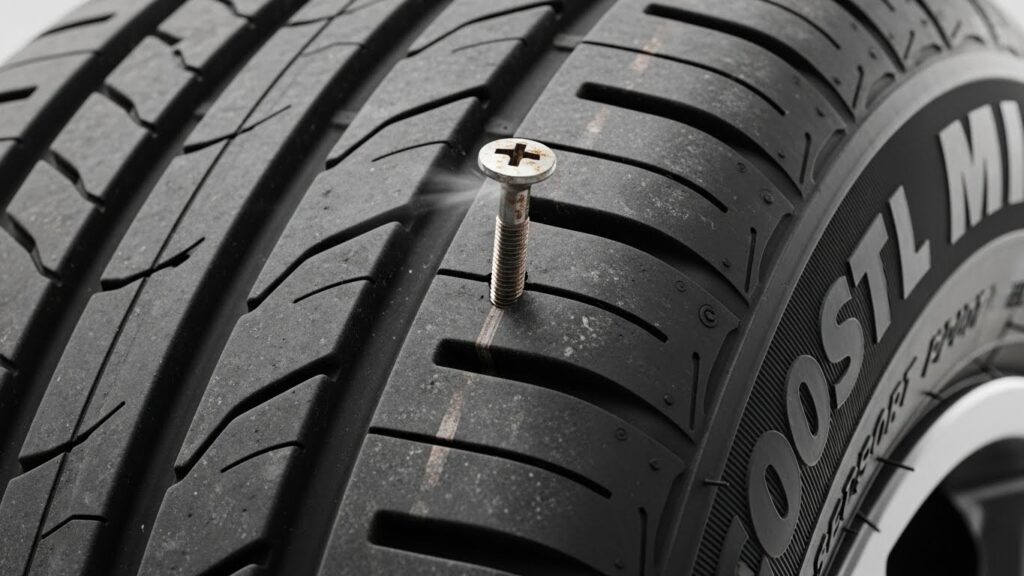
A flat tyre means the tyre has lost enough air pressure that it can no longer support the vehicle safely. This can happen suddenly or gradually.
Common causes include:
- Nails or screws penetrating the tread
- Sidewall damage from kerbs or potholes
- Valve stem leaks
- Bead leaks where the tyre meets the wheel
- Internal structural failure due to age or under-inflation
A tyre can go flat without a visible puncture. Slow leaks are especially dangerous because drivers often keep driving without realising the tyre is compromised.
Early warning signs drivers miss
- Steering pulling slightly to one side
- Increased road noise
- Heavier steering feel
- Warning lights that appear briefly and then disappear
Can You Drive With a Flat Tyre
No, driving with a flat tyre is unsafe and should be avoided. Even moving the vehicle a short distance with little or no air pressure causes the wheel to crush the tyre sidewall against the road surface.
This damage happens internally and cannot be repaired, even if the tyre is later reinflated. Driving slowly does not prevent harm. In most cases, serious tyre damage begins within metres, not miles, and wheel damage often follows.
How Far Can You Drive on a Flat Tyre
In real-world conditions, the safe distance is measured in metres, not miles.
Distance driven | Likely damage |
Less than 50 metres | Possible sidewall stress |
100 to 500 metres | Sidewall collapse and internal cord damage |
Over 1 mile | Tyre destroyed. Wheel likely damaged |
Driving at motorway speeds causes instant failure. Even at low speed, turning and braking forces accelerate damage.
What Happens If You Drive on a Flat Tyre
When air pressure drops to zero:
- The tyre sidewall folds and overheats
- Internal steel cords snap
- Alloy wheels scrape the road surface
- Suspension and alignment components take the impact load
By the time the vehicle stops, repair is often impossible.
What to Do Immediately When You Get a Flat Tyre
- Slow down gradually. Avoid harsh braking.
- Pull over to a safe, flat area away from traffic.
- Do not continue driving to “get home”.
- Inspect the tyre visually only. Do not reinflate yet.
- Decide whether a spare, professional repair, or replacement is required.
Sealants and inflation kits should only be used if recommended by the vehicle manufacturer. Many tyres become irreparable after sealant use.
Temporary Fixes Explained. Tyre Foam and Inflation Kits
Tyre sealants temporarily block small tread punctures. They do not fix:
- Sidewall damage
- Large punctures
- Internal structural failure
Most professional tyre fitters must remove sealant before inspection. In many cases, the tyre is rejected due to contamination.
What Are Run-Flat Tyres
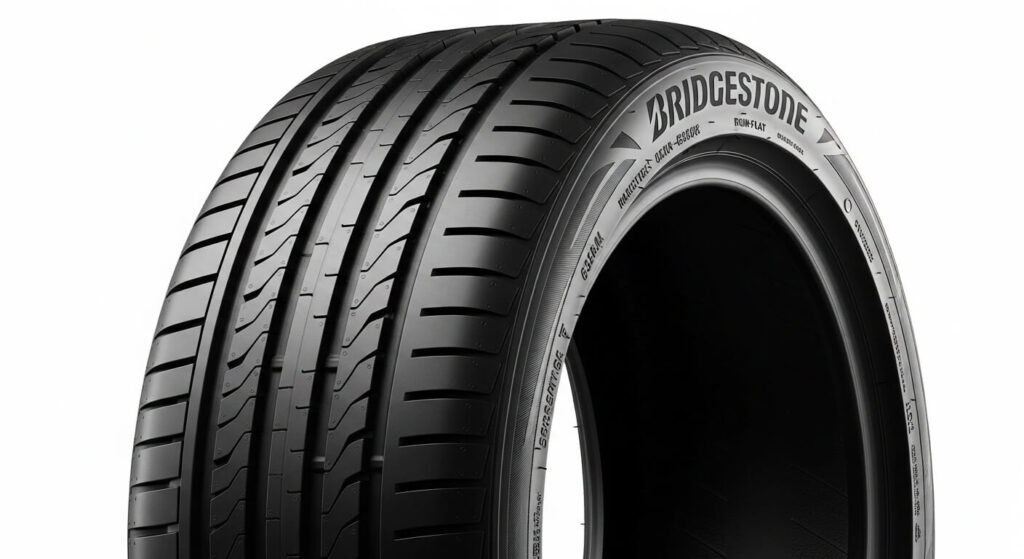
Run-flat tyres are designed with reinforced sidewalls that allow limited driving after air pressure is lost.
They were introduced to:
- Reduce roadside stops
- Improve safety after sudden punctures
- Eliminate the need for spare wheels
They are commonly fitted to performance and premium vehicles.
How Run-Flat Tyres Work After a Puncture
When pressure drops:
- Reinforced sidewalls support vehicle weight
- Heat-resistant compounds slow degradation
- Vehicle remains controllable for a limited distance
However, they are not indestructible. Heat buildup is the limiting factor.
How Far Can You Drive on Run-Flat Tyres
Most manufacturers specify:
- Maximum distance. Around 50 miles
- Maximum speed. Around 50 mph
Exceeding either limit causes internal damage that makes the tyre unsafe to reuse.
Tyre type | Distance | Speed |
Standard tyre | 0 miles | Not safe |
Run-flat tyre | Up to 50 miles | Up to 50 mph |
Can Run-Flat Tyres Be Repaired
Sometimes. But not always.
Repair may be possible if:
- The puncture is small
- It is located in the central tread area
- The tyre was driven a very short distance
Repair is not allowed if:
- Sidewall damage is present
- The tyre was driven while fully deflated
- Heat damage is visible internally
Many run-flat tyres are replaced as a safety decision, not because repair is impossible.
How to Identify If Your Tyres Are Run-Flat
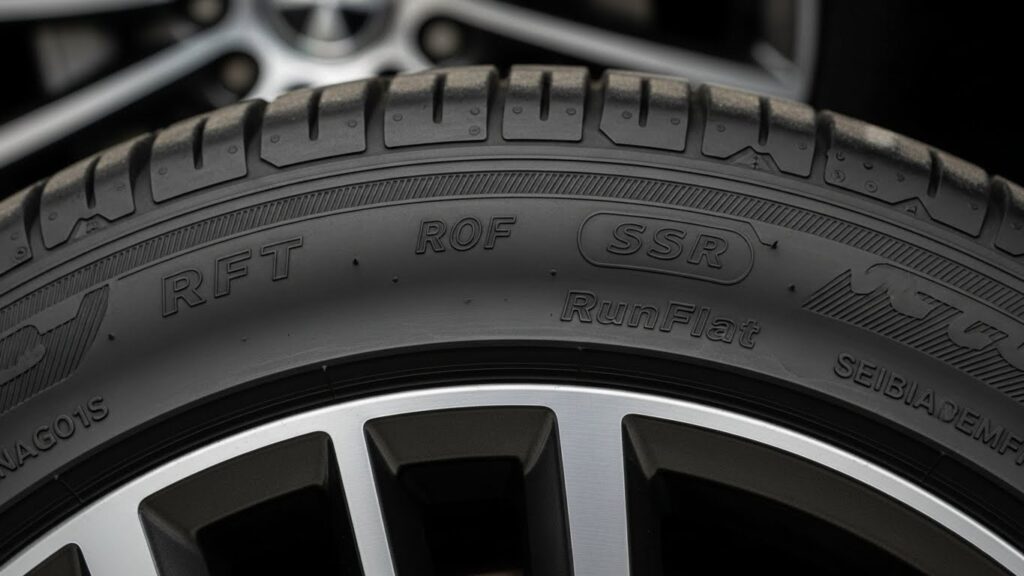
Check the tyre sidewall for markings such as:
- RFT
- ROF
- SSR
- RunFlat
Other indicators:
- No spare wheel in the boot
- Tyre pressure monitoring system warnings
- Firmer ride quality
Are Run-Flat Tyres Worth It
Advantages:
- Continued mobility after puncture
- Improved safety at speed
- No roadside tyre changes
Disadvantages:
- Higher cost
- Firmer ride
- Limited repair options
They suit drivers who prioritise safety and convenience over comfort.
Can You Mix Run-Flat and Normal Tyres
Mixing run-flat and standard tyres is not recommended.
Problems include:
- Uneven handling
- Stability system errors
- Different flex characteristics between axles
Tyres on the same axle must always match in type and size.
Common Tyre Sizes and What They Mean
Example: 205/55 R16 91V
Marking | Meaning |
205 | Tyre width in millimetres |
55 | Sidewall height percentage |
R | Radial construction |
16 | Wheel diameter in inches |
91 | Load index |
V | Speed rating |
The correct size ensures braking, steering, and safety systems function as designed.
Does Breakdown Cover Help With Flat Tyres
Breakdown services may:
- Inflate a tyre temporarily
- Change a spare wheel
- Tow the vehicle if repair is not possible
Coverage depends on policy level and damage type.
Expert Advice From Real Tyre Inspections
From professional experience, the most common costly mistakes are:
- Driving “just a little further”
- Reinflating damaged tyres
- Ignoring slow punctures
- Using sealant unnecessarily
Most avoidable damage happens within the first few minutes.
Frequently Asked Questions
Find quick answers to the most common questions our customers ask.
No, even slow driving causes immediate internal damage to the tyre sidewall and can bend or crack the wheel. The tyre may look repairable later, but internal cord damage usually makes it unsafe.
In most cases, you should not drive at all. Even a few hundred metres can destroy the tyre and damage the wheel. Flat tyres are designed to carry air, not vehicle weight.
Most run-flat tyres are designed to travel up to 50 miles at reduced speed, usually around 50 mph. Actual distance depends on vehicle load, road conditions, and how soon the driver slows down after the puncture.
No, many run-flat tyres cannot be repaired, especially if they were driven while fully deflated. Heat buildup inside the tyre often causes hidden damage that makes repair unsafe.
A slow puncture feels less dramatic, but it can be more damaging over time. Driving for days or weeks on low pressure weakens the tyre structure and often turns a repairable puncture into a full replacement.
A tyre is usually repairable only if the puncture is small, located in the central tread area, and the tyre has not been driven flat. Sidewall damage and run-flat heat damage usually rule out repair.
No, space saver spares are designed for short distances and low speeds only. Using one long-term affects braking, handling, and can damage differentials and suspension components.
Loss of tyre pressure changes the contact patch and steering geometry instantly. This reduces grip and makes the vehicle feel unstable, especially during turns or braking.
Sealants should only be used if recommended by the vehicle manufacturer. Many tyres become unrepairable after sealant use because it contaminates the internal structure and sensor systems.
You should stop immediately if the tyre loses pressure rapidly, the steering feels unstable, you hear flapping or grinding noises, or a tyre pressure warning appears and does not clear after slowing down.
Final Thoughts
Flat tyres and run-flat tyres demand different decisions, but both require quick, informed action. Knowing when to stop, when repair is possible, and when replacement is the only safe option saves money, time, and risk.
If there is one rule to remember, it is this: Driving on a damaged tyre almost always costs more than stopping early.