
Choosing new tyres becomes confusing when several models from the same manufacturer promise different benefits. One might focus on comfortable motorway driving, while another prioritises responsive steering and cornering grip. Some tyres are also developed to cope with changing weather throughout the year. Bridgestone offers different ranges to meet these needs, including Turanza, Potenza and dedicated all-season options. Understanding their differences can help you find suitable tyres without paying for characteristics you rarely need.
Think of tyre selection like choosing footwear for different activities. Comfortable walking shoes, running trainers and winter boots may all fit your feet, but they serve different purposes. Tyres work similarly because their construction, rubber compounds and tread patterns influence how they perform. A family saloon used for commuting may benefit from different characteristics than a powerful sports car. This Bridgestone tyres guide explains the main options and what UK drivers should consider before making a decision.
Bridgestone Tyres Guide: What Are the Main Types of Bridgestone Tyres?
Bridgestone manufactures tyres for various vehicles, driving conditions and performance requirements. Its passenger-car ranges include touring, high-performance, all-season and winter-focused options. These categories help drivers narrow their choices according to comfort, grip, handling and weather conditions. However, a tyre’s category does not automatically establish whether it fits a particular vehicle. The manufacturer’s approved specifications must always take priority over product descriptions.
For everyday motorists, the most relevant starting point is understanding Turanza and Potenza. Turanza focuses mainly on touring characteristics, while Potenza is associated with performance-oriented driving. The Turanza All Season 6 offers a different approach by combining characteristics intended for multiple seasons. Other Bridgestone families, including Blizzak and Dueler, address winter and certain SUV or off-road requirements. The available selection of tyre brands and sizes can provide additional context when comparing suitable replacement options.
What Is the Difference Between Touring, Performance and All-Season Tyres?
Touring tyres are generally designed for motorists who value comfortable handling, stability and dependable everyday performance. They are particularly relevant to drivers completing regular commutes or longer motorway journeys. Performance tyres place greater emphasis on responsive steering, cornering behaviour and braking characteristics. All-season tyres aim to provide a practical balance across warmer and colder conditions. Each type has strengths, but choosing one involves understanding its intended purpose.
Imagine comparing three drivers who use their cars differently. One spends several hours travelling along motorways, another enjoys a responsive sports saloon, and the third drives throughout the year without changing tyres seasonally. Their priorities could naturally lead them towards different Bridgestone ranges. The motorway driver might prefer touring characteristics, while the sports-car owner may value performance-focused handling. The third driver could consider all-season tyres for greater flexibility in changing weather.
Are Bridgestone Turanza Tyres Suitable for Everyday Driving?
The Bridgestone Turanza family is primarily associated with touring performance for everyday motorists. These tyres are developed around characteristics such as road comfort, stability and dependable wet-road handling. They are particularly relevant to drivers who cover substantial distances or regularly travel on motorways. However, individual Turanza models have different specifications and seasonal purposes. It is important to compare the actual product rather than assuming every tyre carrying the name performs identically.
Consider a driver travelling from London to Birmingham for work several times a month. Motorway stability, road noise and comfortable handling may matter more than maximum cornering responsiveness. A suitable touring tyre can offer a practical balance for those priorities. However, tyre performance also depends on the vehicle, inflation pressure, road surface and driving conditions. Choosing an appropriate model involves matching those factors with the manufacturer’s approved fitment.
What Makes Bridgestone Turanza 6 a Touring Tyre?
Bridgestone Turanza 6 is a summer touring tyre designed with everyday road use in mind. Its development focuses on wet-road performance, mileage and rolling efficiency. The tyre incorporates Bridgestone’s ENLITEN technology, which supports particular performance and efficiency objectives. These characteristics make it relevant to motorists seeking a balance between driving comfort and practical performance. However, individual results depend on tyre size, vehicle characteristics and operating conditions.
Wet-road performance deserves attention because British motorists regularly encounter rain throughout the year. A tyre must channel water away from its contact area while maintaining suitable road grip. Turanza 6 is developed with these wet-driving demands in mind, alongside dry-road handling requirements. That does not mean it prevents aquaplaning or removes the need to adjust speed in heavy rain. Tyre tread depth, road conditions and sensible driving remain important regardless of the model fitted.
Which Drivers Might Prefer Bridgestone Turanza 6?
Turanza 6 may appeal to drivers using family hatchbacks, saloons, estate cars and compatible SUVs. These motorists often prioritise predictable handling and comfortable everyday travel over maximum sports-car responsiveness. Regular motorway journeys can also make rolling noise, stability and efficiency important considerations. For an electric or hybrid vehicle, load capacity and rolling resistance may receive additional attention. The correct choice still depends on whether the available tyre specification matches the vehicle.
Imagine a family preparing for a long weekend journey with passengers and luggage. Their main priorities are suitable grip, steady motorway handling and a comfortable journey. A touring-focused tyre may align well with those expectations, provided its load and speed ratings are appropriate. However, drivers regularly travelling through snow or icy conditions may need to consider a different seasonal option. Turanza 6 should not be confused with Turanza All Season 6, which is designed for broader weather conditions.
What Should You Consider Before Choosing Bridgestone Touring Tyres?
Choosing touring tyres involves more than deciding whether comfort matters to you. Wet grip, rolling resistance, tread life and road noise should all influence the comparison. Drivers covering long distances may place greater emphasis on efficiency and consistent motorway performance. Those mainly travelling through urban areas may prioritise wet braking and predictable handling during frequent stops. These considerations help narrow the choices without assuming one tyre performs best in every situation.
It is also important to understand the limitations of tyre performance information. A manufacturer’s product description explains design priorities, but it does not replace independent comparison testing. Tyres can perform differently across sizes, vehicles and test conditions. A model receiving favourable results in one size should not automatically be expected to behave identically in every fitment. Compare relevant information before deciding whether a particular touring tyre suits your normal driving conditions.
How Important Are Tyre Size, Load Index and Speed Rating?
Tyre dimensions and service ratings determine whether a replacement is suitable for your vehicle. The size marking identifies characteristics including width, aspect ratio and wheel diameter. The load index indicates the tyre’s rated weight-carrying capacity, while the speed rating identifies its speed capability under specified conditions. Two Turanza tyres may have different ratings despite belonging to the same product family. Choosing the correct combination is essential for safe and appropriate fitment.
Check the vehicle handbook, manufacturer tyre information label or approved fitment data before ordering. You can also learn how to find the correct tyre size and specification when interpreting sidewall markings. Some vehicles use different approved sizes on their front and rear axles. Others require particular load ratings, reinforced construction or manufacturer-approved specifications. Confirming these details first helps prevent an unsuitable purchase and makes it easier to compare compatible Bridgestone models.
What Makes Bridgestone Potenza Performance Tyres Different?
Bridgestone Potenza tyres are developed for drivers who value responsive steering, precise cornering and dependable braking performance. Unlike touring-focused tyres, the Potenza range places greater emphasis on handling and vehicle control. These characteristics are particularly relevant to sports cars, powerful saloons and certain performance SUVs. Tyre construction, tread design and rubber compounds all influence how effectively the vehicle responds to steering and braking inputs. However, the right performance tyre must still match the vehicle’s approved specifications. In this Bridgestone tyres guide, the Potenza models represent the performance side of the range.
Imagine driving along a winding country road where the surface changes between smooth tarmac and damp patches. A performance tyre is designed to provide predictable responses when steering, braking and cornering. This does not mean encouraging higher speeds or taking unnecessary risks. Instead, suitable tyres can help drivers maintain confidence and control within safe driving limits. The Potenza family offers different models for motorists seeking these characteristics.
What Is Bridgestone Potenza Sport Designed For?
Bridgestone Potenza Sport is an ultra-high-performance summer tyre designed for demanding road use. It focuses on steering response, cornering stability and braking performance in suitable summer driving conditions. Its asymmetric tread pattern and reinforced construction help maintain controlled handling during changes in direction. The tyre is available in specifications intended for various performance cars and compatible SUVs. However, individual fitments differ, so checking the correct size and ratings remains essential.
For example, a driver using a powerful sports saloon may appreciate the responsive steering characteristics associated with Potenza Sport. The tyre is developed to provide substantial grip during braking and cornering on both dry and wet roads. However, its summer construction is not intended to replace a dedicated winter tyre in snow or icy conditions. Drivers should consider their local weather and seasonal requirements before choosing it. A performance tyre is most useful when its strengths match the vehicle and driving environment.
How Is Potenza Sport EVO Different From Potenza Sport?
Bridgestone Potenza Sport EVO builds on the original Potenza Sport with updated materials and construction. Introduced for the European market in 2026, it incorporates Bridgestone’s ENLITEN technology. The newer design focuses on improving wet braking, longevity and rolling efficiency while retaining responsive handling. Bridgestone reports a 5% reduction in wet braking distance and 15% greater mileage compared with the original model in specified internal tests. These figures describe particular test conditions rather than guaranteed results for every driver.
The Potenza Sport EVO also incorporates an updated tread compound designed to improve resistance to wear. Its reinforced construction supports stability during cornering and other demanding driving situations. Bridgestone additionally positions the tyre as suitable for electric vehicles when the correct specification is available. However, choosing the EVO version does not automatically guarantee better results in every vehicle or tyre size. Drivers should compare available fitments, relevant test information and their everyday priorities before deciding.
How Do Bridgestone Potenza Tyres Perform on Wet and Dry Roads?
Wet and dry handling are particularly important considerations when selecting high-performance tyres for UK roads. Summer performance tyres are designed to provide controlled responses during steering, acceleration and braking in suitable conditions. Bridgestone Potenza Sport uses specialised tread construction and rubber compounds to support these characteristics. Potenza Sport EVO builds on that approach with updated materials intended to improve braking and handling. Nevertheless, road conditions and tyre maintenance remain important factors in actual performance.
Think about a motorway journey that begins under clear skies but encounters heavy rain later. The tyres must maintain appropriate contact with the road despite changing surface conditions. A suitable performance tyre can provide dependable handling, but it cannot eliminate the effects of standing water or reduced visibility. Drivers still need to adjust their speed and increase following distances when necessary. Choosing a tyre with strong wet-road performance should support safe driving rather than encourage unnecessary risks.
How Does Tread Design Affect Steering and Cornering?
Tyre tread design influences how forces are transferred between the vehicle and the road. Bridgestone Potenza Sport uses an asymmetric pattern with tread sections designed for different handling requirements. The outer tread areas support stability during cornering, while grooves help manage water on wet surfaces. Its internal construction also influences steering response and the way the tyre maintains its shape. These features work together rather than providing separate benefits in isolation.
Imagine entering a roundabout on a dry road and making a smooth steering adjustment. The tyre’s construction influences how quickly the vehicle responds and how consistently it follows the intended direction. A performance-focused design may feel more direct than a comfort-oriented touring tyre on a compatible vehicle. However, steering feel also depends on suspension setup, tyre pressure and road conditions. Good handling requires the entire vehicle to work together, not simply an aggressive-looking tread pattern.
Do Potenza Sport Tyres Offer Reliable Wet Grip?
Bridgestone Potenza Sport is engineered to provide strong wet-road grip alongside its dry handling capabilities. Its tread grooves help channel water away from the contact area, while the rubber compound supports braking and cornering performance. The Potenza Sport EVO introduces further changes intended to improve wet-road behaviour. These developments are particularly relevant to drivers dealing with frequent rain throughout the year. However, actual grip varies with tyre condition, vehicle characteristics and the road surface.
Wet grip ratings are useful when comparing tyres, but they do not describe every situation a driver might encounter. A tyre with strong wet braking results can still lose traction when travelling through deep standing water. Worn tread also reduces a tyre’s ability to manage water effectively. Drivers should therefore check tread depth regularly and avoid assuming premium tyres make them immune to aquaplaning. Safe speed, sensible braking and proper maintenance remain essential.
Who Should Choose Bridgestone Potenza Instead of Turanza?
Choosing between Bridgestone Potenza and Turanza begins with understanding what matters most during everyday driving. Potenza is primarily performance-oriented, while Turanza focuses more on touring comfort and balanced everyday use. Drivers who value precise steering and responsive handling may prefer a suitable Potenza model. Those prioritising comfortable motorway travel and relaxed driving may find Turanza more appropriate. Neither family is automatically better because they serve different priorities.
Consider two motorists driving similar executive saloons. One enjoys responsive handling and frequently travels on winding roads, while the other spends most of the week commuting on motorways. The first driver may place greater value on the steering characteristics of Potenza Sport. The second might prioritise the comfort and efficiency associated with Turanza. Understanding how to choose suitable tyres for your driving needs can help clarify which characteristics deserve attention.
Are Bridgestone Potenza Tyres Suitable for Everyday Driving?
Yes, suitable Bridgestone Potenza tyres can be used for everyday road driving. Although developed around performance characteristics, Potenza Sport is not exclusively intended for racing circuits. It can be appropriate for compatible sports cars, powerful hatchbacks and performance saloons used for commuting or longer journeys. However, its summer construction should be considered when driving in colder conditions. Choosing the correct fitment and maintaining suitable inflation pressure remain essential.
A performance hatchback used for daily commuting is a good example. Its driver may appreciate precise steering and responsive handling during ordinary journeys. However, everyday roads also contain potholes, speed humps and uneven surfaces that influence comfort. Performance-focused tyres may not deliver the same ride characteristics as touring alternatives. Drivers should weigh handling benefits against their expectations for comfort, noise and overall running costs.
What Are the Trade-Offs in Comfort, Noise and Tyre Wear?
Performance tyres often use construction and compound characteristics designed to prioritise steering response and grip. Depending on the specific model and vehicle, this can influence ride firmness, road noise and tread life. However, it would be misleading to assume every performance tyre is uncomfortable or wears quickly. The Potenza Sport EVO, for example, was developed with improved longevity among its objectives. Real-world results still depend on driving habits, road surfaces and maintenance.
Consider a driver replacing comfortable touring tyres with performance-focused alternatives. They might notice more direct steering, but the vehicle could also feel different over rough surfaces. Rolling noise may become more noticeable on certain roads, particularly with larger wheels and lower-profile tyres. Tyre wear will also depend on inflation pressure, alignment and driving behaviour. Comparing independent tyre tests in the correct size can help establish whether the trade-offs suit your expectations.
What Should You Check Before Fitting Bridgestone Potenza Tyres?
Before ordering Potenza tyres, confirm the vehicle manufacturer’s approved size, load index and speed rating. Some performance cars also use different tyre sizes on their front and rear axles. Others require specific manufacturer-approved constructions or tyre markings. These requirements matter because a tyre that physically fits the wheel may still be unsuitable. Checking the complete specification prevents compatibility problems and helps narrow the available options.
Performance vehicles can also require additional care during tyre fitting, particularly when fitted with large alloy wheels or low-profile tyres. Certain models use expensive braking components that need protection when wheels are removed and refitted. The explanation of tyre fitting for cars with ceramic brakes highlights some of these specialist considerations. Appropriate fitting equipment, correct wheel tightening and suitable inflation are all important after replacement. Careful installation helps preserve the performance and safety characteristics of the selected tyres.

What Makes Bridgestone Turanza All Season 6 Different?
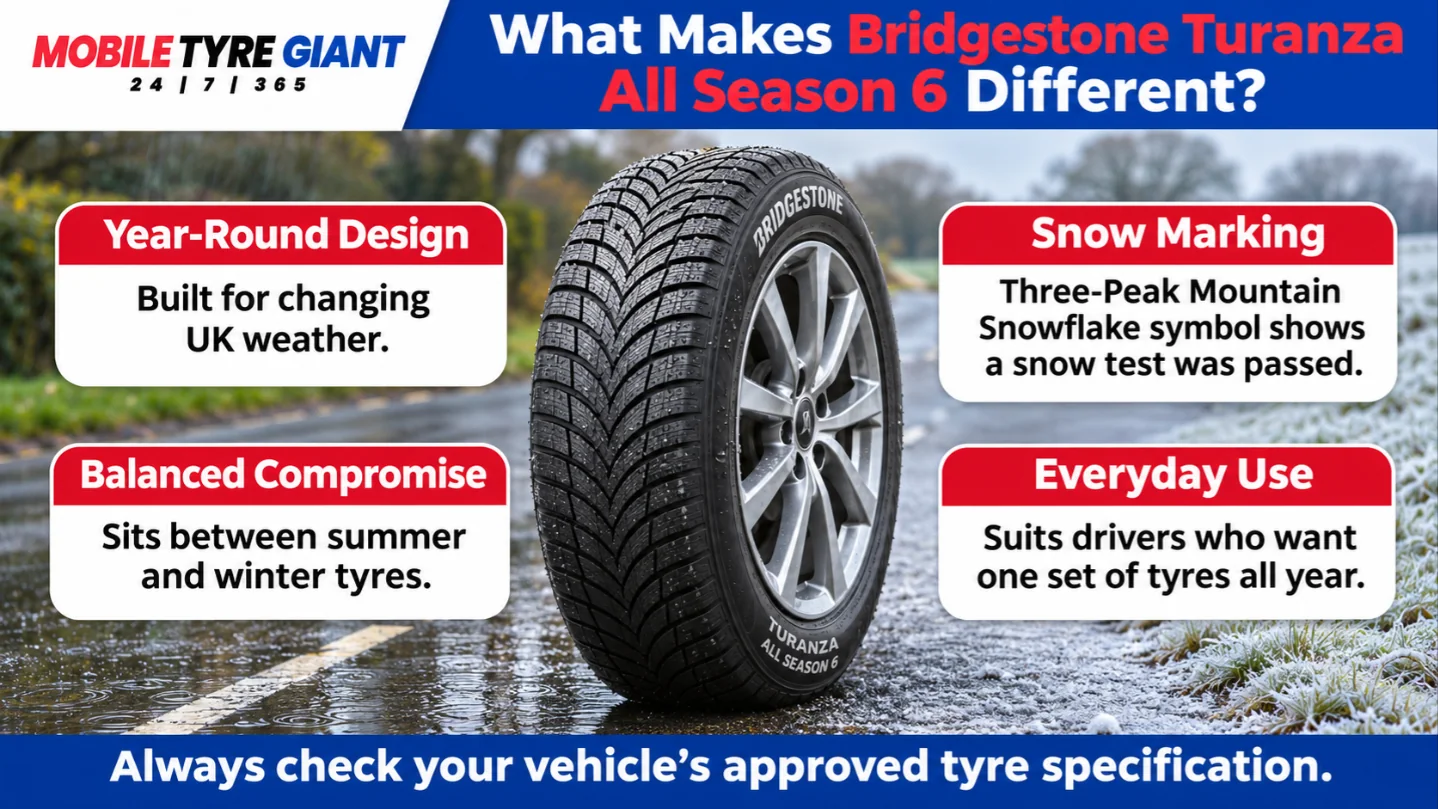
Bridgestone Turanza All Season 6 is designed for drivers who want one set of tyres suitable for changing weather throughout the year. Unlike the summer-focused Turanza 6, this model combines characteristics intended for warmer roads, cold conditions and occasional snow. Its tread design and rubber compound are developed to balance grip, braking and everyday handling. The tyre also carries the Three-Peak Mountain Snowflake marking, indicating that it has passed a defined snow-performance test. These features make it worth considering for motorists who regularly encounter unpredictable British weather.
Imagine leaving home on a chilly November morning when the roads are damp and the temperature is close to freezing. By the afternoon, the sun has appeared, and the road surface feels noticeably warmer. All-season tyres are developed to cope with this variety without requiring seasonal replacements. However, they remain a compromise between dedicated summer and winter tyres. Understanding that balance helps drivers decide whether Turanza All Season 6 suits their journeys.
How Does Turanza All Season 6 Perform on Wet Roads?
Wet-road performance is one of the important characteristics of Bridgestone Turanza All Season 6. Its tread pattern includes grooves designed to move water away from the contact area. The tyre’s compound and construction also contribute to braking and handling on wet surfaces. Independent tyre tests have recorded competitive wet braking results for the model, although performance varies between tyre sizes and conditions. This makes current, size-relevant test information useful when comparing available options.
Picture travelling along a motorway during an autumn shower when passing vehicles throw up fine spray. Your tyres must maintain suitable contact with the road as water gathers across the surface. Turanza All Season 6 is designed with these conditions in mind, but no tyre can eliminate aquaplaning. Deep standing water, excessive speed and worn tread can still reduce grip significantly. Drivers should always adjust their speed and following distance when roads become slippery.
Can Bridgestone Turanza All Season 6 Handle Snow?
Bridgestone Turanza All Season 6 is designed to provide traction in occasional snowy conditions. Its directional tread features grooves and small cuts called sipes that help the tyre interact with snow-covered surfaces. The model carries the Three-Peak Mountain Snowflake certification, demonstrating that it has passed a recognised snow-performance requirement. This offers more meaningful evidence of winter capability than relying on an all-season marketing description alone. However, certified snow performance does not guarantee grip on every icy or snow-covered road.
Consider a driver travelling through a residential area after a light overnight snowfall. A suitable all-season tyre may offer more useful snow traction than a comparable summer tyre. Nevertheless, compacted snow, freezing rain and polished ice can create much more difficult conditions. Drivers regularly travelling through severe winter weather may benefit from dedicated winter tyres instead. The practical advice on driving in snow and preparing your tyres explains additional precautions for these conditions.
What Does the Three-Peak Mountain Snowflake Symbol Mean?
The Three-Peak Mountain Snowflake symbol, often shortened to 3PMSF, appears on tyres that meet a recognised snow-performance standard. It features a snowflake inside a mountain outline and can be found on suitable winter and all-season tyres. The marking confirms that the tyre has passed defined testing requirements for snow traction. This helps motorists distinguish tested winter capability from general claims about suitability for cold weather. Turanza All Season 6 carries this marking.
Some tyres also display the letters M+S, meaning Mud and Snow. However, an M+S marking alone does not confirm that the tyre has passed the same standardised snow test. Drivers should therefore look for the 3PMSF symbol when verified snow capability matters. Even with this certification, tyre condition, inflation and driving behaviour remain important. The symbol should be treated as useful performance information rather than a promise of safe driving in every winter situation.
Is Bridgestone Turanza All Season 6 Suitable for UK Weather?
The UK experiences varied weather, including mild summers, frequent rainfall, cold mornings and occasional snowfall. For many motorists, these conditions make all-season tyres a practical option. Bridgestone Turanza All Season 6 is developed to provide balanced performance across different seasons. Its design is particularly relevant to drivers who want year-round usability without regularly changing tyre sets. However, local climate and driving requirements should still influence the decision.
Someone commuting around southern England may encounter wet roads and occasional frost more often than significant snowfall. Another driver regularly travelling through elevated northern routes might experience prolonged freezing temperatures and deeper snow. Although both motorists live in the UK, their tyre requirements could differ substantially. All-season tyres can be suitable for many everyday journeys, but dedicated seasonal tyres may offer advantages in demanding conditions. Choosing the right option requires considering where and when you actually drive.
Bridgestone Turanza 6 vs Turanza All Season 6: Which Should You Choose?
Bridgestone Turanza 6 is a summer touring tyre, while Turanza All Season 6 is developed for year-round use. Both belong to the Turanza family, but their intended operating conditions are different. Turanza 6 focuses on touring characteristics during suitable summer road conditions. Turanza All Season 6 adds tested snow capability through its all-season construction and 3PMSF certification. The choice depends on whether your journeys require that additional winter versatility.
Imagine a driver who rarely travels during snowy weather and mainly uses well-maintained roads. A suitable summer touring tyre could remain an appropriate choice throughout much of their driving. Another motorist regularly encountering cold mornings and occasional snow may prefer an all-season option. However, all-season performance involves compromises compared with specialist tyres in their intended conditions. Comparing independent tests in the correct tyre size is more useful than assuming one model is always superior.
Are All-Season Tyres Better Than Winter Tyres?
All-season and winter tyres are developed for different priorities. All-season tyres aim to balance performance across changing temperatures and road conditions. Dedicated winter tyres focus more heavily on cold-weather grip, particularly when snow and ice become frequent. This means winter tyres may provide additional advantages in challenging winter conditions. However, those advantages may not justify seasonal tyre changes for every UK motorist.
Consider someone living in a rural area where untreated roads frequently become covered in snow. Dedicated winter tyres may offer a more suitable solution during the colder months. A driver who mainly travels on urban roads with occasional light snowfall might find an appropriate all-season tyre more convenient. Neither option removes the need to inspect the tyres or adapt driving behaviour. Local conditions and the vehicle manufacturer’s requirements should determine the final choice.
Who Should Consider Bridgestone Turanza All Season 6?
Bridgestone Turanza All Season 6 may suit motorists who value practical year-round driving performance. This includes drivers of compatible hatchbacks, family saloons, estate cars and certain SUVs. It may particularly appeal to people who regularly encounter wet weather and occasional winter conditions. The all-season design can also reduce the need for switching between separate summer and winter tyre sets. However, compatibility and the expected driving environment remain essential considerations.
Think about a family car used for commuting, shopping trips and weekend journeys throughout the year. The driver wants dependable everyday handling without managing two separate tyre sets. Turanza All Season 6 could be worth comparing with other suitable all-season models. On the other hand, a sports-car owner prioritising maximum summer performance might prefer a dedicated summer tyre. The best choice depends on personal priorities rather than the popularity of a particular tyre range.
Is Turanza All Season 6 Suitable for Electric and Hybrid Cars?
Bridgestone Turanza All Season 6 incorporates ENLITEN technology and is marketed as EV-ready. This means the range has been developed with characteristics relevant to electric vehicles, including efficiency and performance requirements. However, electric and hybrid vehicles vary significantly in weight, power and approved tyre specifications. A tyre carrying an EV-ready designation is not automatically suitable for every electric car. The correct load index, speed rating, dimensions and construction must still match the vehicle.
Imagine comparing a compact hybrid hatchback with a large electric SUV. Their tyre requirements may differ substantially because of weight and vehicle design. The smaller car might prioritise everyday comfort, while the larger vehicle could require reinforced tyres with higher load capacity. Both may benefit from suitable all-season performance where their driving conditions justify it. Always confirm the manufacturer’s approved specification before choosing a Turanza All Season 6 fitment.
How Should You Maintain Bridgestone All-Season Tyres?
All-season tyres require the same attention to maintenance as other road tyres. Correct inflation pressure, suitable tread depth and regular visual inspections remain essential. Changes in temperature can affect tyre pressure, making cold-weather checks particularly important. Uneven wear may also indicate alignment, suspension or inflation problems that deserve investigation. Maintaining the tyres correctly helps preserve their intended performance throughout the year.
A useful habit is to check tyre pressure when the tyres are cold and compare the reading with the vehicle manufacturer’s recommendations. The tyre pressure guide explains how to identify appropriate settings and measure pressure correctly. Drivers should also inspect the tread for cuts, embedded objects and unusual wear patterns. If a tyre develops a bulge or significant damage, arrange professional assessment before continuing normal driving. Regular maintenance remains important regardless of the tyre’s seasonal classification.
Which Bridgestone Tyres Should You Choose?
Choosing between Bridgestone Turanza, Potenza and all-season tyres depends on your vehicle and everyday driving requirements. Touring tyres generally prioritise comfort, balanced handling and efficiency, while performance tyres focus on steering response and grip. All-season tyres provide another option for motorists facing changing weather throughout the year. However, no single range is ideal for every vehicle or driving situation. Understanding these differences helps narrow the options before comparing individual tyre specifications. This Bridgestone tyres guide compares each range so you can narrow the options before checking tyre sizes.
Consider a family saloon used mainly for motorway commuting and a sports car driven on winding roads. Both vehicles need reliable braking and suitable wet grip, but their owners may have different priorities. The family driver might prefer the touring characteristics of Turanza 6, while the sports-car owner could consider Potenza Sport EVO. Someone regularly encountering cold mornings and occasional snow might favour Turanza All Season 6. The final choice must still satisfy the vehicle manufacturer’s approved requirements.
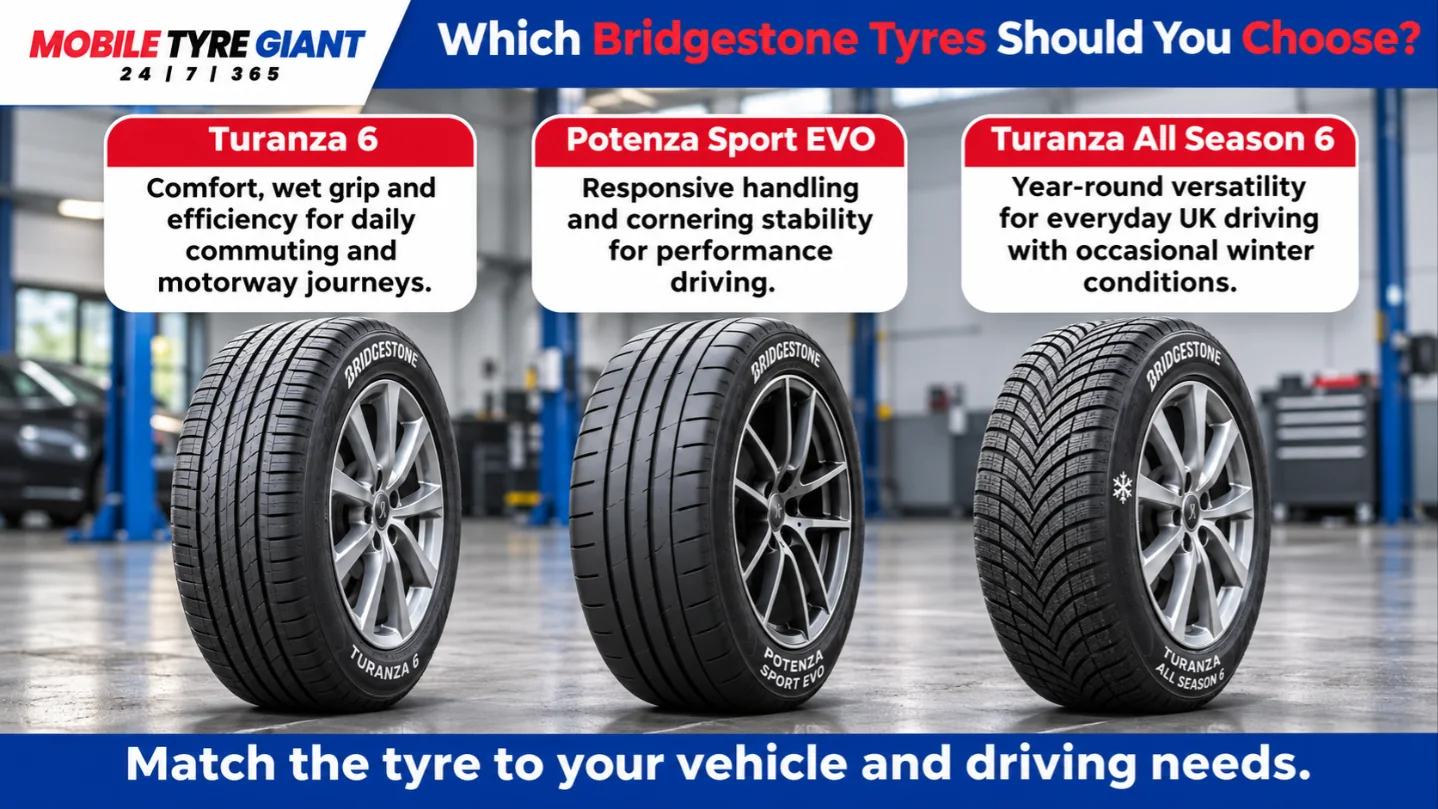
Bridgestone tyre model | Tyre category | Main characteristics | Suitable driving needs |
Turanza 6 | Summer touring | Wet grip, comfort and efficiency | Daily commuting and motorway journeys |
Potenza Sport | Ultra-high-performance summer | Responsive handling, cornering stability and braking | Sports cars and performance-focused driving |
Potenza Sport EVO | Ultra-high-performance summer | Updated wet performance, handling and longevity objectives | Compatible performance cars and powerful vehicles |
Turanza All Season 6 | All-season | Year-round versatility and tested snow capability | Everyday UK driving with occasional winter conditions |
Bridgestone Turanza vs Potenza: Which Is Better for Everyday Driving?
Bridgestone Turanza and Potenza serve different driving priorities rather than competing for exactly the same purpose. Turanza 6 is designed for motorists seeking balanced touring performance during suitable summer conditions. Potenza Sport and Potenza Sport EVO focus more strongly on responsive steering and demanding handling requirements. Performance-focused construction may influence ride comfort and road noise, depending on the vehicle. The better choice depends on what you value during normal journeys.
Imagine regularly travelling along busy motorways with passengers and luggage. Comfortable handling, wet grip and efficiency may be more important than maximum cornering responsiveness. A suitable Turanza model could therefore match your priorities better than an ultra-high-performance tyre. However, a powerful performance saloon may benefit from the handling characteristics offered by Potenza. Compare compatible models rather than assuming the more performance-focused option is automatically superior.
Should You Choose Turanza All Season 6 Instead of Summer Tyres?
Turanza All Season 6 may be worth considering if you want tyres designed for changing weather throughout the year. Its all-season construction provides a balance of characteristics for warmer roads, cold conditions and occasional snow. The Three-Peak Mountain Snowflake marking confirms that it meets a recognised snow-performance requirement. However, all-season tyres are not automatically better than dedicated summer tyres in every situation. Their value depends on your local climate and regular journeys.
For motorists who mainly travel on well-maintained roads in mild weather, suitable summer tyres may remain a sensible option. Drivers regularly encountering frosty mornings and occasional snowfall may appreciate all-season versatility. Those facing frequent heavy snow could benefit from dedicated winter tyres instead. The decision should reflect realistic driving conditions rather than convenience alone. Always confirm that the selected model is available in an approved specification for your vehicle.
What Should You Check Before Buying Bridgestone Tyres?
Before ordering Bridgestone tyres, confirm the complete specifications approved for your vehicle. These include tyre size, load index, speed rating and any required construction or manufacturer approval. A tyre may belong to the correct product range but still be unsuitable for your particular car. Different sizes of the same model can also carry different performance labels. Checking these details first helps prevent purchasing tyres that do not meet your vehicle’s requirements.
Your driving habits should also influence the buying decision. Consider how frequently you use motorways, encounter heavy rain or travel during colder weather. Compare relevant wet-grip, efficiency and noise information between compatible options. Independent tests can also provide useful insight into individual tyre performance. Choose a model based on your vehicle and circumstances rather than relying entirely on advertising claims.
How Important Are Tyre Labels and Vehicle Compatibility?
Tyre labels provide useful information about rolling resistance, wet grip and external rolling noise. Rolling resistance affects vehicle efficiency, while wet-grip ratings describe performance in standardised braking tests. External noise ratings refer to sound generated outside the vehicle rather than necessarily indicating cabin comfort. These details can help distinguish compatible tyres with different performance characteristics. However, the label does not cover every aspect of handling or tread durability.
Imagine comparing two Bridgestone tyres with the same approved dimensions and load ratings. One may offer a different efficiency rating, while the other has characteristics that better suit your driving priorities. The vehicle’s specification should determine which tyres are eligible before performance ratings influence the choice. Drivers should also check existing tyre condition and look for abnormal wear. A tyre safety guide can help identify tread wear, sidewall damage and other concerns before replacement.
Should You Replace Two Bridgestone Tyres or All Four?
Replacing two or four tyres depends on their condition and the vehicle manufacturer’s requirements. If two tyres remain suitable for continued use, replacing only a worn pair may be appropriate. However, matching tyre construction, dimensions and approved ratings remains essential. Certain all-wheel-drive vehicles also have specific requirements concerning tread-depth differences. These should be checked before deciding how many tyres to replace.
Consider a car with two worn front tyres and two rear tyres that remain in good condition. A suitable paired replacement might be sufficient, depending on the vehicle and tyre requirements. However, significant differences in tyre type or tread depth can affect handling and some drivetrain systems. Follow manufacturer guidance on matching tyres and axle positioning. Professional assessment can help determine the safest and most appropriate replacement arrangement.
How Can You Maintain Your New Bridgestone Tyres?
Maintaining Bridgestone tyres correctly helps preserve their intended performance and useful service life. Incorrect inflation, wheel misalignment and demanding driving habits can contribute to premature wear. Regularly inspect tread depth, tyre pressure and visible sidewall condition. Drivers should also investigate unusual vibration or steering changes rather than ignoring them. These checks remain important whether the vehicle uses touring, performance or all-season tyres.
After new tyres are fitted, confirm that the correct specifications have been installed and that the wheels have been properly balanced and secured. Follow the manufacturer’s recommended inflation pressures and investigate any dashboard tyre warnings. The after-fitting tyre checklist explains useful checks before returning to normal driving. Remember that new tyres still need appropriate maintenance. Regular attention helps reduce avoidable wear and supports consistent performance.
Final Words: Choosing the Right Bridgestone Tyres for Your Driving Needs
Bridgestone offers different tyre ranges to meet the requirements of everyday motorists and performance-focused drivers. Turanza 6 prioritises touring characteristics, while Potenza Sport and Potenza Sport EVO focus on responsive handling and grip. Turanza All Season 6 provides an alternative for motorists seeking year-round versatility. Each model has advantages, but none is automatically the best choice for every vehicle. Your driving habits, local weather and approved tyre specifications should guide the decision.
Before buying, compare compatible tyre sizes, load ratings, speed ratings and relevant performance information. Consider whether comfort, efficiency, handling or seasonal flexibility matters most during your journeys. Inspect your existing tyres and address unusual wear or mechanical problems before replacement. Correct fitting and ongoing maintenance are equally important for preserving tyre performance. Making an informed choice helps ensure your tyres suit both your vehicle and everyday driving conditions. Use this Bridgestone tyres guide as a starting point, then confirm the exact specification for your vehicle.
Not Sure Which Bridgestone Tyres Suit Your Car?
Tell us your vehicle and driving needs, and we will confirm suitable tyre options and fit them at your home, workplace or roadside.
Frequently Asked Questions
Find quick answers to the most common questions our customers ask.
Yes, Bridgestone Turanza tyres are designed around touring characteristics such as comfort, wet grip and stability. Suitable models can work well for regular commuting and motorway journeys.
Turanza 6 is a summer touring tyre focused on balanced everyday performance. Potenza Sport is an ultra-high-performance summer tyre developed for responsive steering, braking and cornering.
Potenza Sport EVO introduces updated technology targeting wet performance, longevity and efficiency. However, the best choice depends on available fitments, independent test results and your driving priorities.
Yes, they are designed for year-round use and carry the Three-Peak Mountain Snowflake marking. Dedicated winter tyres may still offer advantages in severe snow and ice.
Not normally, because all-season tyres are designed for use throughout the year. However, suitable summer tyres may provide advantages in particular warm-weather driving conditions.
Some Bridgestone models incorporate ENLITEN technology and are marketed as EV-ready. Always confirm the correct size, load index, speed rating and manufacturer-approved fitment.
There is no fixed mileage that applies to every Bridgestone tyre. Tread life depends on the model, vehicle weight, driving habits, road conditions and maintenance.
Yes, suitable Potenza tyres can be used on motorways when correctly specified for the vehicle. However, touring alternatives may better suit drivers prioritising comfort and efficiency.
Yes, Turanza All Season 6 carries the Three-Peak Mountain Snowflake marking. This confirms tested snow capability but does not guarantee grip on every icy road.
Check the approved tyre size, load index, speed rating and any manufacturer-specific requirements. Then compare suitable models according to your driving conditions and performance priorities.