
Winter can create serious challenges for businesses that depend on vehicles being available every day. Cold mornings, heavy rain, icy roads and unexpected snowfall can affect deliveries, service appointments and daily operations. For fleet managers, one vehicle struggling with poor traction may result in missed schedules, delayed customers and unnecessary downtime. Winter tyre planning for fleets helps businesses prepare for these conditions before problems affect their operations. The aim is to choose suitable tyres, identify potential issues early and keep vehicles ready for changing road conditions.
Imagine several delivery vans leaving a depot before sunrise on a freezing December morning. Some travel through busy London streets, while others head towards rural roads where frost and ice may remain longer. Although the vehicles belong to the same business, they may face very different driving conditions. Fitting identical tyres across the entire fleet without considering these differences may not be the most effective approach. A sensible winter tyre strategy considers vehicle types, routes, mileage, operating hours and the conditions drivers are likely to encounter.
Why Is Winter Tyre Planning Important for Fleet Vehicles?
Fleet vehicles often cover substantial distances and operate according to demanding schedules. Unlike private motorists who may postpone an unnecessary journey during severe weather, commercial drivers may have essential work to complete. Cold temperatures and slippery roads can make braking, steering and maintaining traction more challenging. Worn or unsuitable tyres can make these conditions harder to manage. Preparing the fleet before winter helps managers identify potential problems while there is still time to arrange inspections and replacements.
Winter preparation is also about maintaining control over operating costs. An unexpected tyre failure can interrupt a delivery route, delay a service engineer or leave a company vehicle unavailable for work. When several vehicles experience similar problems, the disruption becomes more difficult to manage. Regular inspections, appropriate tyre selection and planned maintenance can help reduce avoidable interruptions. The objective is not simply to purchase winter tyres, but to create a practical approach to fleet safety and availability.
How Cold and Wet Roads Affect Fleet Operations
British winters frequently bring wet roads, low temperatures, frost and occasional snow. These conditions change how much grip tyres can provide, particularly during braking and cornering. Tyre compound, tread design and remaining tread depth all influence performance. Dedicated winter tyres are designed to work effectively in colder conditions, while suitable all-season tyres provide a compromise across different seasons. However, no tyre can eliminate the risks associated with ice, standing water or inappropriate driving speeds.
Consider a service van travelling along a wet motorway before turning onto a poorly maintained rural road. The motorway may be clear, but the smaller road could have patches of frost or compacted snow. A tyre choice that suits mainly urban journeys may not provide the same advantages in more demanding winter conditions. Fleet managers should therefore examine where their vehicles actually travel rather than focusing only on the weather around the main depot. The practical advice on preparing tyres for driving in snow also highlights why tyre condition and suitable specifications matter when traction becomes limited.
Are Winter Tyres a Legal Requirement for UK Fleets?
Winter tyres are not generally compulsory for vehicles operating on UK roads. However, fleet operators must still ensure that their vehicles are roadworthy and fitted with tyres suitable for their specifications and operating conditions. Legal requirements also cover tyre condition, tread depth and inflation pressure. The applicable tread depth rules differ between cars, light commercial vehicles and certain heavier vehicles. Fleet managers should check the requirements relevant to each vehicle category rather than applying one standard to every vehicle.
The absence of a general winter tyre requirement does not mean winter preparation can be ignored. A business operating regularly in exposed rural areas may benefit from dedicated winter tyres even when they are not legally required. Another fleet travelling mainly through milder urban conditions may find suitable all-season tyres more practical. Vehicles travelling internationally can also face additional tyre regulations in certain countries. Any fleet tyre policy should therefore consider both legal compliance and the conditions in which the vehicles operate.
Which Fleet Vehicles Need a Dedicated Winter Tyre Plan?
Not every fleet needs to change all its tyres when winter approaches. The most appropriate decision depends on vehicle type, route conditions, operating hours and the level of winter exposure. Delivery vans travelling through busy urban areas may have different requirements from vehicles operating across rural Scotland or northern England. Company cars, taxis, service vehicles and heavier commercial vehicles may also use different tyre specifications. A single purchasing rule may therefore overlook important differences within a mixed fleet.
Fleet managers should begin by dividing vehicles into groups based on their actual duties. One group might consist of city-based vehicles, while another regularly travels on rural roads or operates during overnight shifts. Vehicles carrying heavy loads or visiting exposed sites may require additional consideration. This approach makes it easier to decide where dedicated winter tyres provide a useful benefit and where suitable all-season tyres may be sufficient. It also helps businesses avoid unnecessary seasonal tyre changes for vehicles that do not need them.
Match Tyre Choice to Routes, Shifts and Weather Conditions
The routes a vehicle follows can reveal more about its winter requirements than its registration or model alone. A courier van travelling through central London may experience frequent wet roads and occasional frost. Meanwhile, a maintenance vehicle travelling through the Yorkshire Dales could encounter colder temperatures, snow and challenging gradients. These journeys place different demands on tyre grip and vehicle handling. Reviewing route conditions allows fleet managers to make more informed tyre choices.
Operating hours also influence winter exposure. Early-morning and overnight drivers may encounter frost before roads have warmed or received treatment. Vehicles operating on remote roads may have fewer alternative routes when conditions deteriorate. Fleet managers should discuss these risks with drivers and review any previous winter-related incidents or delays. A practical tyre policy needs to reflect the journeys employees actually make, not simply average winter conditions across the UK.
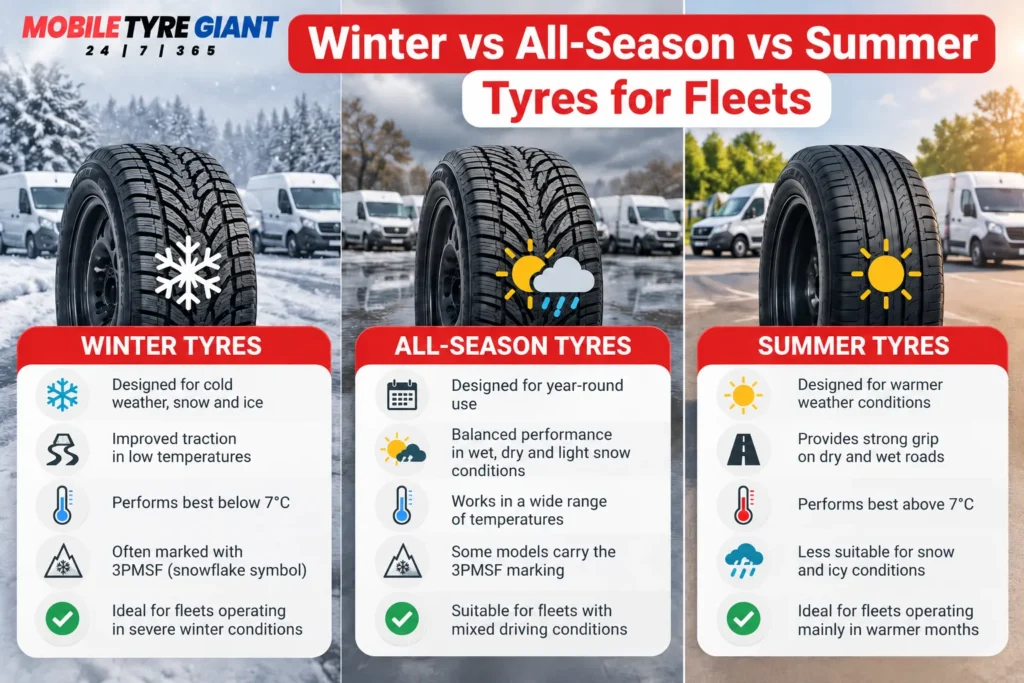
Winter vs All-Season vs Summer Tyres for Fleets
Winter tyres are designed to provide improved performance in cold conditions, particularly where snow or ice is likely. Their tread patterns and rubber compounds are developed for the demands of winter driving. All-season tyres are intended to provide a compromise between summer and winter performance, making them attractive for fleets operating in varied but generally moderate weather. Summer tyres are designed primarily for warmer conditions and can be less suitable where severe winter conditions are common. The correct choice depends on the vehicle and its expected use.
For example, a fleet operating mainly in southern England may consider properly specified all-season tyres to reduce the need for seasonal changeovers. A fleet regularly travelling through areas with persistent snow may benefit more from dedicated winter tyres. When comparing options, check whether the tyre carries the Three-Peak Mountain Snowflake marking, which indicates that it has passed a defined snow-performance test. Also confirm the correct size, load rating and speed rating for the vehicle. Tyre selection should balance safety, durability, operating conditions and total cost rather than focusing only on the purchase price.
When Should Fleet Managers Start Winter Tyre Planning?
Winter tyre planning should begin before cold weather creates immediate problems. Waiting until the first snowfall can make inspections, ordering and fitting more difficult to organise. Popular tyre sizes may also become harder to source at short notice during periods of increased demand. Beginning preparations during late summer or early autumn gives businesses more opportunity to review their requirements. However, the actual fitting schedule should reflect local conditions, tyre manufacturer recommendations and the fleet’s operating needs.
The frequently discussed 7°C temperature guideline is a useful indicator when considering seasonal tyre performance, but it is not a legal switching date or a universal rule. Some regions experience consistently colder conditions much earlier than others. Fleet managers should examine typical weather patterns, planned journeys and the availability of suitable tyres. Scheduling inspections and replacements before vehicles become urgently needed can reduce operational disruption. A planned approach is generally easier to manage than organising several unexpected tyre changes during a period of severe weather.
Start With a Fleet-Wide Tyre Condition Review
The first practical step is to establish the condition of every vehicle’s tyres. Record tyre sizes, tread depths, inflation pressures, visible damage and any unusual wear patterns. Check that the fitted tyres meet the vehicle manufacturer’s specifications, including the appropriate load and speed ratings. Vehicles showing significant wear or damage should be assessed rather than automatically remaining in service until the next scheduled replacement. This information provides a clear starting point for deciding which vehicles need attention before winter.
For businesses managing multiple vehicles, a documented inspection process is more reliable than depending on occasional driver reports. A scheduled fleet tyre check can help identify pressure problems, tyre damage and developing wear concerns across working vehicles. The results can then be used to prioritise replacements and plan appropriate seasonal tyre choices. Drivers should also continue carrying out relevant routine checks between scheduled inspections. Effective winter preparation begins with knowing the condition of the tyres already fitted to the fleet.
How Should Fleets Choose the Right Winter Tyres for Different Vehicles?
Choosing winter tyres for a fleet involves more than selecting a familiar brand or finding the lowest price. A tyre that suits a company car may not be appropriate for a heavily loaded delivery van. Vehicle weight, journey type, daily mileage and operating conditions all influence the decision. Fleet managers should also consider how frequently vehicles encounter snow, frost or prolonged cold weather. Winter tyre planning for fleets works best when each vehicle category is assessed against its actual duties.
Imagine managing a fleet containing passenger cars, delivery vans and vehicles carrying specialised equipment. Some might remain within London, while others regularly travel through exposed countryside. Their winter requirements will not necessarily be identical. Rather than automatically buying the same tyre type for every vehicle, identify suitable options for each group. This allows businesses to balance winter performance, operating costs and the practical demands of daily journeys.
Winter, All-Season and Summer Tyres for Fleet Vehicles
Dedicated winter tyres are developed for colder conditions, with compounds and tread patterns designed to provide traction in demanding winter weather. All-season tyres offer a compromise between summer and winter performance, making them a practical option for some UK fleets. Summer tyres generally perform best in warmer conditions but may offer less suitable performance during severe cold or snow. The right choice depends on the weather and road conditions vehicles encounter regularly.
For example, an urban delivery fleet operating mainly in southern England may find suitable all-season tyres convenient because seasonal changeovers are reduced. However, vehicles frequently travelling through snowy or mountainous areas may benefit more from dedicated winter tyres. Managers should also consider braking performance, expected mileage and the manufacturer’s approved tyre specifications. No tyre type guarantees grip on ice or makes unsafe driving conditions harmless. Drivers must still adjust their speed and driving behaviour to suit the road.
What Does the 3PMSF Marking Mean on Winter Tyres?
When comparing winter and all-season tyres, the Three-Peak Mountain Snowflake symbol is particularly useful. Commonly called 3PMSF, it appears as a snowflake surrounded by three mountain peaks. The marking indicates that the tyre has met a defined snow-performance testing requirement. This provides a clearer indication of tested snow capability than relying on a tyre’s marketing description. Both dedicated winter tyres and certain all-season tyres can carry this marking.
You may also notice the letters M+S, meaning Mud and Snow, printed on the sidewall. However, M+S alone does not establish that a tyre has passed the same standardised snow-performance test. Fleet managers should check the actual markings and specifications before approving a tyre for winter use. A 3PMSF marking does not guarantee safe performance on every icy surface. Tyre condition, inflation pressure, vehicle loading and driver behaviour remain essential considerations.
What Tyre Specifications Should Fleet Managers Check Before Winter?
Before ordering seasonal tyres, fleet managers need to confirm the correct specifications for every vehicle. Tyre width, profile and wheel diameter are only part of the information required. Load index, speed rating and vehicle-specific requirements are equally important. Two tyres with identical dimensions may have different load-carrying capabilities or operating characteristics. Choosing an unsuitable replacement can create safety problems even when the tyre appears to fit correctly.
The vehicle handbook, manufacturer-approved fitment information and existing tyre markings provide useful starting points. However, tyres already fitted should not automatically be treated as the correct specification. A previous owner or maintenance provider may have installed a different size or rating. Fleet records should therefore identify the approved tyre requirements for each vehicle. This helps prevent incorrect orders and unnecessary delays when winter fitting appointments begin.
Match Tyre Size, Load Index and Speed Rating to Each Vehicle
The load index indicates the weight a tyre is designed to support under specified conditions. This is particularly important for vans carrying tools, parcels or other equipment. Tyres must have adequate load capacity for the vehicle’s approved axle loads and operating requirements. Speed ratings must also meet the applicable vehicle and tyre requirements, including any permitted winter-specific arrangements. Fleet managers should never assume that a tyre is suitable simply because it fits the wheel.
For example, two vans may use tyres with the same width, profile and rim diameter but require different load ratings. A lightly loaded service vehicle and a delivery van carrying substantial cargo may place different demands on their tyres. Checking the complete specification helps prevent expensive purchasing mistakes. The information on finding the correct tyre size and specification explains how sidewall markings identify tyre dimensions, load index and speed rating. Where commercial vehicles have additional requirements, those must be confirmed separately.
Check Tread Depth, Uneven Wear and Existing Tyre Damage
Tyre tread depth becomes particularly important when vehicles encounter standing water, slush or snow. The grooves help manage water and provide the tread characteristics needed for different driving conditions. In the UK, cars and most light vans must have at least 1.6mm of tread across the central three-quarters of the tyre and around its entire circumference. Some heavier commercial vehicles have different legal requirements. Fleet managers must apply the correct standard to each vehicle category.
However, the legal minimum should not automatically become the fleet’s replacement target. A tyre approaching its minimum permitted depth may offer less useful performance in demanding winter conditions than one with substantial tread remaining. Inspect for uneven wear, cracks, cuts and bulges during the same check. Measurements should be recorded so developing problems can be identified before vehicles enter their busiest operating periods. Where a tyre is damaged or unsuitable, arrange professional assessment before it returns to service.

How Should Fleet Managers Plan Tyre Pressure Checks and Seasonal Fitting?
Winter tyre planning should include a clear maintenance schedule rather than focusing only on purchasing new tyres. Cold weather, changing vehicle loads and daily mileage can all affect tyre management. A vehicle leaving the depot with incorrect tyre pressure may experience unnecessary wear and poorer handling. Regular checks help identify pressure problems before they interrupt a working day. This is particularly important for vehicles carrying heavy or variable loads.
Fleet managers should establish who is responsible for checking tyres and how findings are reported. Drivers can complete routine visual checks, while maintenance teams or qualified technicians handle more detailed inspections. Records should show when pressures were checked, when tyres were replaced and whether faults remain unresolved. A consistent process helps prevent problems from being forgotten between shifts. It also provides a clearer picture of which vehicles may need attention as winter progresses.
Check Cold Tyre Pressures and TPMS Warnings Regularly
Tyre pressure can change as temperatures fall, making winter checks particularly important. A pressure reading taken after a long journey may differ from one taken when the tyres are cold. Always use the vehicle manufacturer’s recommended pressure for the fitted tyres and actual loading conditions. Heavily loaded vans may require different settings from the same vehicles travelling without cargo. Fleet drivers should not copy pressure figures from another vehicle simply because the tyres look similar.
A reliable gauge allows drivers to measure pressure before beginning their journey. Where staff need additional instructions, the steps for checking tyre pressure correctly explain how to use a gauge and identify suitable pressure information. Tyre Pressure Monitoring Systems can provide useful warnings, but they do not replace manual checks. A recurring warning should be investigated rather than repeatedly reset. Clear reporting procedures help managers arrange inspections before a minor problem becomes a breakdown.
Schedule Winter Tyre Changeovers and Store Unused Tyres Correctly
Seasonal fitting becomes easier when appointments are planned around vehicle availability. Businesses can organise changeovers during quieter operating periods instead of removing several vehicles from service simultaneously. Ordering the required tyre sizes in advance can also reduce delays when demand increases. Where dedicated winter tyres are used, managers should plan when the fleet will return to suitable warmer-weather tyres. The changeover decision should reflect actual conditions rather than relying on one fixed date.
Unused tyres also need suitable storage if they will be fitted again. They should be kept in a clean, dry location away from unnecessary heat, direct sunlight and damaging substances. Storage methods can differ depending on whether tyres remain mounted on wheels, so appropriate manufacturer guidance should be followed. Label each set with its vehicle identification and relevant condition details to avoid confusion during refitting. Before a stored tyre returns to service, inspect its condition, confirm its suitability and check its pressure once fitted.
How Can Fleet Managers Budget for Winter Tyres Without Overspending?
Winter tyre planning for fleets should balance safety, vehicle availability and long-term operating costs. Purchasing the cheapest available tyres might reduce immediate expenditure, but it does not always provide the best value. Tyre durability, fitting requirements and the conditions vehicles encounter can influence overall costs. Fleet managers should also consider how unexpected tyre failures affect delivery schedules, employees and customers. A realistic budget accounts for these factors rather than focusing only on the initial purchase price.
Imagine a company operating twenty delivery vans throughout the winter. Replacing every tyre simultaneously could create unnecessary expenditure if some remain suitable for continued service. However, postponing essential replacements may result in unexpected breakdowns and disrupted operations. A planned assessment helps identify which vehicles need attention first. This approach allows businesses to spread appropriate maintenance costs while keeping roadworthiness and driver safety at the centre of every decision.
Compare Total Tyre Costs, Not Just Purchase Prices
The purchase price represents only one part of a tyre’s overall cost. Fleet managers should also consider fitting charges, expected service life, maintenance requirements and potential vehicle downtime. A tyre that costs less initially may not offer better value if it wears quickly under the fleet’s normal operating conditions. However, a more expensive tyre does not automatically guarantee longer service life. The best decision depends on performance, suitability and reliable operating data.
High-mileage delivery vans may experience different wear patterns from company cars covering occasional business journeys. Frequent stopping, heavy loads and urban driving conditions can influence tyre life. Understanding these differences helps managers compare suitable products more effectively. The information on van tyre specifications, pressure and replacement explains several considerations relevant to working vehicles. Reviewing actual tyre performance across the fleet can provide a stronger purchasing basis than relying on price alone.
Prioritise Vehicles Based on Winter Exposure and Mileage
Not every fleet vehicle needs the same level of winter preparation. A delivery van travelling through exposed rural areas may face more demanding conditions than a company car operating mainly on well-maintained urban roads. Vehicles covering high daily mileage can also develop tyre wear more quickly. Fleet managers should identify the vehicles facing the greatest combination of weather exposure, usage and operational demands. These vehicles may need earlier inspections or replacement planning.
A simple priority system can help organise maintenance decisions. Vehicles with damaged tyres, unsuitable specifications or unsafe tread must receive attention before returning to service. Other vehicles can be scheduled according to measured wear, expected mileage and upcoming journeys. This makes it easier to allocate budgets without automatically replacing tyres that remain suitable. Prioritisation should support roadworthiness, not become a reason to delay necessary repairs.
How Can Businesses Reduce Winter Tyre Downtime?
Unexpected tyre problems can disrupt an entire working day. A delivery vehicle stranded with a puncture may delay several customer orders, while a service engineer could miss important appointments. During winter, cold weather and difficult road conditions can make recovery and scheduling more complicated. Businesses can reduce avoidable disruption by arranging tyre inspections and planned replacements before problems become urgent. The aim is to keep vehicles available without compromising safety.
Preventive maintenance also gives fleet managers more control over where and when tyre work takes place. A vehicle parked at the depot overnight is often easier to schedule for maintenance than one stranded during a delivery route. Identifying developing problems early can help businesses organise suitable tyres and technicians in advance. However, no maintenance strategy can prevent every puncture or unexpected failure. A reliable fleet plan should therefore include both scheduled maintenance and an emergency response procedure.
Schedule Fleet Tyre Fitting Around Vehicle Availability
Planned tyre fitting allows businesses to organise maintenance around quieter periods. Vehicles that return to a depot each evening may be suitable for scheduled inspections or replacement work before their next shift. Fleet managers should identify which vehicles need attention and arrange appointments without unnecessarily removing several from service simultaneously. This approach can reduce scheduling conflicts and improve the availability of working vehicles.
Before an appointment, prepare the vehicle registrations, tyre sizes and required specifications. Ensure the vehicles are accessible and that any locking wheel nut keys are available. Where the working location is suitable, mobile tyre fitting for fleets can provide an alternative to sending individual vehicles to a tyre centre. Planned on-site work may help reduce unnecessary journeys and driver disruption. Any additional mechanical problems should still be referred to an appropriately equipped service provider.
Prepare for Unexpected Punctures and Winter Breakdowns
Even well-maintained tyres can suffer damage from road debris, potholes or other hazards. Fleet managers should establish a clear process for drivers who experience a puncture during working hours. Drivers need to know who to contact, what information to provide and when the vehicle must remain stationary. Emergency instructions should also explain the importance of finding a place of relative safety before attempting any inspection.
For example, a delivery driver experiencing sudden pressure loss on a busy motorway should not attempt to reach the depot on a completely flat tyre. The immediate priority is controlling the vehicle and following the appropriate breakdown procedures. Once safe, the driver can report the location, registration, tyre condition and relevant warning signs. Fleet managers can then decide whether mobile assistance or recovery is appropriate. Keeping these procedures clear helps reduce confusion when an unexpected problem occurs.
Who Is Responsible for Winter Fleet Tyre Checks?
Effective fleet tyre maintenance depends on cooperation between drivers, fleet managers and qualified maintenance providers. Drivers are often the first to notice unusual vibrations, pressure warnings or visible tyre damage. Managers are responsible for establishing appropriate maintenance arrangements and ensuring reported problems are addressed. Maintenance providers carry out inspections and repairs requiring specialist equipment or technical expertise. Each role should be clearly defined before winter operations begin.
For commercial vehicles covered by DVSA maintenance guidance, meaningful daily walkaround checks and proper defect reporting form important parts of maintaining roadworthiness. Company car fleets should also establish practical inspection procedures appropriate to their vehicles and usage. Drivers must understand what to check and how to report concerns. A written process can help prevent important information from being lost between shifts. Winter tyre planning becomes more reliable when everyone understands their responsibilities.
Make Daily Driver Walkaround Checks Part of the Routine
A driver walkaround check provides an opportunity to identify tyre problems before a vehicle begins its journey. Drivers should look for visible damage, unusual wear, embedded objects and signs of significant pressure loss. Tyre pressures should also be measured regularly using the manufacturer’s recommendations rather than estimated from appearance. High-mileage vehicles or those operating in demanding conditions may require additional attention.
Consider a van driver arriving at a depot before sunrise on a cold January morning. During the inspection, they notice a fresh bulge on a rear tyre. Reporting the problem before departure allows the vehicle to be assessed rather than risking failure during a delivery. Drivers should never attempt to ignore serious defects simply to meet a schedule. A roadworthy replacement vehicle or revised route is preferable to operating an unsafe van.
Record Tyre Defects and Monitor Repeated Problems
Keeping accurate tyre maintenance records helps fleet managers identify problems that may otherwise appear unrelated. Useful information includes vehicle registration, tyre size, tread measurements, pressure readings, reported damage and completed repairs. Records should also identify when a defect was discovered and when the vehicle was confirmed safe to return to service. Commercial vehicle operators must follow the record-keeping requirements applicable to their operations. A consistent system can make maintenance decisions easier to review.
For example, repeated uneven wear on several vehicles may indicate an underlying problem involving loading, alignment, suspension or inflation practices. Replacing tyres without investigating the cause may allow the same issue to develop again. The explanation of how suspension problems can damage tyres highlights why unusual wear deserves proper investigation. Fleet managers should review recurring faults and adjust maintenance procedures where necessary. This creates a more proactive approach to tyre safety, operating costs and winter vehicle availability.
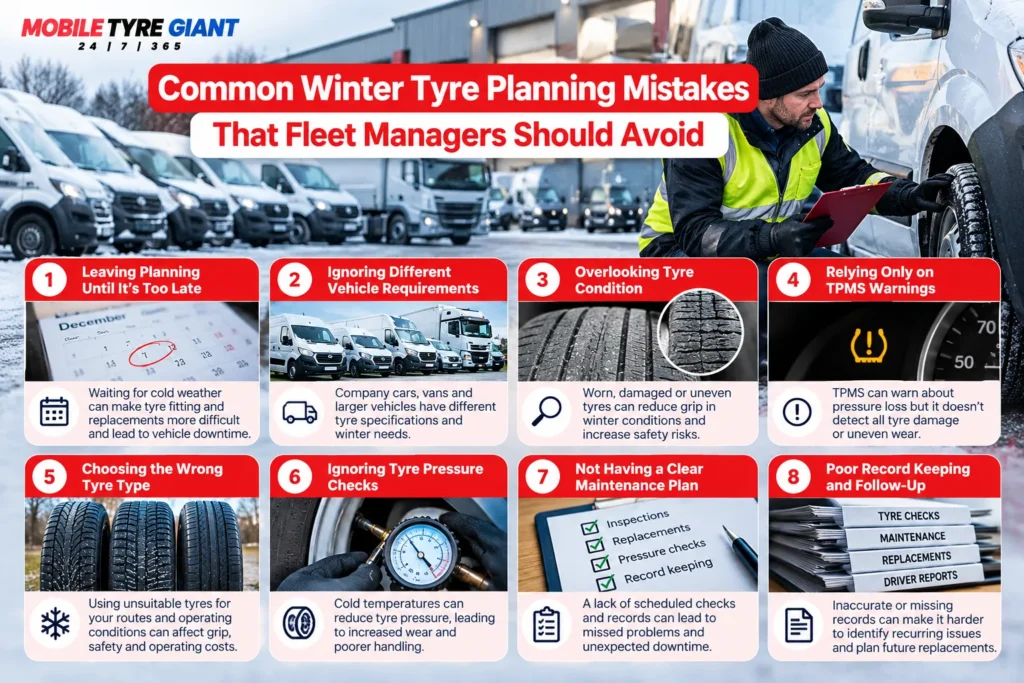
Common Winter Tyre Planning Mistakes That Fleet Managers Should Avoid
Even well-organised businesses can overlook important details when preparing vehicles for winter. Some fleet managers focus entirely on purchasing seasonal tyres without considering maintenance schedules, driver responsibilities or operating conditions. Others postpone inspections until bad weather arrives, leaving limited time to address problems. These mistakes can increase vehicle downtime and create unnecessary safety risks. A successful winter tyre strategy should consider the entire fleet rather than individual replacements.
Winter conditions can change quickly across the UK, particularly when vehicles travel between urban and rural areas. A van leaving a relatively mild London depot could encounter frost or snow further along its route. Fleet managers need to understand these differences before deciding which vehicles require additional preparation. Reviewing common planning mistakes can help businesses develop a more reliable approach to winter tyre management.
Treating Every Fleet Vehicle as Having the Same Winter Requirements
One common mistake is assuming every vehicle needs identical tyres and maintenance arrangements. Company cars, delivery vans and heavier commercial vehicles may operate under very different conditions. Their approved tyre specifications, loads and daily mileage can also vary considerably. Applying one purchasing policy without considering these differences may result in unsuitable tyre choices.
Imagine a business operating city delivery vans alongside vehicles travelling regularly through rural Scotland. Both groups need roadworthy tyres, but their exposure to snow and ice may be different. Fleet managers should evaluate routes, vehicle specifications and operating hours before selecting seasonal tyres. This helps identify where dedicated winter tyres provide useful benefits and where suitable all-season tyres may be more practical.
Waiting Until Tyres Become Unsafe Before Planning Replacements
Delaying tyre replacement until a vehicle develops a serious problem can interrupt daily operations. A tyre may have legal tread remaining but still show damage, uneven wear or deterioration that requires attention. During winter, wet roads and reduced grip make proper tyre condition especially important. Fleet managers should identify developing problems before vehicles reach an unsafe condition.
Scheduled tread measurements and inspections help businesses make replacement decisions in advance. Understanding when tyres need replacing can also help distinguish normal wear from problems requiring immediate attention. The legal minimum should not automatically become the fleet’s preferred replacement threshold. Decisions should reflect tyre condition, expected journeys and applicable vehicle requirements.
Assuming TPMS Warnings Replace Regular Tyre Inspections
Tyre Pressure Monitoring Systems can provide valuable information, but they do not replace physical inspections. A TPMS warning may indicate pressure loss, yet the system cannot identify every problem involving tyre damage, unsuitable load ratings or uneven tread wear. Some vehicles may also have sensors that require attention during seasonal wheel changes. Ignoring these details can leave important maintenance problems unresolved.
Drivers should understand what tyre pressure warnings mean and how to report them. Fleet managers should also confirm whether seasonal wheel sets require compatible pressure sensors or recalibration. When sensors become faulty, professional TPMS valve replacement may be necessary. Maintaining accurate monitoring equipment should support regular tyre checks rather than replace them.
Final Winter Tyre Planning Checklist for Fleet Managers
A practical winter tyre checklist helps businesses turn maintenance plans into consistent daily actions. It should cover vehicle suitability, tyre condition, pressure, seasonal fitting and driver reporting procedures. The aim is to identify problems before they disrupt scheduled journeys. Managers should also confirm that tyres meet the manufacturer’s specifications and the applicable legal requirements.
The checklist below can be adapted for delivery fleets, service vehicles and company cars. Larger commercial vehicles may have additional inspection and record-keeping obligations. Fleet managers should ensure their procedures reflect the vehicles they operate rather than treating every category identically.
- Review the routes and winter conditions each vehicle is likely to encounter.
- Confirm whether winter, all-season or summer tyres are appropriate.
- Check tyre size, load index and speed rating requirements.
- Record tread depths and inspect tyres for visible damage.
- Check inflation pressures against manufacturer recommendations.
- Identify vehicles requiring replacement before winter.
- Arrange seasonal fitting and suitable tyre storage where necessary.
- Confirm driver inspection and defect-reporting responsibilities.
- Prepare an emergency tyre assistance or recovery procedure.
- Review maintenance records throughout the winter season.
What Should Drivers Check Before Every Winter Shift?
Drivers should begin with a visual inspection before using their vehicles. Look for damaged sidewalls, unusual tread wear, embedded objects and signs of significant pressure loss. Check that there are no outstanding safety defects or tyre-related warnings requiring investigation. Appropriate pressure measurements should also form part of the fleet’s regular maintenance procedures.
During cold weather, drivers should pay attention to changing road conditions and any unusual vehicle behaviour. A van that begins pulling to one side or develops persistent vibration may need further inspection. Commercial vehicle drivers covered by daily walkaround requirements must follow the relevant procedures. Safety concerns should be reported immediately rather than postponed until the end of the shift.
What Should Fleet Managers Schedule and Record?
Fleet managers should establish an inspection schedule based on vehicle usage, manufacturer guidance and operating conditions. Records should include tyre specifications, tread measurements, pressure checks, reported defects and completed maintenance. Tracking this information makes it easier to identify vehicles approaching replacement. It also helps managers investigate recurring problems rather than repeatedly replacing tyres without understanding the cause.
An organised system can include reminders for scheduled inspections, tyre changeovers and additional winter checks. Responsibility for reviewing reported defects should be clearly assigned. For operators subject to formal commercial vehicle maintenance requirements, records must meet the applicable standards and retention periods. Accurate documentation supports better decisions about tyre safety, budgets and vehicle availability.
When Should a Fleet Vehicle Be Taken Out of Service?
A vehicle should not continue operating when its tyres are unsafe or fail the applicable legal requirements. Serious sidewall damage, exposed reinforcing material, dangerous bulges or insufficient tread require attention before further use. Persistent pressure loss may also indicate a fault that needs professional investigation. Winter delivery schedules should never take priority over roadworthiness.
If a driver reports a serious tyre problem, arrange an appropriate inspection and determine whether repair or replacement is necessary. A suitable replacement vehicle may help maintain operations while the damaged vehicle is unavailable. Managers should record the defect and the corrective action taken. The vehicle should return to service only when it has been confirmed safe.
How to Improve Your Fleet Tyre Strategy After Winter
Winter tyre planning should not end when temperatures begin to rise. Reviewing vehicle performance after the colder months can reveal which parts of the strategy worked and where improvements are needed. Fleet managers should examine tyre wear, unexpected breakdowns, maintenance costs and any disruptions related to tyre problems. This information can support more informed decisions for the following winter.
For example, repeated punctures or uneven wear on particular routes may highlight issues that deserve further investigation. Tyre performance records can also help businesses assess whether their seasonal tyre choices remain appropriate. Where dedicated winter tyres are fitted, arrange suitable changeovers when conditions and manufacturer recommendations justify them. Stored tyres should be inspected before being used again.
Review Tyre Wear, Downtime and Seasonal Changeover Results
At the end of winter, compare maintenance records with the fleet’s operating experience. Identify vehicles that experienced repeated pressure loss, premature wear or unexpected tyre failures. Review whether scheduled fitting arrangements reduced disruption and whether drivers followed reporting procedures. These findings can help managers improve the next winter maintenance plan.
Do not judge success only by the number of punctures or replacement tyres purchased. Consider roadworthiness, inspection completion, vehicle availability and whether problems were identified promptly. A fleet that avoids breakdowns through consistent maintenance may achieve better operational results than one relying on emergency repairs. Use the findings to update budgets, replacement schedules and driver instructions before the next cold season.
Final Words: Keep Your Fleet Safe, Prepared and Moving Throughout Winter
Winter tyre planning for fleets is about more than choosing between summer, winter and all-season tyres. It involves understanding vehicle requirements, assessing winter routes, monitoring tyre condition and establishing reliable maintenance procedures. The right strategy helps businesses address preventable problems before they affect drivers or daily operations. Every vehicle should be fitted with suitable, properly maintained tyres for the conditions it is expected to encounter.
Fleet managers should begin preparation before severe weather arrives and continue monitoring tyres throughout winter. Clear driver responsibilities, timely inspections and accurate records make the process easier to manage. By reviewing the results after each winter season, businesses can improve future tyre decisions and reduce avoidable disruption. Consistent preparation provides a stronger foundation for safe and dependable fleet operations.
Get Your Fleet Winter-Ready!
Preparing your fleet for colder weather? Arrange professional mobile tyre fitting for vans and company vehicles at your depot or another safe, accessible location, helping reduce disruption and keep your fleet moving.
Frequently Asked Questions
Find quick answers to the most common questions our customers ask.
No, winter tyres are not generally a legal requirement in the UK. However, fleet vehicles must have roadworthy tyres suitable for their specifications and operating conditions.
Plan changeovers before consistently cold conditions arrive. The appropriate timing depends on regional weather, vehicle usage and manufacturer guidance rather than a fixed legal date.
All-season tyres may suit fleets operating mainly in moderate UK weather. Vehicles regularly encountering severe snow or ice may benefit more from dedicated winter tyres.
The Three-Peak Mountain Snowflake marking indicates that a tyre has passed a defined snow-performance test. It provides more meaningful snow-performance information than M+S marking alone.
Most light vans require at least 1.6mm of tread across the central three-quarters and around the tyre's circumference. Different requirements apply to certain heavier vehicles.
Check pressures regularly when tyres are cold, following manufacturer guidance and the fleet's maintenance policy. High-mileage or heavily loaded vehicles may need more frequent checks.
No tyre can completely prevent skidding. Winter tyres can improve traction in suitable cold-weather conditions, but drivers must still adjust speed and maintain safe stopping distances.
Not necessarily. Inspect tyre condition, tread depth and specifications first. Replace tyres that are damaged, unsafe or unsuitable for the vehicle's expected operating conditions.
No. TPMS can warn of certain pressure problems but cannot detect every type of tyre damage or wear. Regular visual inspections and appropriate pressure checks remain essential.
Schedule inspections, replace unsuitable tyres promptly and prepare a clear breakdown procedure. Accurate maintenance records and planned fitting appointments can help reduce avoidable disruption.