

Rubber and metal TPMS valves can both be correct choices, but they are not interchangeable simply because they fit through the same wheel. A rubber TPMS valve normally uses a flexible snap-in stem, while a metal version usually uses a rigid clamp-in stem secured to the wheel with a nut and sealing components. Both designs can connect to a pressure sensor mounted inside the wheel on a direct tyre pressure monitoring system. The right valve depends on the sensor design, wheel, vehicle specification and compatible service parts rather than which material looks stronger. That means replacing a rubber valve with a metal one, or doing the reverse, should never be treated as a cosmetic upgrade.
The confusion is understandable because only a small part of the assembly is visible from outside the wheel. To a driver, it may look like nothing more than the place where air is added, yet the valve can also help secure and position a TPMS sensor inside the rim. A leaking stem, damaged seal or corroded component can therefore cause falling tyre pressure even when there is no puncture in the tread. Some faults can also lead to a tyre pressure warning appearing repeatedly after the tyre has been inflated. Understanding the difference between rubber and metal TPMS valves makes it easier to recognise why the correct replacement hardware matters.
What Is a TPMS Valve and Why Does the Type Matter?
A tyre valve controls the path through which air enters and leaves the tyre, but on many direct TPMS systems it also forms part of the sensor assembly. The electronic sensor sits inside the wheel and monitors tyre pressure, while the valve stem passes through the rim and provides the external inflation point. Depending on the design, that stem may be a rubber snap-in type or a metal clamp-in type. If the valve seal begins leaking, the pressure can fall slowly over hours or days even though the tyre itself has no obvious puncture. This is why persistent pressure loss should not automatically be blamed on a nail or damaged tread.
Valve type matters because the sensor, stem and wheel need to work as one compatible assembly. A replacement valve must have the correct attachment method, sealing design and dimensions for the sensor being used. Fitting the wrong hardware can create an air leak, position the sensor incorrectly or damage components during installation. If the problem is traced to the stem rather than the tyre itself, professional TPMS valve replacement can address rubber, metal or valve-core faults without assuming the complete tyre needs replacing. The practical rule is simple: identify the system first, then fit the valve designed for it.
Direct TPMS vs Indirect TPMS: Does Every Car Have a Sensor Valve?
Not every tyre pressure monitoring system uses a sensor attached to the valve. A direct TPMS uses electronic pressure sensors mounted inside the wheels, commonly attached to either a rubber snap-in or metal clamp-in valve assembly. These sensors measure pressure directly and transmit information to the vehicle. An indirect TPMS works differently because it uses data from systems such as the ABS wheel-speed sensors to identify changes in tyre behaviour associated with pressure loss. In that type of system, there is no pressure sensor sitting inside each tyre simply because the dashboard has a TPMS warning function.
This distinction matters when somebody asks whether their car needs a rubber or metal TPMS valve. If the car uses indirect TPMS, the ordinary valve stem is not carrying an electronic pressure sensor inside the wheel in the same way. If it uses direct TPMS, the exact sensor and valve arrangement needs to be identified before replacement parts are chosen. You cannot reliably determine the complete system merely by looking at a warning symbol on the dashboard. Vehicle information, diagnostic equipment and inspection of the wheel setup can provide a more dependable answer. Getting this basic distinction right prevents drivers from buying sensor valves for a vehicle that does not use them or assuming every visible metal valve must contain a TPMS sensor.
What Is a Rubber Snap-In TPMS Valve?
A rubber snap-in TPMS valve looks similar from outside the wheel to the familiar flexible black valve fitted to many ordinary tyres. The rubber stem passes through the valve hole in the rim and seals against it through the shape and tension of the rubber body. On a direct TPMS version, the pressure sensor is attached to the inner end of the valve using a design specific to that sensor. The flexible stem can make servicing straightforward when the correct components and installation method are used. However, a TPMS-compatible rubber stem is not necessarily the same as a basic rubber valve with no sensor attached.
Rubber snap-in designs are common because they are simple, compact and suitable for many everyday passenger-vehicle applications. They also avoid some of the exposed metal surfaces that can suffer corrosion in wet and salty conditions. That does not make rubber maintenance-free, because heat, weather, ageing and repeated flexing can eventually harden or crack the stem. A valve may look acceptable when viewed straight on but reveal small cracks when gently flexed during inspection. Once the rubber no longer seals properly around the rim, air can escape slowly enough to resemble a minor puncture.
Why Do Rubber TPMS Valves Crack or Start Leaking?
Rubber changes as it ages, especially after years of exposure to heat, moisture, road contamination and changing temperatures. The base of a snap-in valve experiences repeated movement whenever the tyre is inflated, checked or exposed to wheel vibration. Over time, the material can become harder and less flexible, and small cracks may develop where the stem meets the rim. Those cracks do not always cause an immediate flat tyre because the first symptom may simply be a slow loss of pressure over several days. A driver may keep adding air without realising the leak is coming from the valve rather than the tyre.
That is why pressure loss that keeps returning deserves investigation instead of repeated inflation. Check the tyre at the recommended cold pressure and monitor whether the reading drops again under similar conditions. Our guide on how to check tyre pressure correctly explains how temperature and incorrect measuring conditions can affect the reading, which helps separate a genuine leak from a normal pressure variation. If one tyre consistently loses air while the others remain stable, the valve, valve core, bead and tread all need consideration. Replacing a worn rubber TPMS stem at the right time can prevent a minor leak from becoming another roadside tyre problem.
How Can You Tell a Rubber TPMS Valve From a Standard Rubber Valve?
From the outside, the two can look frustratingly similar, which is why appearance alone is not always enough. A normal rubber snap-in valve is designed primarily to provide an airtight inflation point, while a TPMS-compatible version is designed to work with an electronic sensor inside the wheel. Depending on the design, the sensor may attach to the inner part of the valve with a screw or another dedicated connection. Some TPMS snap-in stems also have construction details around the base that are not visible while the tyre remains fitted. This makes guessing from a quick glance at the black rubber stem unreliable.
The safest way to identify the valve is to confirm whether the vehicle uses direct TPMS and then identify the sensor type fitted to the wheel. Service information or diagnostic equipment can often establish the sensor design without relying on assumptions. This becomes especially important during tyre changes because fitting an ordinary rubber valve where a sensor-specific stem is required can leave the TPMS assembly incorrectly mounted or unusable. The opposite mistake can waste money by fitting sensor hardware where none is needed. A tyre valve may be one of the smallest components on the wheel, but matching the right one depends on understanding the system behind it.
What Is a Metal Clamp-In TPMS Valve?
A metal clamp-in TPMS valve uses a rigid metal stem that passes through the wheel and is secured with a retaining nut rather than being pulled into place like a rubber snap-in valve. Inside the wheel, the TPMS sensor attaches to the valve assembly so it can monitor tyre pressure directly. The seal normally relies on several small components working together, including a rubber grommet or sealing washer, retaining nut, valve core and cap. These parts may look insignificant, but a worn seal or incorrectly fitted nut can allow air to escape slowly around the valve hole. Metal stems are often found on vehicles where the sensor and wheel design call for a more rigid mounting arrangement. They can also look cleaner on alloy wheels because less of the valve flexes outside the rim. None of this means a metal valve is automatically stronger, safer or better for every car. The sensor, wheel and valve hardware must still be compatible with one another. A metal valve fitted to the wrong sensor can create exactly the same problems as an incorrect rubber stem. The correct specification matters more than the material you can see from outside the wheel.
Clamp-in valves also need more careful installation because the retaining nut has a specified tightening requirement. Too little tightening can allow the seal to leak, while excessive force can damage the grommet, stem or sensor body. This is one reason a metal TPMS valve should not be treated like an ordinary nut that simply needs to be made as tight as possible. When a tyre is removed, the valve assembly can be inspected for corrosion, damaged threads and worn sealing components before the wheel is returned to service. Drivers should also pay attention to a recurring slow leak around a metal valve because adding air every week only hides the underlying problem. During professional mobile tyre fitting, the wheel and valve area can be checked when the tyre is being removed or replaced. A few minutes of inspection can prevent a leaking stem from being mistaken for a tread puncture.
Why Do Metal TPMS Valves Corrode?
Metal TPMS valves are exposed to rain, road salt, brake dust, cleaning chemicals and temperature changes throughout the year. Over time, moisture can collect around the retaining nut, valve cap and sealing surfaces, especially on wheels that see winter road conditions regularly. Corrosion may begin as light white or dull deposits around an aluminium stem before becoming more serious. If the retaining nut or valve cap starts to seize, attempting to force it loose can damage the stem or sensor attached inside the wheel. Corrosion around the valve hole can also disturb the seal and create a slow pressure leak. A valve may therefore look solid from a distance while the sealing components underneath are already deteriorating. Drivers who repeatedly lose a small amount of pressure from one tyre should have the valve area checked as well as the tread. Pressure loss caused by corrosion is often gradual rather than dramatic. That makes it easy to ignore until the TPMS warning begins appearing repeatedly. Regular visual checks can help spot surface deterioration before the valve becomes difficult to service.
The materials used in small valve components matter as well because unsuitable combinations can encourage galvanic corrosion. TPMS service parts are therefore normally designed specifically for the valve and sensor rather than being generic replacements from any ordinary tyre valve. This is especially important with valve cores because the wrong material can react with an aluminium valve stem over time. The cap also needs to protect the core without becoming seized onto the stem. If corrosion is already advanced, replacing only one visible component may not solve the leak because the sealing surface or threads may also be damaged. A wider tyre safety check should include pressure loss, valve condition, tread wear and visible tyre damage rather than looking at the tyre rubber alone. The smallest component on the wheel can still be responsible for the warning light on the dashboard.
Rubber Valve vs Metal TPMS Valve: What Is the Real Difference?
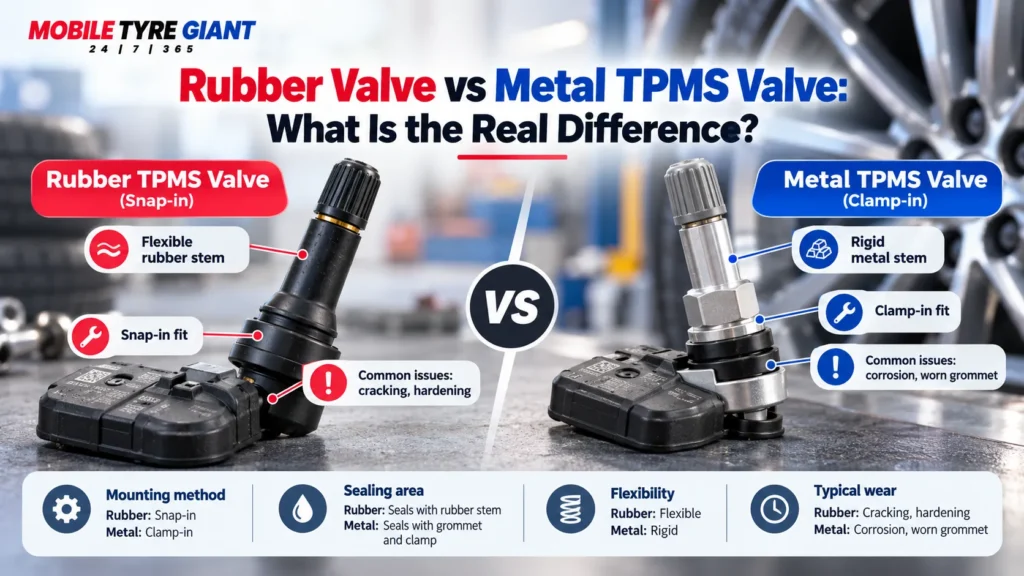
The clearest difference is the way each valve attaches to the wheel. A rubber snap-in valve is pulled through the valve hole and seals through the flexible rubber body, while a metal clamp-in valve is secured with a nut and sealing grommet. Rubber valves flex more when touched or when air equipment is connected, whereas metal valves remain relatively rigid. Rubber can deteriorate through ageing, heat and repeated flexing, while metal is more likely to develop corrosion, seized components or sealing problems around the clamp-in hardware. Both designs can provide reliable service when they are the correct type for the sensor and are installed properly. Neither material guarantees a longer sensor life because the electronic TPMS sensor has its own battery and internal components. A worn valve may sometimes be serviceable without replacing the entire electronic sensor, depending on the sensor design. This is why identifying the exact assembly before ordering parts matters.
Drivers sometimes assume that switching from rubber to metal is an upgrade, but that is not how TPMS fitment should be approached. The valve type is normally determined by the sensor and wheel design rather than personal preference. A metal valve can offer a rigid, tidy installation, but it introduces a retaining nut, sealing grommet and exposed metal parts that need correct servicing. A rubber valve is simpler externally, but the stem itself can age and crack. The best design is therefore the one the system was built to use. The comparison below shows the practical differences without treating either design as universally superior.
Feature | Rubber Snap-In TPMS Valve | Metal Clamp-In TPMS Valve |
Mounting method | Flexible stem snaps into wheel | Secured with retaining nut |
Main sealing area | Rubber body around valve hole | Grommet or seal under clamp hardware |
Common ageing issue | Hardening, cracking or splitting | Corrosion, seized nut or damaged seal |
Flexibility | Flexible external stem | Rigid external stem |
Installation concern | Correct seating and sensor compatibility | Correct seal placement and tightening torque |
Best choice | When specified for that sensor and wheel | When specified for that sensor and wheel |
Is a Metal TPMS Valve Better Than a Rubber Valve?
A metal TPMS valve is not automatically better simply because metal feels stronger in your hand. Tyre valves work in an environment where sealing ability, compatibility and correct installation matter more than how rigid the stem feels. A metal stem may resist the flexing that affects an ageing rubber valve, but it can still leak if its grommet hardens or the retaining hardware corrodes. Rubber stems avoid some exposed metal corrosion issues, yet the material can crack as it ages. Both types are capable of holding pressure reliably for years when fitted correctly. The real comparison should therefore be between compatible and incompatible parts, not cheap-looking rubber versus premium-looking metal. If the sensor was designed around a snap-in valve, a clamp-in metal stem should not be fitted merely for appearance. The same logic applies in reverse. Vehicle and sensor specifications should decide the valve type.
There is also no meaningful reason to replace a healthy rubber TPMS valve with metal purely because a driver wants something more durable. Doing so could require a different sensor assembly and may introduce fitment problems that did not exist before. When servicing is needed, it makes more sense to renew the correct compatible valve or service components and inspect the sensor at the same time. This approach protects the pressure seal while keeping the TPMS system working as intended. A properly maintained rubber valve is better than an incorrectly fitted metal one, and a properly serviced metal valve is better than a deteriorated rubber stem. Material alone does not decide reliability.
Which Parts of a Metal TPMS Valve Need Servicing?
A metal clamp-in TPMS valve is made up of more than the visible stem. The sealing grommet sits around the valve where it passes through the wheel and creates the airtight seal against the rim. A retaining nut holds the assembly in place, while the valve core controls airflow into and out of the tyre. The cap protects the core from water, dirt and contamination. Depending on the sensor design, washers or other small sealing parts may also form part of the service kit. These components experience pressure, temperature changes and environmental exposure every time the vehicle is driven. Reusing a hardened grommet or damaged nut can create a leak even when the electronic sensor itself is still functioning perfectly. This is why TPMS service kits often contain several small parts rather than only a new valve core.
The condition of these parts should be assessed whenever the tyre is removed and the valve requires attention. A cracked seal, damaged thread or badly corroded nut should not be ignored simply because the sensor still communicates with the car. The sensor can report pressure accurately while the valve attached to it is slowly allowing that pressure to escape. Installation also matters because clamp-in components normally need to be tightened according to the valve manufacturer’s specification rather than by feel. Over-tightening can distort the grommet or damage the assembly, while under-tightening may fail to create a dependable seal. Proper servicing therefore protects both the tyre pressure and the more expensive electronic sensor attached inside the wheel.
Can You Replace the TPMS Valve Without Replacing the Sensor?
In many direct TPMS designs, the valve stem or service components can be replaced separately from the electronic sensor, provided compatible parts are available and the sensor itself is still working correctly. This can be useful when the problem is a cracked rubber stem, damaged metal valve, worn grommet or leaking valve core rather than a failed sensor. The tyre normally needs to be removed or moved away from the valve area so the sensor and stem can be accessed safely from inside the wheel. The technician can then inspect the sensor body for corrosion, damage or a loose connection before deciding which parts need renewal. Replacing only the faulty valve components can avoid discarding a functioning sensor unnecessarily. However, not every sensor uses the same detachable valve design, so this should not be assumed for every vehicle.
If the electronic sensor has failed, has physical damage or has reached the end of its internal battery life, changing the valve alone will not restore TPMS operation. A dashboard warning can therefore represent several different faults, including low pressure, a leaking valve, communication failure or a dead sensor battery. Proper diagnosis matters before parts are ordered. Treating every TPMS warning as a valve problem can waste time, while treating every leaking valve as a failed electronic sensor can waste money. The most efficient repair is the one that identifies whether the fault lies in the valve hardware, the pressure sensor or somewhere else in the tyre and wheel assembly.
How Can You Tell If a TPMS Valve Is Leaking?
A leaking TPMS valve often behaves like a slow puncture, which is why it can be easy to misdiagnose at first. You may inflate the tyre to the correct pressure, drive normally for several days and then see the pressure warning appear again. In some cases, the tyre loses only a small amount of air overnight, while in others the pressure drops more noticeably after temperature changes or motorway driving. A rubber valve may show visible cracking or movement around the base, while a metal valve may have corrosion, a damaged retaining nut or a worn sealing grommet. The valve core itself can also leak even when the outer stem looks perfectly healthy. This is why simply checking the tread for nails is not enough when one tyre repeatedly loses pressure. A proper inspection should look at the tread, bead, valve stem, valve core and wheel sealing area together. If the tyre is losing pressure from the valve, topping it up repeatedly only delays the repair. Slow leaks deserve attention before they leave the tyre too soft to support the vehicle correctly.
A simple workshop leak check often involves applying a suitable leak-detection solution around the valve and watching for bubbles, but diagnosis should still consider the complete wheel assembly. Tiny bubbles around the valve core can point towards the core itself, while bubbles around the base of the stem may suggest a sealing problem where the valve meets the wheel. A rubber stem can also leak only when moved slightly, especially if cracking has developed near its base. Metal clamp-in valves may leak around the grommet or nut even when the stem appears visually clean. The important point is to find the exact source rather than assuming every pressure drop requires a new sensor. If the sensor still communicates correctly and the fault is limited to compatible service hardware, repairing the valve assembly can be much simpler than replacing the complete electronic unit.

Can a TPMS Warning Light Be Caused by the Valve Instead of the Sensor?
Yes, a TPMS warning can appear because the tyre is genuinely losing air through the valve even when the electronic sensor is still working correctly. In that situation, the sensor is doing exactly what it is supposed to do by detecting that pressure has fallen below the expected level. Drivers sometimes assume the dashboard warning proves the sensor has failed, but a slow valve leak can create the same warning because the pressure itself is actually low. Inflate the tyre correctly and the light may disappear temporarily, only to return later as air escapes again. That pattern should make you think about a leak before blaming the electronics.
A true sensor fault can behave differently, depending on the vehicle. Some cars display a separate malfunction warning, flashing light or message when the system cannot communicate with a sensor, while others simply keep the TPMS warning illuminated. A dead sensor battery, damaged sensor body or communication problem will not normally be fixed by replacing only the valve stem. This is why diagnosis matters before parts are changed. Think of the valve as the tap and the sensor as the gauge watching the water pressure. A leaking tap can make the gauge report low pressure even though the gauge itself is working perfectly.
Rubber vs Metal TPMS Valve Failure Signs
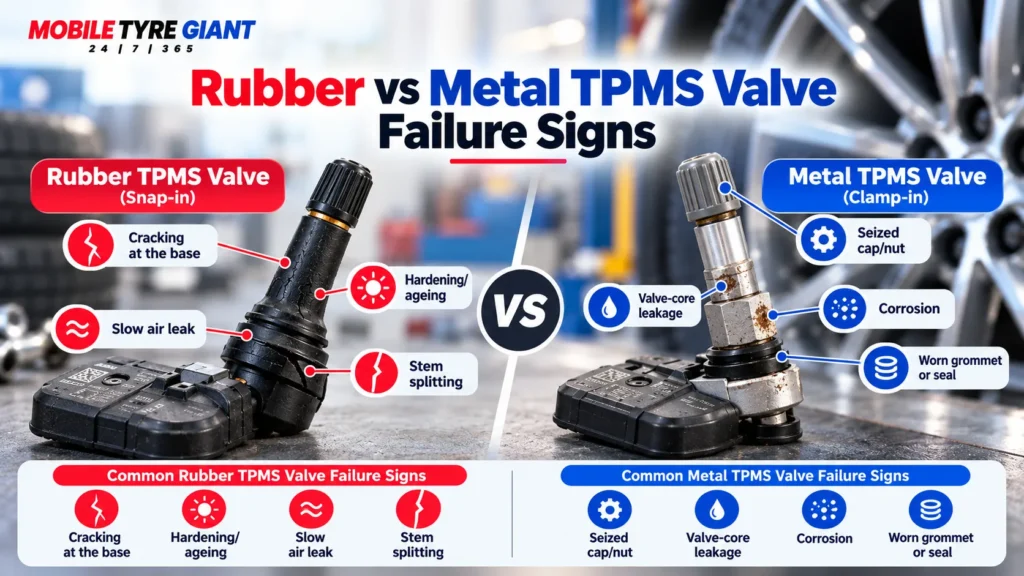
Rubber and metal TPMS valves tend to show different warning signs because they age in different ways. Rubber snap-in stems can harden, split or develop cracks around the base, especially after years of heat, road dirt and repeated movement. If the valve feels unusually stiff or shows visible surface cracking when inspected, the rubber may be approaching the end of its useful service life. A slow pressure leak that becomes worse when the stem is gently moved can also point towards deterioration around the valve body. Rubber valves do not need to look completely broken before they start leaking.
Metal clamp-in valves are more likely to develop problems around corrosion, threads, sealing grommets and retaining hardware. White or chalky deposits around an aluminium stem can be an early sign of corrosion, while a seized cap or nut deserves careful handling rather than brute force. A cracked or flattened grommet can allow pressure to escape around the valve hole even when the metal stem itself is still strong. Corrosion may also make future servicing more difficult if the components become bonded together. Both valve types can fail, just in different ways, which is another reason there is no simple answer that metal is always better than rubber.
Should TPMS Valves Be Serviced When Tyres Are Replaced?
Tyre replacement is a sensible time to inspect TPMS valve components because the tyre is already being removed from the wheel. With the inside of the rim accessible, a technician can see the sensor body, valve attachment and sealing hardware much more clearly than they can from outside. Rubber snap-in stems can be checked for ageing, while metal clamp-in assemblies can be inspected for corrosion, damaged threads and worn seals. If service components are due for replacement, doing the work while the tyre is already off can reduce the chance of a separate leak appearing soon afterwards. It also avoids disturbing a newly fitted tyre again unnecessarily.
This does not mean every tyre change automatically requires a new electronic TPMS sensor. The sensor may still have plenty of useful life left even when the replaceable valve components need attention. On suitable designs, a service kit can renew items such as the valve core, sealing grommet, nut or cap while leaving the working sensor in place. Rubber snap-in systems may allow the compatible stem to be renewed separately. The exact service method depends on the sensor design, which is why generic valve parts should not be fitted simply because they look similar. Good servicing replaces the components that need renewal without throwing away parts that are still functioning correctly.
Can You Change a TPMS Valve Yourself?
Changing an ordinary external valve core is much simpler than replacing a complete TPMS valve stem attached to a sensor inside the wheel. Accessing the full valve assembly usually requires the tyre to be deflated and moved away from the rim, and careless handling can damage the sensor mounted directly behind the valve. Metal clamp-in systems also require the sealing components to be positioned correctly and the retaining nut tightened to the correct specification. Guessing the torque or using the wrong service kit can create a leak that was not there before. Rubber snap-in sensor valves also need the correct compatible stem and fitting method.
DIY work becomes especially risky when corrosion is involved because a seized nut or cap may snap the valve or damage the electronic sensor if excessive force is used. The cost of a small service part can quickly turn into the cost of a complete sensor if the assembly is broken during removal. Unless you have the right tyre equipment, sensor information and fitting tools, TPMS valve replacement is better treated as tyre-service work rather than a simple driveway job. Checking pressure and visually inspecting the stem are sensible owner tasks. Breaking the tyre bead and servicing the sensor assembly is a different level of work.
How Weather and Road Conditions Affect Rubber and Metal TPMS Valves
Weather affects both valve types, although the damage mechanisms are different. Rubber can gradually harden through repeated heating and cooling, while cold conditions can make an already aged stem feel less flexible. Metal valves face moisture, winter road salt and contamination that can encourage corrosion around exposed components. Vehicles driven regularly through salted winter roads may therefore show more corrosion than cars used mainly in dry conditions. Wheel-cleaning chemicals can also contribute if aggressive products are repeatedly left around valve hardware. Neither design is immune to the environment.
Seasonal temperature changes can also make a valve problem easier to notice because tyre pressure naturally falls as temperatures drop. A tyre with a very small leak may appear stable during warm weather but trigger repeated low-pressure warnings once colder mornings arrive. That does not necessarily mean the TPMS suddenly failed at the start of winter. The colder temperature may simply expose a leak that was already present. If one tyre loses noticeably more pressure than the others under the same conditions, investigate the valve and tyre rather than blaming the weather alone. A healthy system should remain predictable even when seasonal pressure adjustments are needed.
Which TPMS Valve Is Right for Your Car?
The correct TPMS valve is the one designed to work with the sensor, wheel and vehicle specification already in use. A rubber snap-in valve may be perfectly suitable on one car, while another vehicle may require a metal clamp-in design with a sealing grommet and retaining nut. The visible material should therefore never be the only deciding factor. Sensor compatibility, valve-hole size, wheel design and the approved service components all matter. If the wrong valve is installed, it may leak, sit incorrectly inside the wheel or place unnecessary stress on the sensor body. A valve that looks stronger or more expensive is not automatically an upgrade. The safest approach is to identify the TPMS sensor first and then fit the compatible valve or service kit intended for that assembly.
Drivers should also consider the condition of the wheel itself when a valve is being replaced. Corrosion around the valve hole, damaged paint, previous repairs or contamination can affect how well a new valve seals against the rim. On metal clamp-in systems, the sealing surface needs to be clean and free from damage before a fresh grommet is installed. Rubber snap-in stems also need a clean valve hole so the rubber can seat correctly. If a tyre has been losing pressure repeatedly, replacing the valve without checking the rim can leave the original problem unsolved. Good TPMS servicing therefore involves the complete sealing area rather than simply removing one stem and fitting another.
Can You Change From a Rubber TPMS Valve to a Metal Valve?
Changing from rubber to metal should not be treated as a simple cosmetic modification. The sensor fitted inside the wheel may be designed specifically for a rubber snap-in stem and may not accept a metal clamp-in valve at all. Even when another valve appears to fit physically, differences in attachment angle, sealing method or sensor mounting can make the combination unsuitable. A rigid metal stem can also sit differently against the wheel compared with a flexible rubber valve. This is why valve conversion should only be considered when the sensor manufacturer or vehicle specification confirms that the alternative design is compatible.
The same rule applies when changing from a metal valve to a rubber one. A driver may want to avoid corrosion or reduce replacement cost, but those reasons do not make an incompatible stem safe to use. In many cases, the better solution is simply to replace the worn valve with a fresh version of the same approved type. If repeated corrosion has occurred, the wheel, cap material, service hardware and maintenance method should also be reviewed rather than changing the entire valve design without evidence. TPMS components work best when they remain within the system they were engineered to use.
When Should a Rubber or Metal TPMS Valve Be Replaced?
A TPMS valve should be replaced when it can no longer hold pressure reliably or when inspection shows deterioration that makes future leakage likely. Rubber stems may need attention when they become hard, cracked, split or damaged around the base. Metal valves may need replacement when corrosion has weakened the stem, threads are damaged, the retaining nut has seized or the sealing surface can no longer create a dependable airtight joint. A leaking valve core or worn grommet may sometimes be solved by replacing only the relevant service parts rather than the complete valve. The decision should be based on the actual fault rather than replacing everything automatically.
Tyre replacement is often a convenient time to inspect the valve because the tyre is already being removed from the wheel. That gives the technician access to the sensor body, stem connection and sealing components that are normally hidden. If the valve is already several years old or shows visible deterioration, renewing the appropriate service parts can prevent another slow leak soon after new tyres are fitted. This is especially useful when the electronic sensor is still communicating correctly and does not need replacement. Preventive servicing should still use compatible parts and the correct installation procedure rather than replacing components simply because they are accessible.
How Do You Know Whether the Valve or the TPMS Sensor Needs Replacing?
A leaking valve and a failed TPMS sensor can create similar dashboard symptoms, but they are not the same fault. If the tyre pressure is genuinely dropping and the sensor continues to report the change accurately, the valve, tyre or wheel seal may be the source of the problem rather than the electronics. If the pressure remains correct but the vehicle cannot communicate with the sensor, the sensor battery, internal electronics or programming may need attention. A visual inspection, pressure check and diagnostic scan can help separate these possibilities before parts are ordered.
The age of the sensor can also be relevant because TPMS sensors normally contain sealed internal batteries that are not intended to be replaced separately. When that battery eventually fails, changing the valve stem will not restore communication. On the other hand, replacing a complete sensor because of a leaking rubber stem can be unnecessary when the valve is serviceable separately. Accurate diagnosis prevents both problems: spending too much on a full sensor when only the valve needs attention, or repeatedly servicing a valve when the electronic sensor has actually failed.
What Should Be Checked After a TPMS Valve Has Been Replaced?
After a new rubber or metal TPMS valve is fitted, the tyre should be inflated to the vehicle’s recommended pressure and the valve area checked carefully for leaks. The technician should also confirm that the sensor remains securely mounted inside the wheel and has not been damaged during tyre fitting. On a metal clamp-in valve, the retaining hardware should be installed to the specified torque and the correct cap and valve core should be used. On a rubber snap-in design, the stem should sit correctly in the valve hole without twisting or visible damage. A final leak check around the valve core and base helps confirm that the new assembly is sealing correctly.
The TPMS warning may also need to be reset, relearned or driven for a short period before the vehicle recognises the repaired wheel, depending on the system. Some cars detect the sensor automatically, while others require a relearn procedure or diagnostic tool. If the warning remains after the pressures are correct, do not assume the new valve has failed immediately. The sensor ID, battery condition and communication with the vehicle may still need checking. After the repair, monitor the tyre pressure over the following days to make sure the original slow leak has genuinely been resolved.
Should TPMS Sensors Be Relearned After Valve Replacement?
A relearn is not always necessary when only the valve hardware has been changed and the original electronic sensor remains in place. The sensor still has the same identification code, so many vehicles will continue recognising it normally once the tyre is reinflated. However, some systems may require a reset after pressure has been restored, especially if the warning remained active for some time. The exact procedure depends on the vehicle rather than whether the stem is rubber or metal.
If the electronic sensor itself has been replaced, programming or relearning becomes much more likely because the vehicle needs to recognise the new sensor ID. Some replacement sensors can be cloned from the original, while others need to be registered through a diagnostic process. This is another reason to identify whether the problem is the valve or the sensor before replacing parts. A simple leaking stem and a failed electronic sensor may produce similar warnings, but the work required after repair can be very different.
Final Words: Choose the TPMS Valve That Matches the Sensor
Rubber and metal TPMS valves can both provide reliable service when they are matched correctly to the sensor and wheel. Rubber snap-in valves are flexible and simple, but they can harden or crack as they age. Metal clamp-in valves provide a rigid mounting system, but they can suffer from corrosion, worn sealing grommets or damaged retaining hardware. Neither design is automatically better for every vehicle. The most important factors are compatibility, correct installation and the condition of the sealing components.
Drivers should also avoid assuming every tyre pressure warning means the electronic sensor has failed. A leaking valve, valve core, tyre bead or puncture can reduce pressure while the TPMS sensor continues working normally. Proper diagnosis can therefore save unnecessary replacement costs and solve the actual problem more quickly. Check recurring pressure loss rather than repeatedly adding air, use the correct service parts and inspect TPMS valves whenever tyres are removed. A small valve may be easy to overlook, but keeping it in good condition helps the whole tyre pressure monitoring system do its job properly.
TPMS Valve Problem? Get the Right Replacement
Get rubber or metal TPMS valves checked and replaced with the correct compatible parts for your sensor, wheel and vehicle.
Frequently Asked Questions
Find quick answers to the most common questions our customers ask.
Not necessarily. Metal clamp-in valves and rubber snap-in valves are designed for different sensor and wheel assemblies. Metal valves are rigid but can suffer corrosion and sealing problems, while rubber valves can crack or harden with age. The better valve is the one specified for the TPMS sensor and wheel fitted to the vehicle.
Only if the sensor and wheel are specifically compatible with that valve design. Rubber and metal TPMS stems use different mounting and sealing methods, so they should not be swapped simply for appearance or perceived durability. In most cases, replacing the worn valve with the correct approved type is the safer approach.
There is no fixed lifespan that applies to every rubber TPMS valve. Heat, weather, road contamination, age and repeated flexing can all affect how quickly the rubber hardens or cracks. The stem should be inspected whenever tyres are serviced and replaced when deterioration or leakage becomes visible.
Metal TPMS valves are exposed to moisture, road salt, brake dust and cleaning chemicals. These conditions can encourage corrosion around the stem, retaining nut and valve cap, particularly on aluminium components. Using compatible service parts and avoiding unsuitable metal caps can help reduce corrosion-related problems.
Yes. Air can escape through a damaged valve core, cracked rubber stem, worn sealing grommet or corrosion around a metal clamp-in valve. A tyre that repeatedly loses pressure should therefore have the valve and wheel sealing areas checked as well as the tread.
Often yes, provided the sensor design allows the valve stem or service components to be replaced separately and the electronic sensor is still functioning correctly. Compatible replacement parts must be used because TPMS valves are not universal. Some sensor designs may require a complete assembly instead.
No. Direct TPMS systems use electronic pressure sensors mounted inside the wheel, often attached to the valve. Indirect TPMS systems use information from wheel-speed sensors instead, so they do not need a pressure sensor mounted to each valve.
Yes. If a valve leak causes the tyre pressure to fall, the working TPMS sensor may trigger the low-pressure warning exactly as intended. A warning light therefore does not automatically mean the sensor itself is faulty.
They should at least be inspected. Rubber stems, metal sealing grommets, valve cores and other service components may need replacement depending on their condition and the sensor design. Servicing worn parts while the tyre is already removed can help prevent a slow leak developing soon after new tyres are fitted.
Usually not if the original electronic sensor remains in place and only the valve or service components have been replaced. Some vehicles may require a TPMS reset after pressure is restored, but full programming is generally more relevant when a new electronic sensor is installed.